Physical Address
304 North Cardinal St.
Dorchester Center, MA 02124
Physical Address
304 North Cardinal St.
Dorchester Center, MA 02124

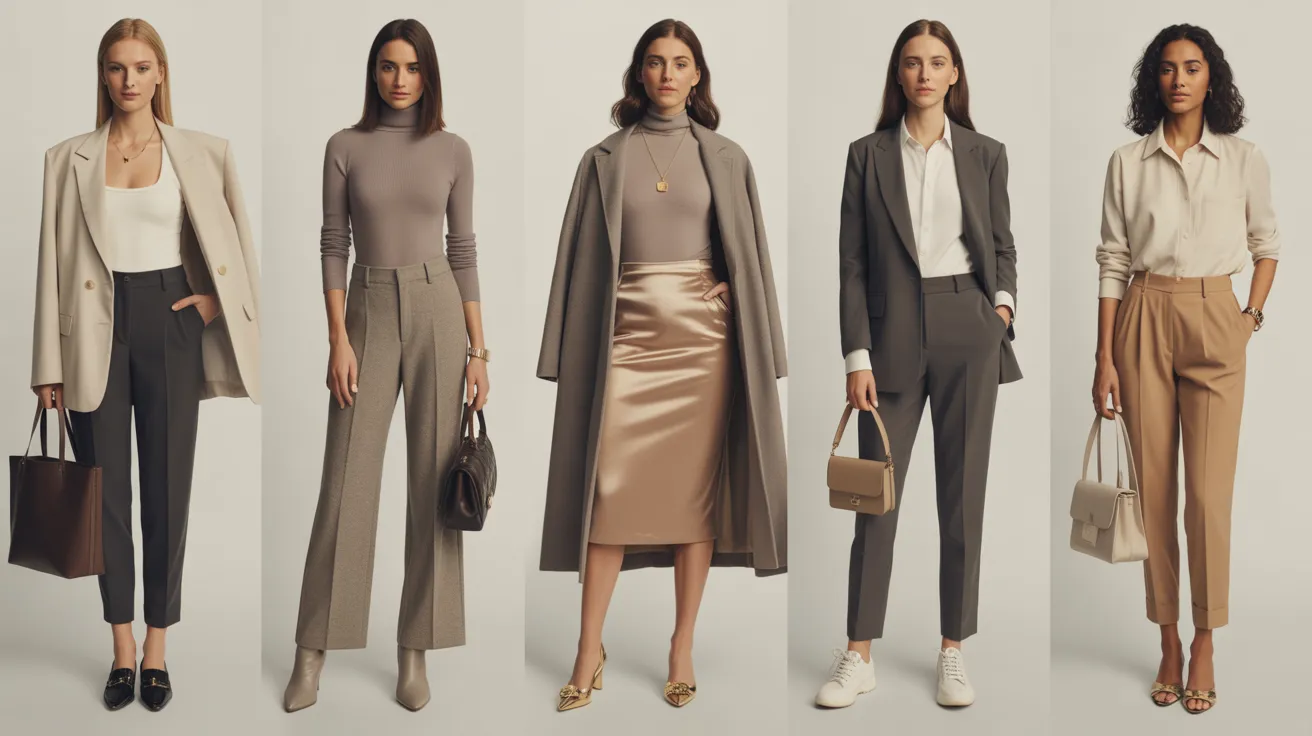
Business casual sounds simple until you’re standing in front of your closet at 7 a.m. wondering whether dark jeans count, whether you need a blazer, and if loafers look too plain. The answer depends on your workplace, but the building blocks are the same almost everywhere.
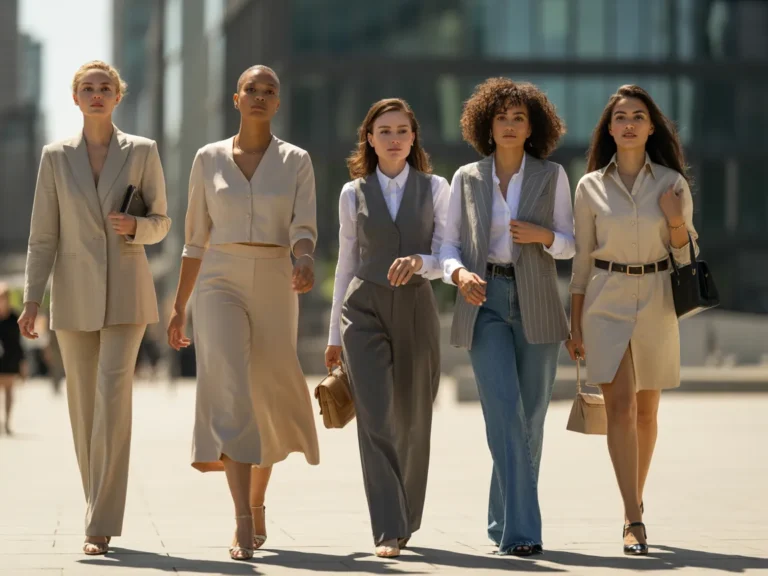
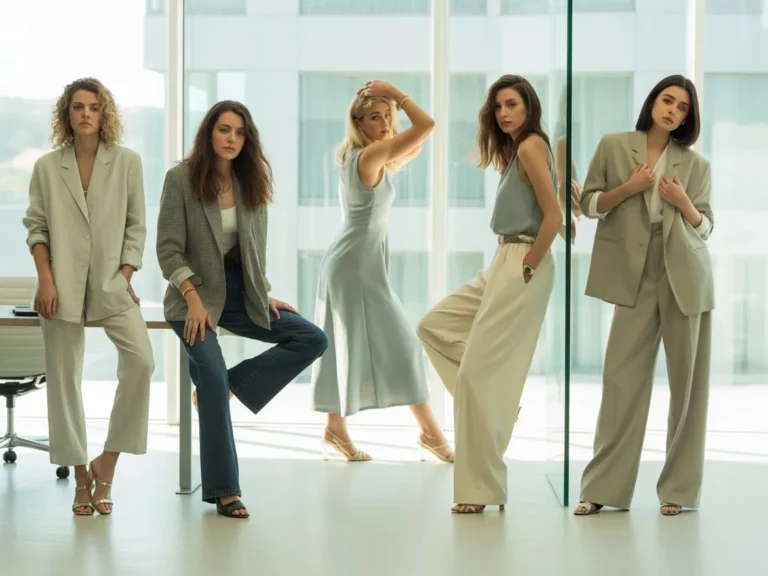
This guide explains what the dress code actually allows, then gives 15 business casual outfits for women, from relaxed blazer looks to winter layers and interview-ready sets. The table after the looks rates how dressy each one is, so you can match the level your office expects on any given day.
Quick answer: Business casual for women means tailored trousers, chinos, knee-length or midi skirts, and dresses, worn with blouses, knit tops, or button-downs, plus closed-toe flats, loafers, or low heels. A blazer is optional. Dark, clean jeans are fine in many offices. Skip athletic wear, ripped denim, flip-flops, and anything sheer or cropped.
Business casual sits between a full suit and weekend clothes. You look professional enough to meet a client, but you aren’t expected to wear a matching jacket and trousers every day.
Safe choices include tailored trousers in wool, crepe, or ponte knit; chinos; skirts at the knee or below; dresses with sleeves or a layer on top; blouses, shells, fine-knit sweaters, and cardigans. Pieces that usually fall outside the code are leggings worn as pants, athletic wear, ripped or distressed denim, slogan tees, crop tops, very short hems, sheer fabrics without a layer underneath, and flip-flops. If your company has a written policy, it wins over any general guide, so check your handbook or notice what senior colleagues wear during your first week.
Fit matters more than price. Blazer shoulder seams should end at your shoulder bone, and the jacket should button without pulling into an X. Button-down shirts should lie flat across the bust; if they gape, size up and tailor the waist, or switch to a shell or knit. Slim and cropped trousers look neatest when the hem grazes the ankle bone, while wide-leg styles should nearly cover your shoe. Pencil and A-line skirts look most professional between the top of the knee and mid-calf.
Leather or suede loafers, pointed or almond-toe flats, block heels between 1 and 3 inches, kitten heels, and low ankle boots are all reliable. Slingbacks and clean mules are fine in most offices. Plain white or black leather sneakers (think Veja’s Campo or any logo-light equivalent) pass in many smart casual workplaces but less often in client-facing roles. If you walk or stand a lot, look for cushioned insoles and rubber soles with some grip.
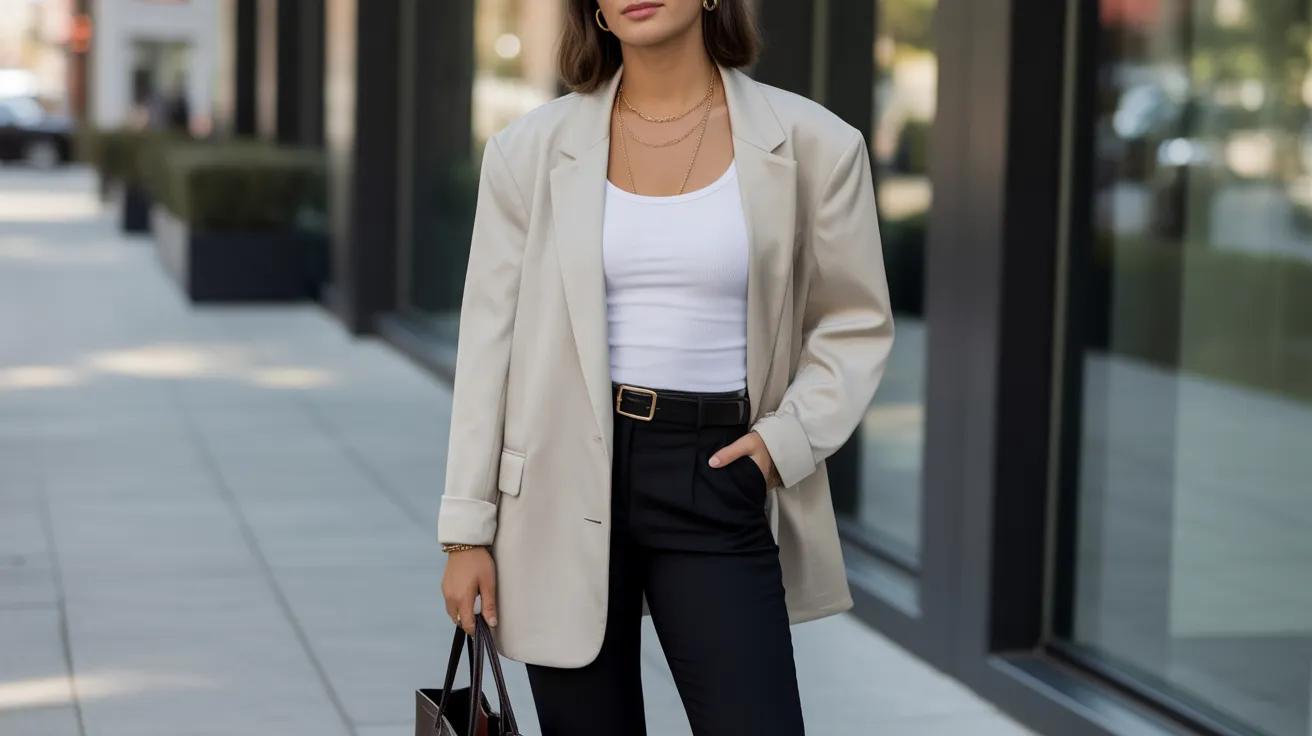
An unstructured blazer has soft shoulders and little padding, so over a fine-knit tee and straight-leg trousers it looks put-together without feeling formal. Camel, navy, and charcoal work with nearly every color underneath.
Few outfits travel between client meetings and desk days as easily, and knit plus soft tailoring barely creases. On internal days, shove the sleeves to the forearm; for presentations, leave them down. Loafers and small studs are all it needs. Our jacket outfit ideas show more ways to wear a blazer outside work.
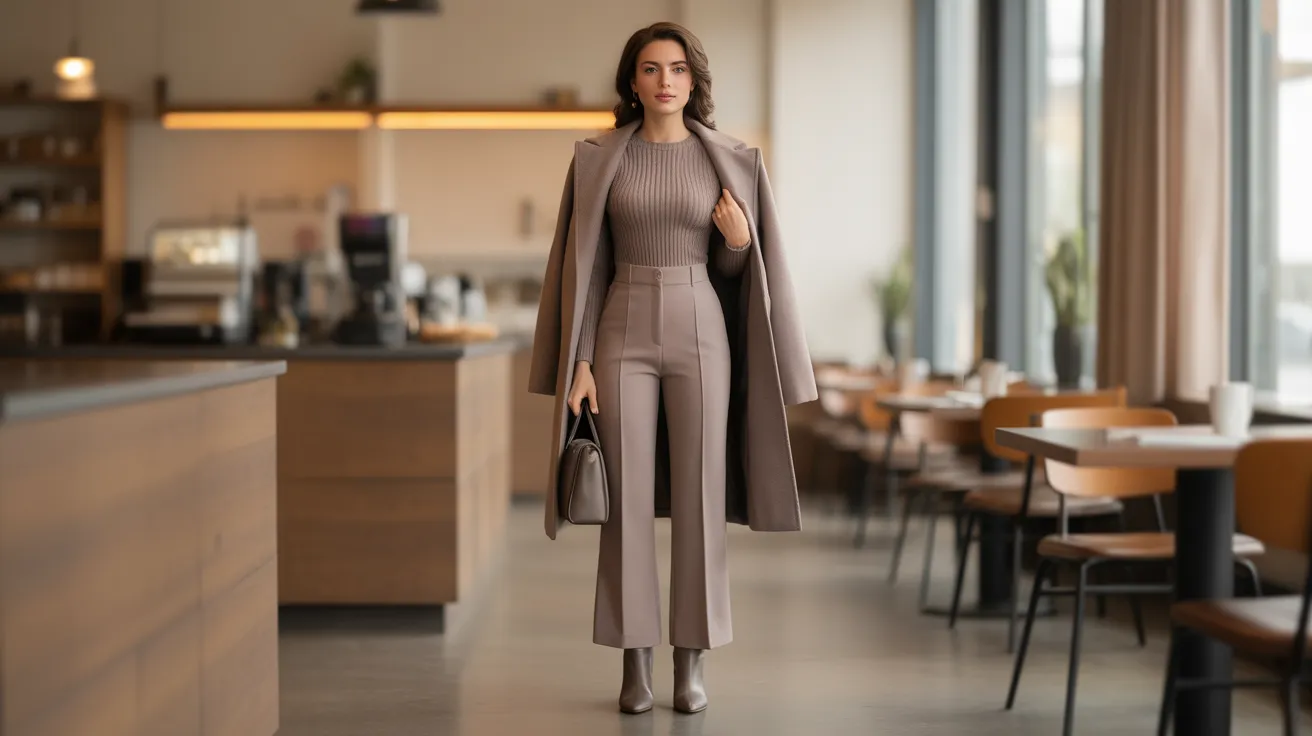
A sweater with a matching midi skirt or ribbed knit trousers looks like a dress but feels as comfortable as loungewear. Oatmeal, gray, chocolate, and black are the most office-friendly colors.
Weight is what keeps it professional. A medium-weight wool or viscose blend hides seams and undergarments and holds its shape, while thin, clingy knits read as casual. Creative offices and internal days in fall and winter suit it best. Add a long coat in the same color family to keep the line unbroken.
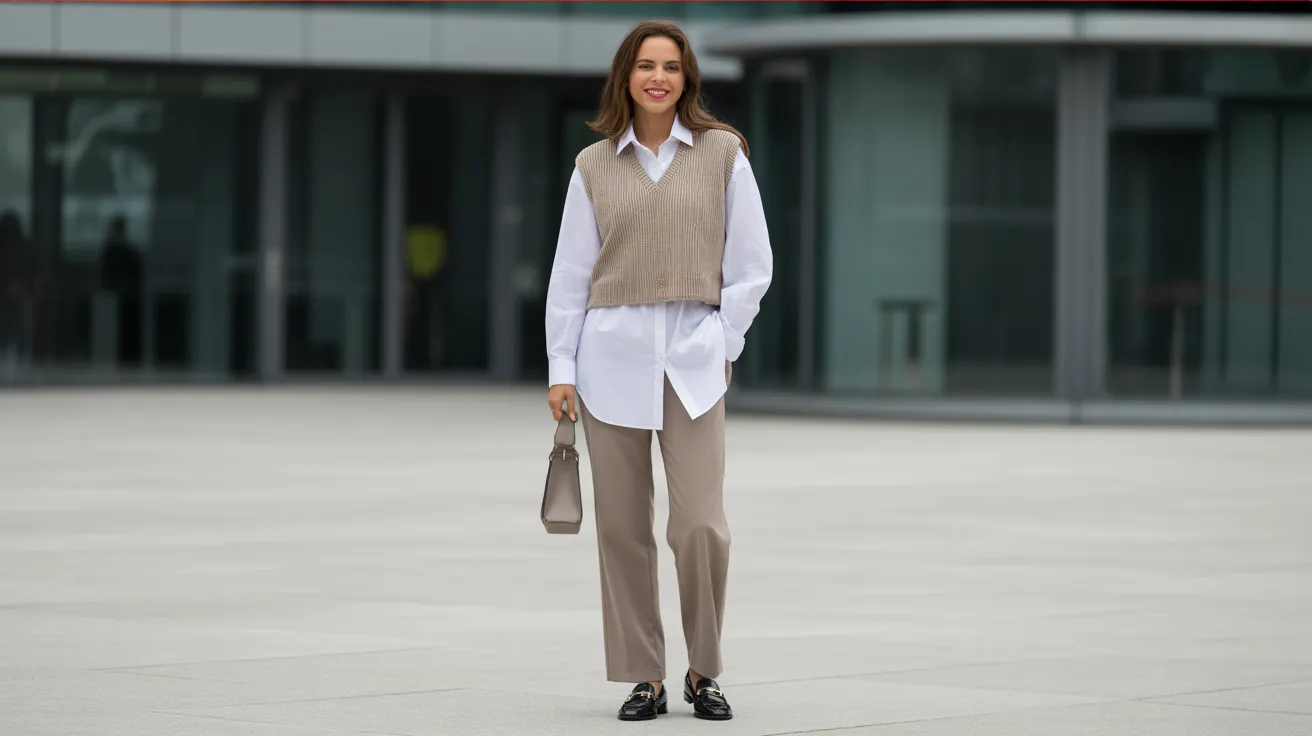
A white cotton poplin shirt layered under a crewneck sweater, with the collar and cuffs showing, is a classic preppy formula. Pair it with gray or navy tailored trousers and loafers.
The shirt should be slim enough to sit smoothly under the knit; an oversized one bunches at the waist. Let about half an inch of cuff show past the sweater sleeve. Conservative offices, banks, and schools are its home turf, and in an overheated building you can drop the sweater at lunch.
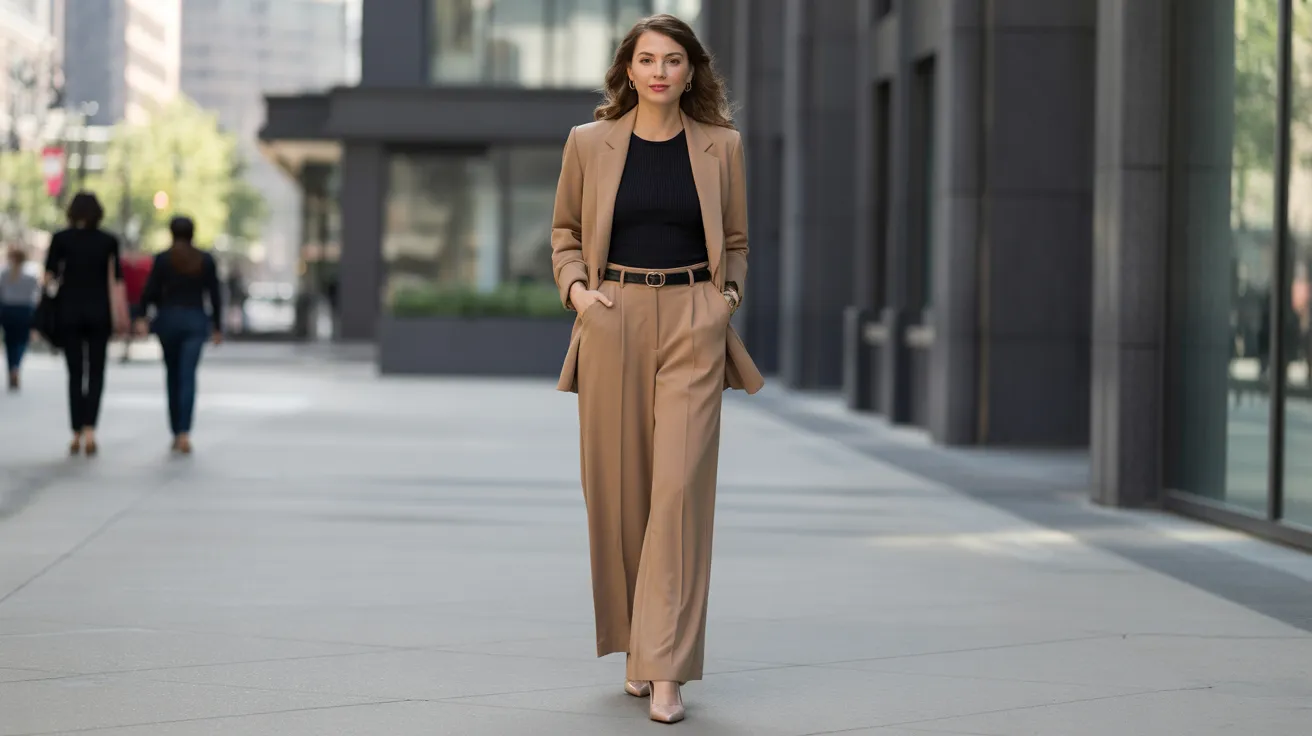
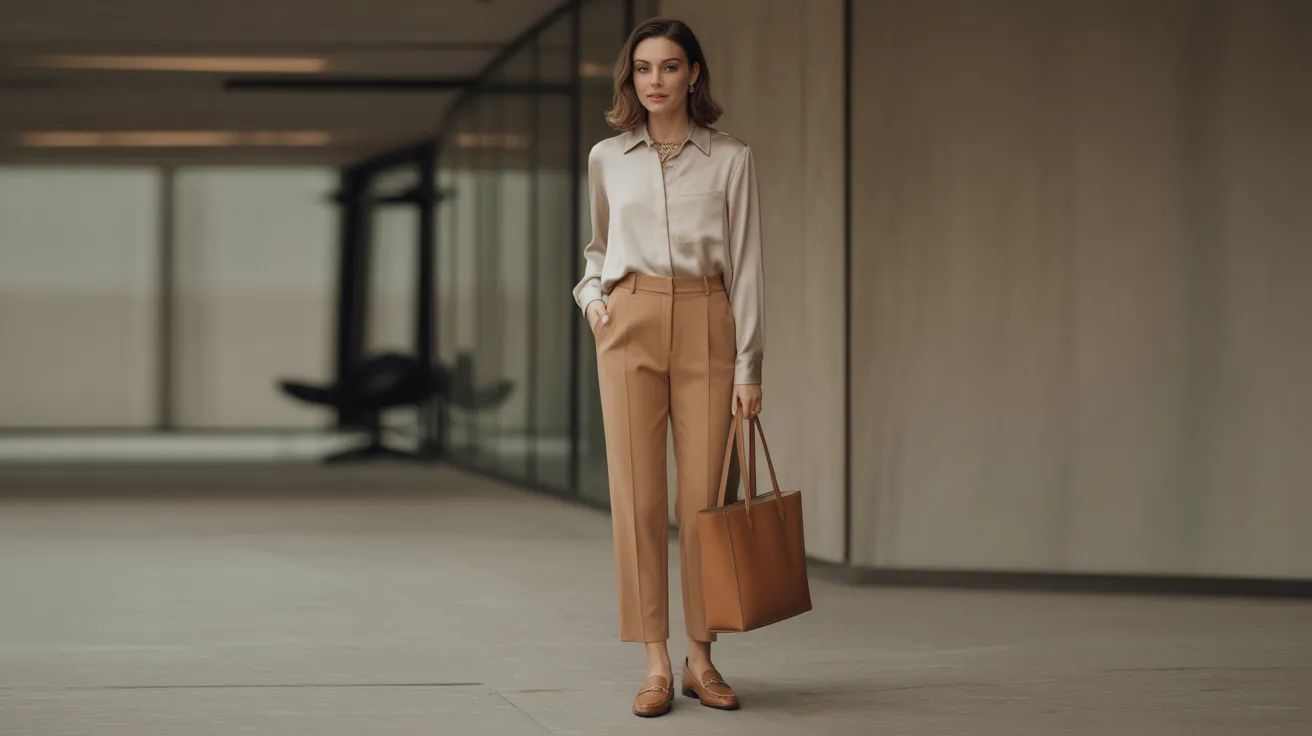
High-rise wide-leg trousers with a fully tucked blouse lengthen your leg line and look modern and professional at once. Pleated fronts, a center crease, and fabric with some weight, such as wool crepe or heavy twill, keep them crisp.
Hem length is everything. Take the exact shoes you plan to wear to the tailor and have the hem just skim the ground in them, since flats and heels need different lengths. A fitted top keeps the volume in check. In warmer months, switch to linen-blend trousers; our guide to summer business casual for women covers breathable options.
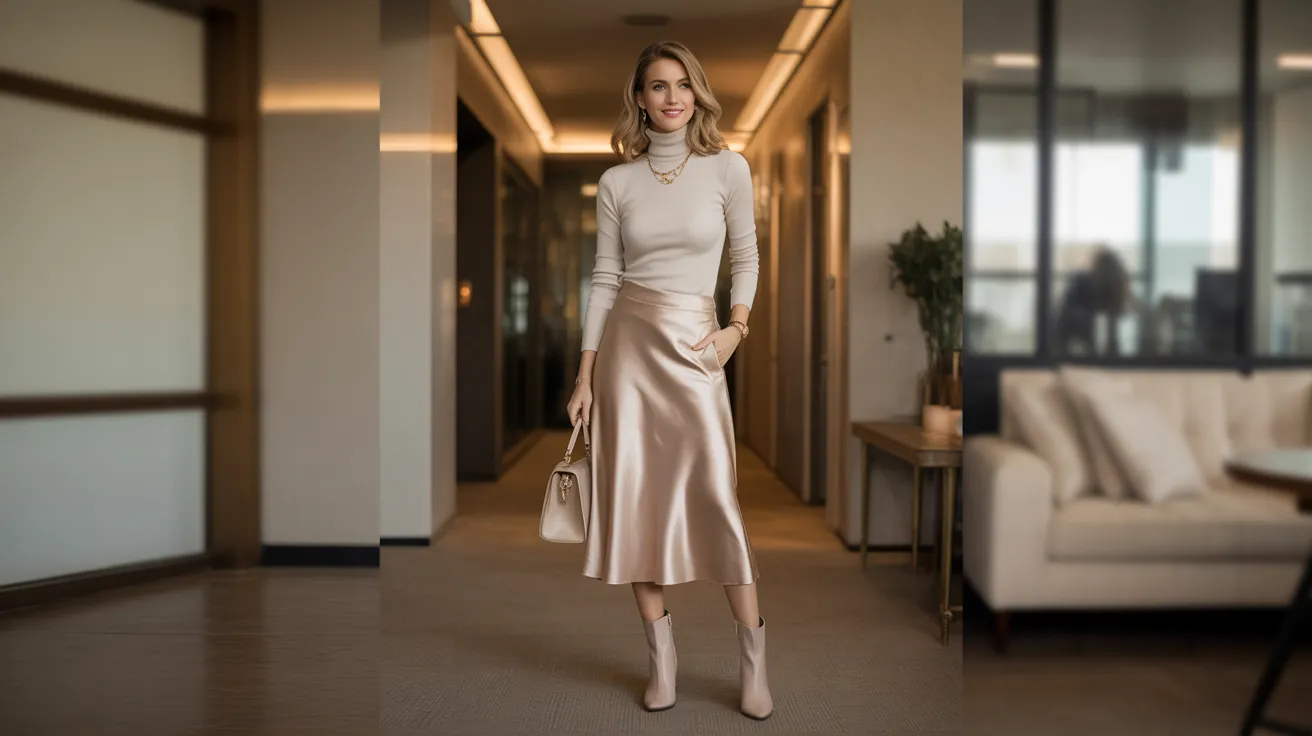
Satin belongs at the office when matte, structured pieces balance the shine. Pair a chocolate, navy, or black satin midi skirt with a fitted fine-knit sweater or cardigan and loafers or low block heels.
A heavier, lined satin won’t cling or show lines under office lighting, and the hem should fall mid-calf. It looks dressy without a suit, so it handles creative offices, after-work dinners, and holiday parties. Skip strappy sandals; closed shoes keep it professional.
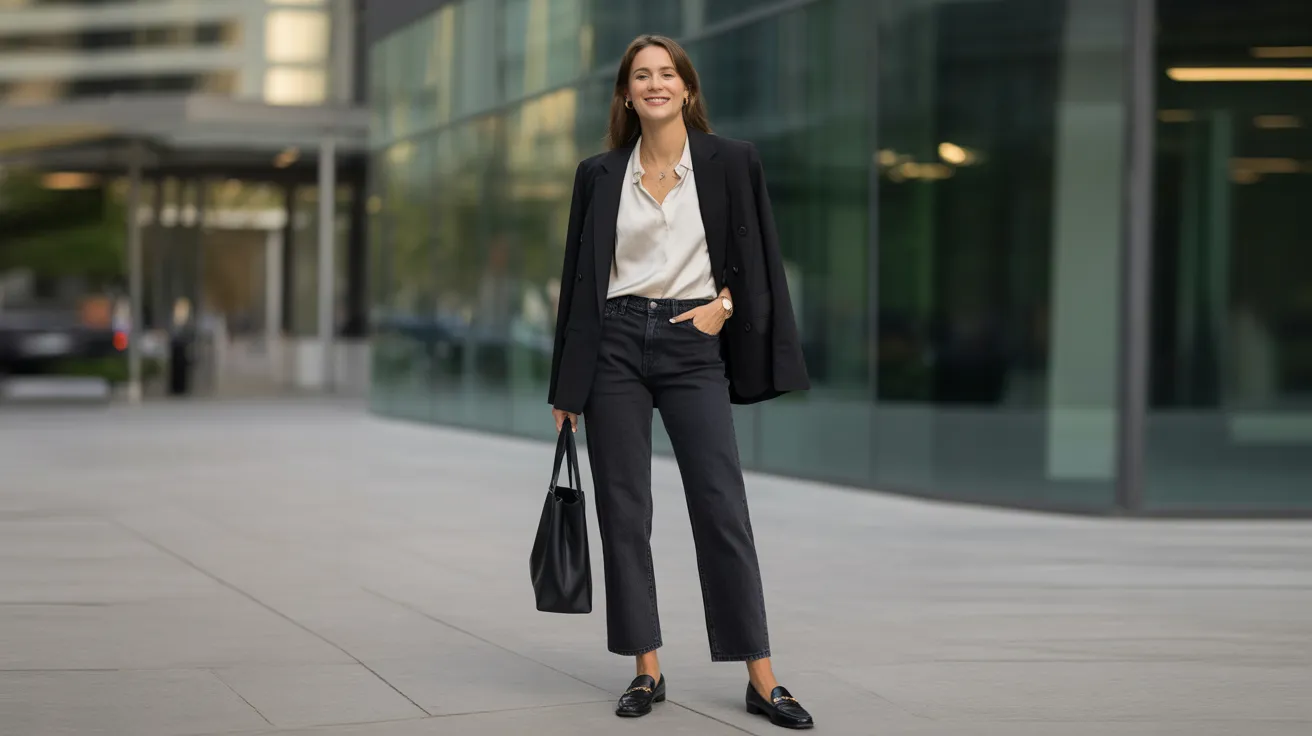
Dark-wash straight-leg jeans can be business casual when every other piece is polished. Wear them with a silky shell or blouse, a tailored blazer, and block heels or pointed flats.
The jeans must be clean, dark, and free of rips, fading, or whiskering. Rigid or low-stretch denim reads more like a trouser than skinny jeans do. Save this for Fridays, internal days, or offices that clearly allow denim; if you’re unsure, try it once and compare with what colleagues wear.
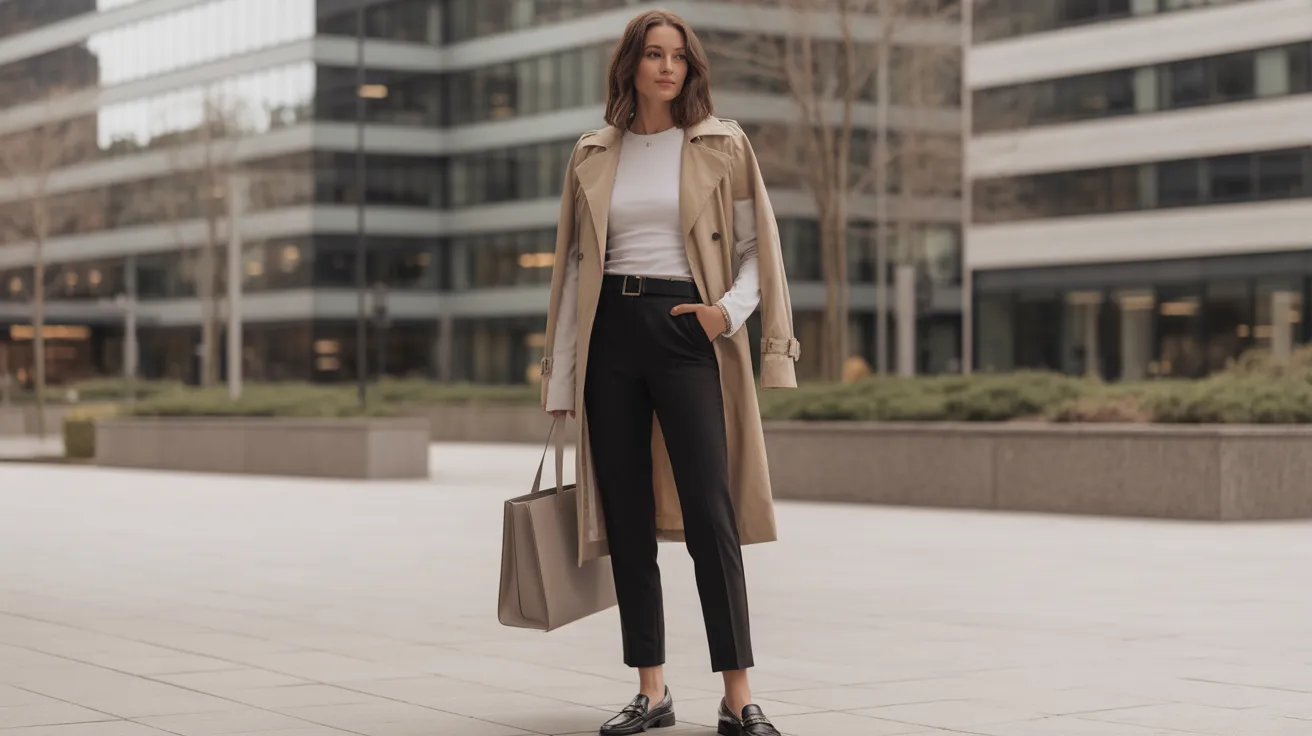
Spring and fall commutes are where a classic beige trench earns its place. Under it, wear a knit polo or fine-gauge sweater with tapered trousers in tan, white, or navy, and finish with ankle boots or loafers.
A cotton gabardine trench is comfortable from roughly 45°F to 65°F and shrugs off drizzle, though not a downpour. Petite women usually look best in a length at or just below the knee; taller women can go mid-calf. Belt it at the waist, or knot the belt behind you when it’s worn open.
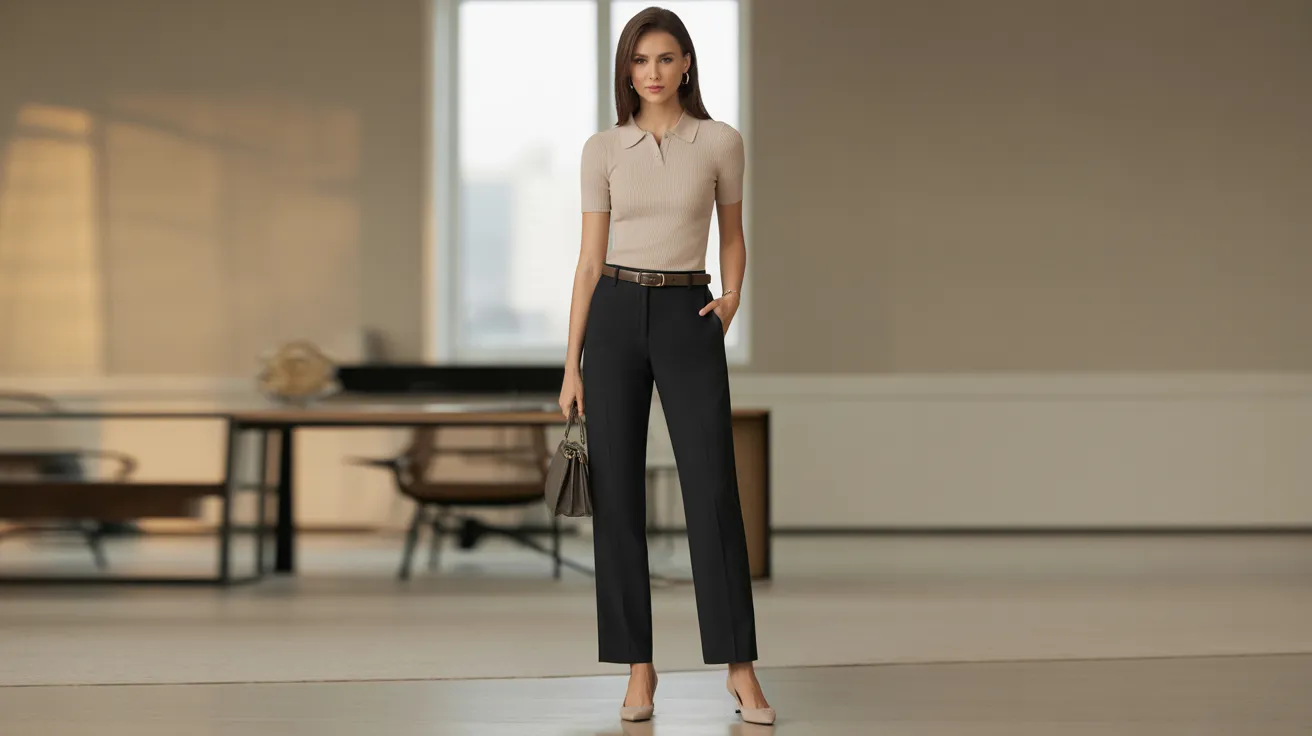
Slim black ankle trousers are the hardest-working piece in a business casual wardrobe. Pair them with a blouse in a small polka dot, stripe, or abstract print, and black or nude ballet flats.
Black trousers can look severe, so let the top carry the personality. Flat-front ponte pairs are comfortable for long days and resist wrinkles, while wool blends look sharper for meetings. The ankle length shows a little skin above the flat and keeps the look light. It works in any office, in any season.
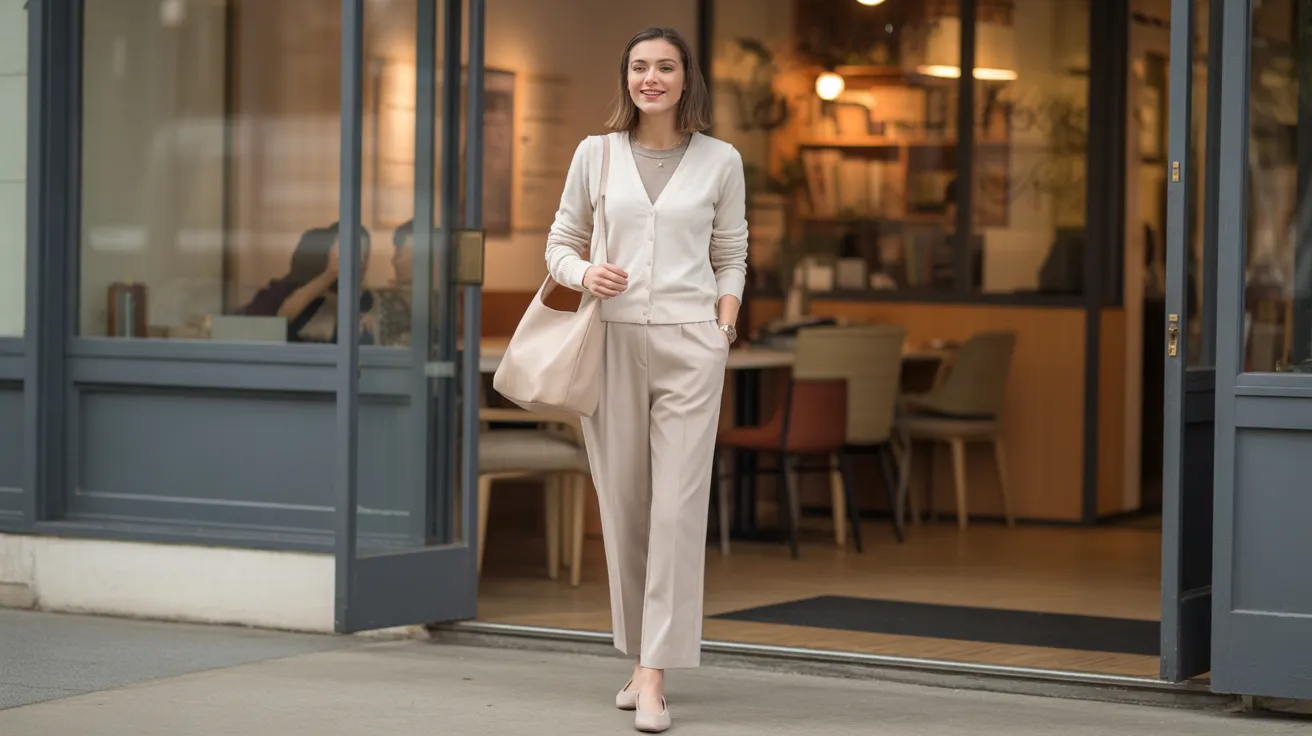
Air-conditioned offices that swing warm and cold are the reason to own this one. A longline cardigan over a sleeveless shell or knit top, with a pleated or A-line midi skirt, is a soft alternative to a blazer.
Let the cardigan end at mid-thigh or just above the skirt’s hem so it doesn’t cut the line awkwardly. Merino and cotton blends look richer and pill less than acrylic; cashmere is softest but needs a fabric comb now and then. Wear it open, or add a slim belt over it to define your waist. Schools, healthcare administration, and relaxed offices suit it well.
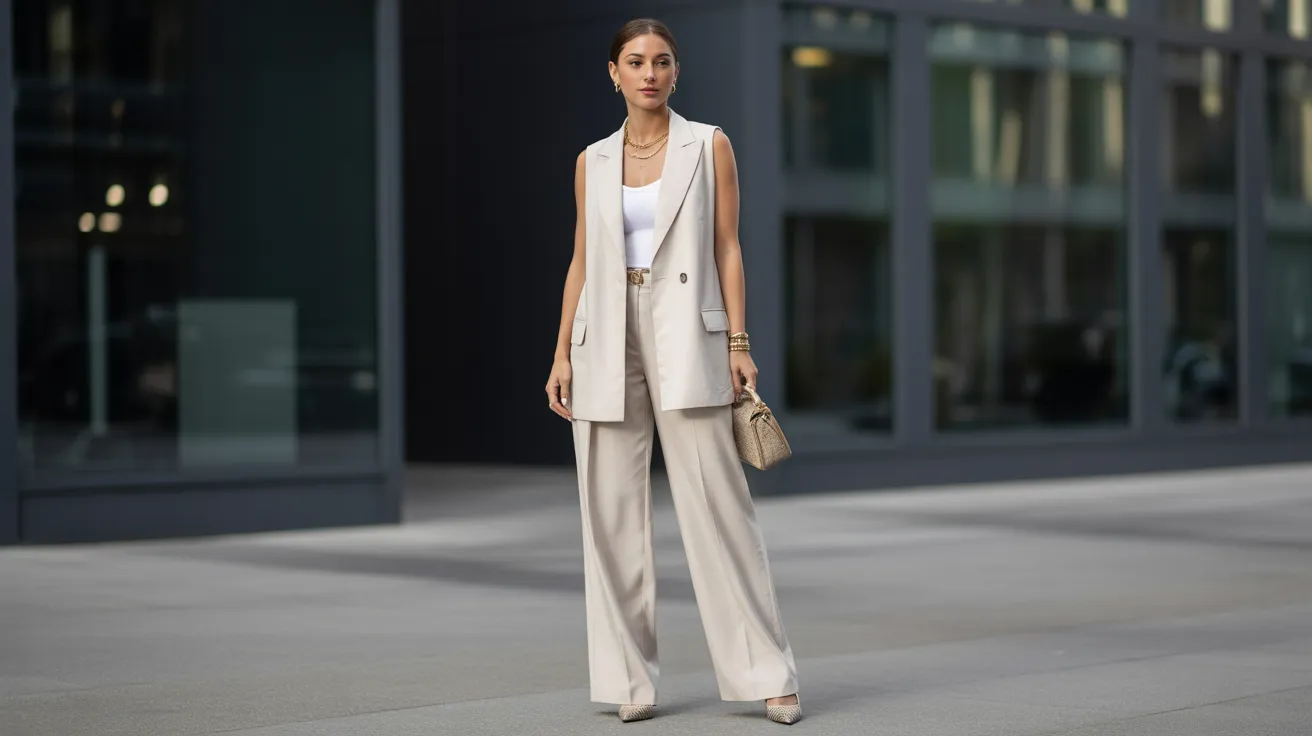
A tailored vest with matching trousers is a modern take on the suit that feels lighter and less formal. Wear it buttoned on its own, or open over a white tee or fine-knit top.
Fit should be close without pulling at the buttons, with the hem ending at your hip bone so it meets high-rise trousers neatly. Gray, navy, and brown pinstripes look especially sharp. Add the matching blazer for client meetings and leave it on the chair for internal days.
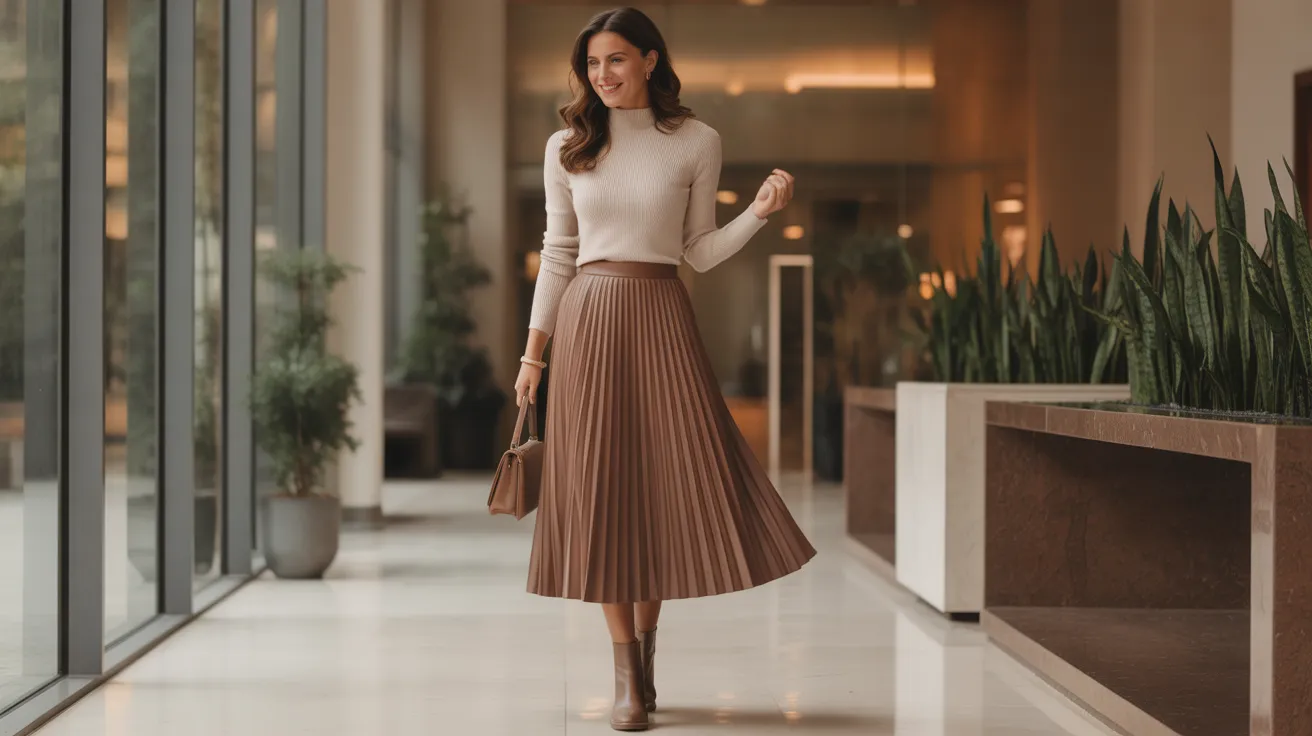
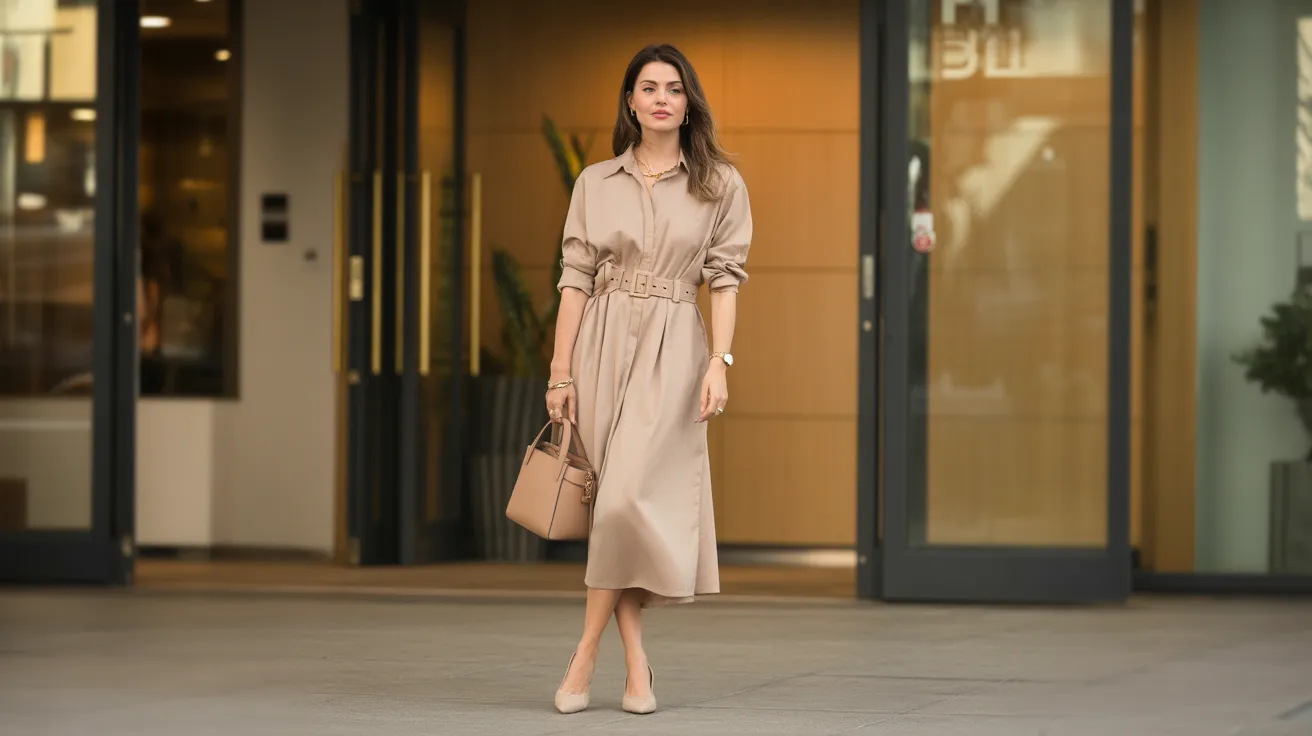
One piece, no coordinating: a midi wrap dress with three-quarter or long sleeves is one of the most comfortable things you can wear to work. Pair it with block heels or pointed flats and a small leather bag.
Go for a solid color or small print in a jersey or crepe heavy enough to drape without clinging. Check that the neckline stays put when you lean forward; a small snap at the cross-over point fixes gaping. Presentations, conferences, and business lunches are all covered, with a light cardigan if the office runs cold.
A tailored jumpsuit in crepe or twill looks polished in seconds. Choose black, navy, or olive with wide or straight legs, and add a thin belt to define your waist.
Most offices expect a layer over a sleeveless style, such as a cropped blazer or cardigan. In the fitting room, sit down and raise both arms: if the crotch or shoulders tug, the torso is too short and it will pull all day. It’s a smart pick for conferences and work events. For more warm-weather options, see our summer work outfits.
For cold days, layer a fine merino sweater over a collared shirt, then add a wool or tweed midi skirt, opaque tights, and leather knee boots. Burgundy, forest green, and camel warm up the darker winter palette.
Make sure the boot tops sit under the skirt hem so no gap shows when you sit. Merino keeps you warm without bulk, so the outfit stays sleek under a wool coat. Swap your studs for statement earrings and it goes straight to dinner after work.
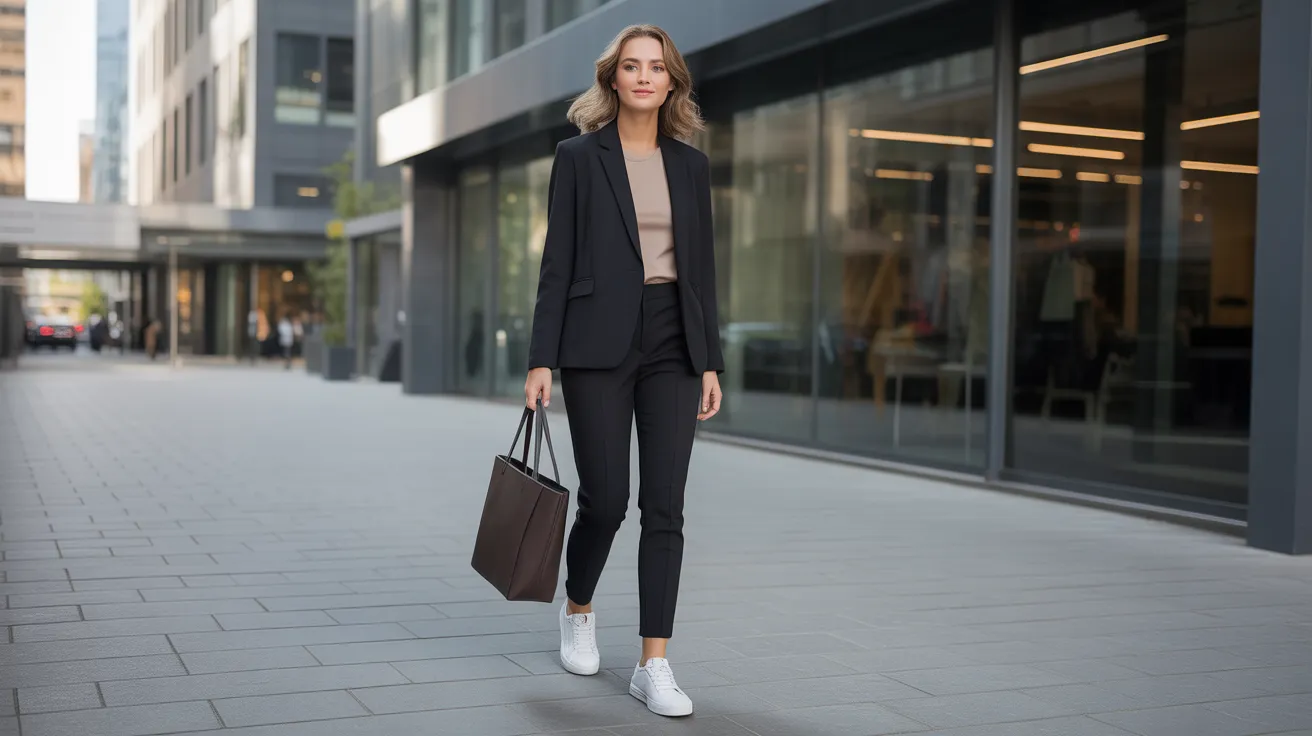
Commuters who walk a lot, hybrid workers, and tech or creative teams get the most from this one. If your office allows sneakers, wear minimal white or black leather pairs with cropped ankle trousers, a striped knit top, and a light jacket or cardigan.
The sneakers must be clean and plain, with no running mesh or bright logos, and everything else should be tailored so the shoes look like a choice rather than a shortcut. Wipe the soles weekly with a damp cloth and a little soap to keep them bright.
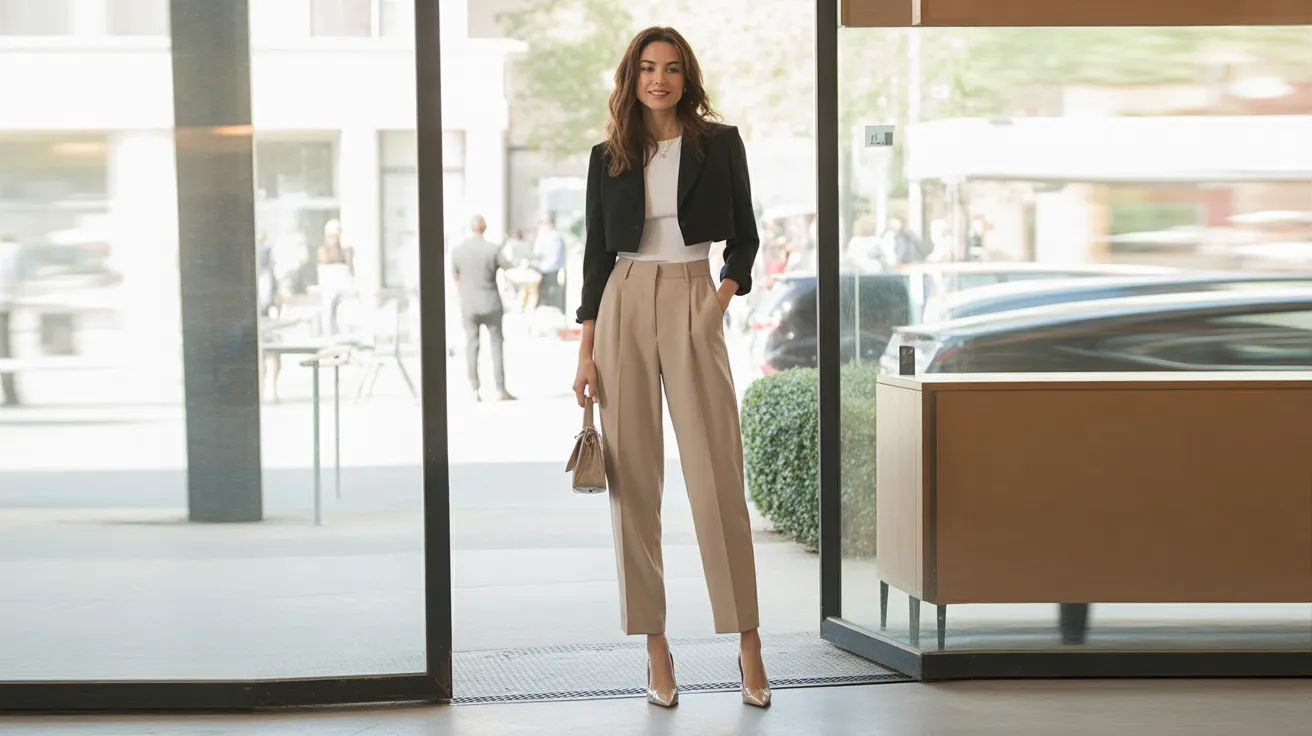
Interviews call for one step dressier than the daily dress code. A navy or charcoal blazer with matching or tonal trousers, an ivory shell top, and pointed flats or low pumps look prepared without seeming stiff.
Neutral colors keep the focus on you, and a shell avoids gaping buttons when you sit across from the panel. Try the whole outfit on the day before, including walking and sitting, and pack a lint roller. On video calls, the top half matters most: choose a solid color, since fine stripes can shimmer on camera.
| Outfit | Formality | Works best in | Season |
|---|---|---|---|
| 1. Relaxed Unstructured Blazer | Mid | Any office, client meetings | All year |
| 2. Monochrome Knit Set | Relaxed | Creative offices | Fall, winter |
| 3. White Shirt Layers | Mid to dressy | Conservative offices, schools | Fall, winter |
| 4. Wide-Leg Trousers | Mid to dressy | Meetings, presentations | All year |
| 5. Satin Skirt Office Style | Mid | Creative offices, dinners | All year |
| 6. Denim Office Balance | Relaxed | Fridays, internal days | All year |
| 7. Neutral Trench Layers | Mid | Commutes to any office | Spring, fall |
| 8. Black Ankle Trousers | Mid | Every office | All year |
| 9. Soft Cardigan Pairing | Relaxed to mid | Schools, relaxed offices | Spring, fall |
| 10. Tailored Waistcoat | Mid to dressy | Corporate, creative | Spring, fall |
| 11. Midi Wrap Dress | Mid to dressy | Presentations, lunches | All year |
| 12. Tailored Jumpsuit | Mid | Conferences, events | Spring, summer |
| 13. Winter Layers | Mid | Every office | Winter |
| 14. Ankle Trousers and Sneakers | Relaxed | Smart casual offices | All year |
| 15. Interview-Ready | Dressy | Interviews | All year |
You don’t need a closet full of workwear. Around a dozen well-chosen pieces in a shared color palette create weeks of combinations.
Add two pairs of shoes (loafers and block heels or pointed flats) and a structured tote. Build everything around one base color, such as black or navy, plus one warm neutral, such as camel, and any top will pair with any bottom on the rail.
Business casual for women is a workplace dress code that combines tailored separates with relaxed pieces. Think trousers, chinos, or midi skirts with blouses, knits, or button-downs, plus an optional blazer and closed-toe flats, loafers, or low heels. It’s less formal than a suit but more polished than weekend clothes.
In many offices, yes, if they’re dark, clean, and free of rips or fading, and worn with a blazer, blouse, or fine knit and polished shoes. Conservative and client-facing workplaces often limit denim to Fridays or ban it, so check your company policy before wearing jeans regularly.
In smart casual and many tech or creative offices, yes. Choose minimal leather sneakers in white, black, or tan without bright logos or athletic mesh, and keep the rest of the outfit tailored. In law, finance, and client-facing roles, loafers, flats, or low heels are safer.
Yes. Fine-gauge crewneck, V-neck, and turtleneck sweaters in wool, merino, or cashmere are business casual staples, especially over a collared shirt or with tailored trousers. Avoid chunky, stretched-out, or graphic sweaters for work, and choose fitted knits that sit neatly at the waist.
Dress one level above the company’s everyday code. A blazer with matching or tonal trousers or a knee-length skirt, a plain shell or blouse, and closed-toe flats or low heels is a safe choice almost anywhere. Leave jeans and sneakers at home even if employees wear them, and keep jewelry and fragrance light.
Start with the pieces you already own that pass the fit checks above, then fill one gap at a time, usually a good pair of trousers or a soft blazer. With a tight color palette and a few reliable shoes, business casual outfits for women become a quick morning routine instead of a daily puzzle. For more office ideas by season, browse our office wear collection.