Physical Address
304 North Cardinal St.
Dorchester Center, MA 02124
Physical Address
304 North Cardinal St.
Dorchester Center, MA 02124

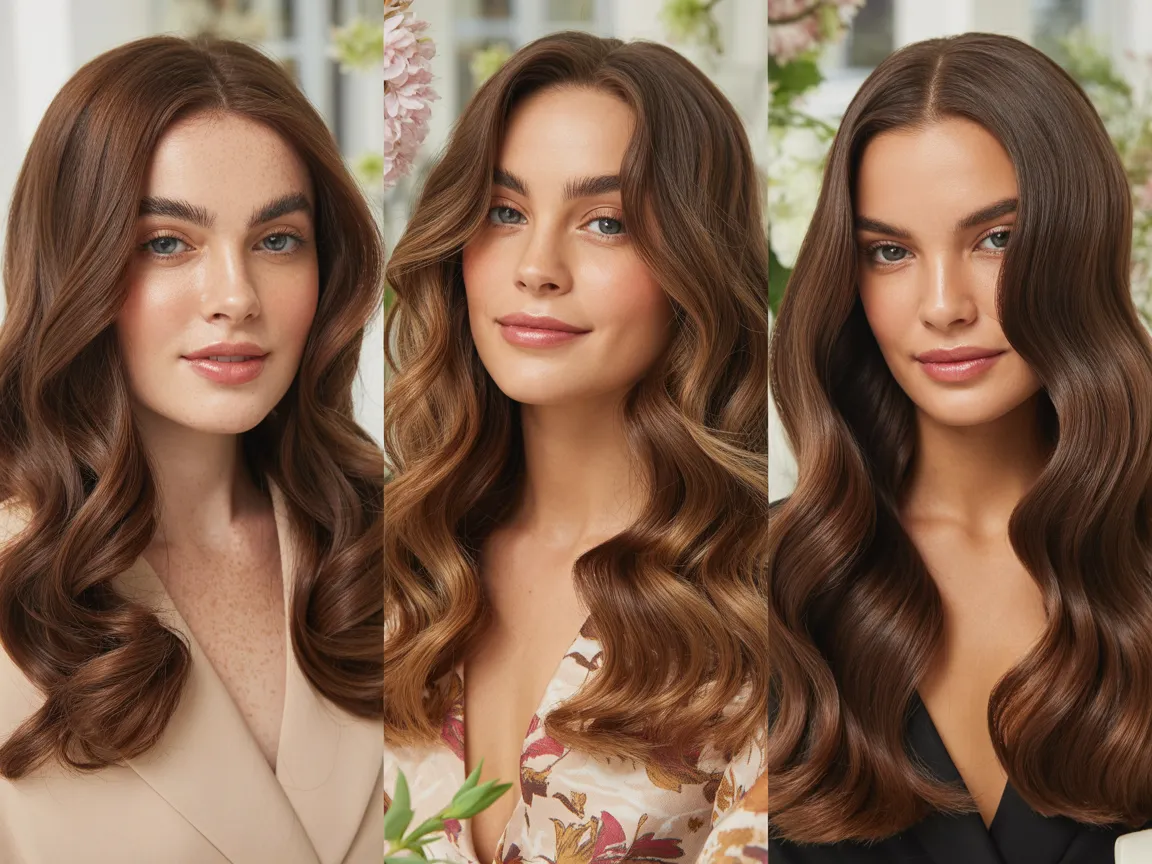
Brown hair rarely needs a full color change when the weather turns. What usually helps is a lighter, warmer, or shinier version of the shade you already have: a few caramel ribbons, a cocoa gloss, or brightness around the face that catches the longer days.
The 17 spring hair colors for brunettes below run from a lunch-break gloss to an afternoon of hand-painted balayage. The right one depends less on trends than on two things: your starting level, and how often you’ll realistically sit in a salon chair.
Quick answer: The best spring shades for brunettes sit no more than two or three levels lighter than your natural base. Choose the tone by undertone: warm undertones glow in caramel, honey, cinnamon and golden bronze, while cool undertones look sharper in mushroom brown, rose brown and cool chocolate. Skin depth is a separate question that mostly decides how much contrast you can carry. For a low-commitment change, ask for a demi-permanent gloss or a face-framing money piece instead of all-over highlights.
Colorists rate hair depth on a 1-to-10 scale, with 1 as black and 10 as the palest blonde. Most brunettes fall between level 2, the darkest brown, and level 6, which is technically dark blonde but reads to most people as light brown. Knowing your number makes every conversation with a stylist faster.
Spring shades look natural when the lightest pieces sit no more than two or three levels above your base. A level 4 brunette can reach a level 6 or 7 caramel in one appointment and still look soft. Going from level 3 to level 9 blonde is a separate, multi-session project, with several brassy in-between stages along the way.
Undertone is the color beneath the surface of your skin, and it’s a different thing from depth, which is simply how light or deep your skin is. To find it, check the veins on your inner wrist in daylight. Greenish veins usually mean warm, blue or purple veins usually mean cool, and a mix you can’t call either way usually means neutral. Two cross-checks help: gold jewelry tends to flatter warm undertones and silver cool ones, and a stark white T-shirt held near the face favors cool undertones while cream favors warm. Olive skin often reads neutral with a green cast and can wear both golden and ash browns. No single test is definitive, so trust the pattern across all three.
Warm spring hair colors include honey, cinnamon, copper and golden bronze; cool options include ash, mushroom, rose brown and violet-based chocolate. If you follow seasonal color analysis, the Light Spring and True Spring palettes lean toward the golden end of this list. Depth then decides contrast: on fair skin a two-level highlight already reads bright, while medium and deep skin can carry richer, higher-contrast placements such as caramel on espresso.
Color doesn’t lift color. If your lengths carry old box dye or a previous dark shade, a gloss or new permanent dye won’t make them lighter, and lightener can lift them unevenly, leaving visible bands. Tell your colorist about every dye, henna or keratin treatment from the last two years. Book a patch test before any permanent color and a strand test before lightening anything previously colored.
Salon prices swing a lot from city to city, but the ranking barely changes. A demi-permanent gloss is the cheapest service and fades gradually over roughly four to six weeks. A money piece or partial foils cost more. Full balayage and babylights sit at the top for both price and chair time, though a soft, lived-in placement can often go three months or longer between visits. For high-shine salon shades with that quiet, polished finish, see our roundup of expensive brunette hair color ideas.
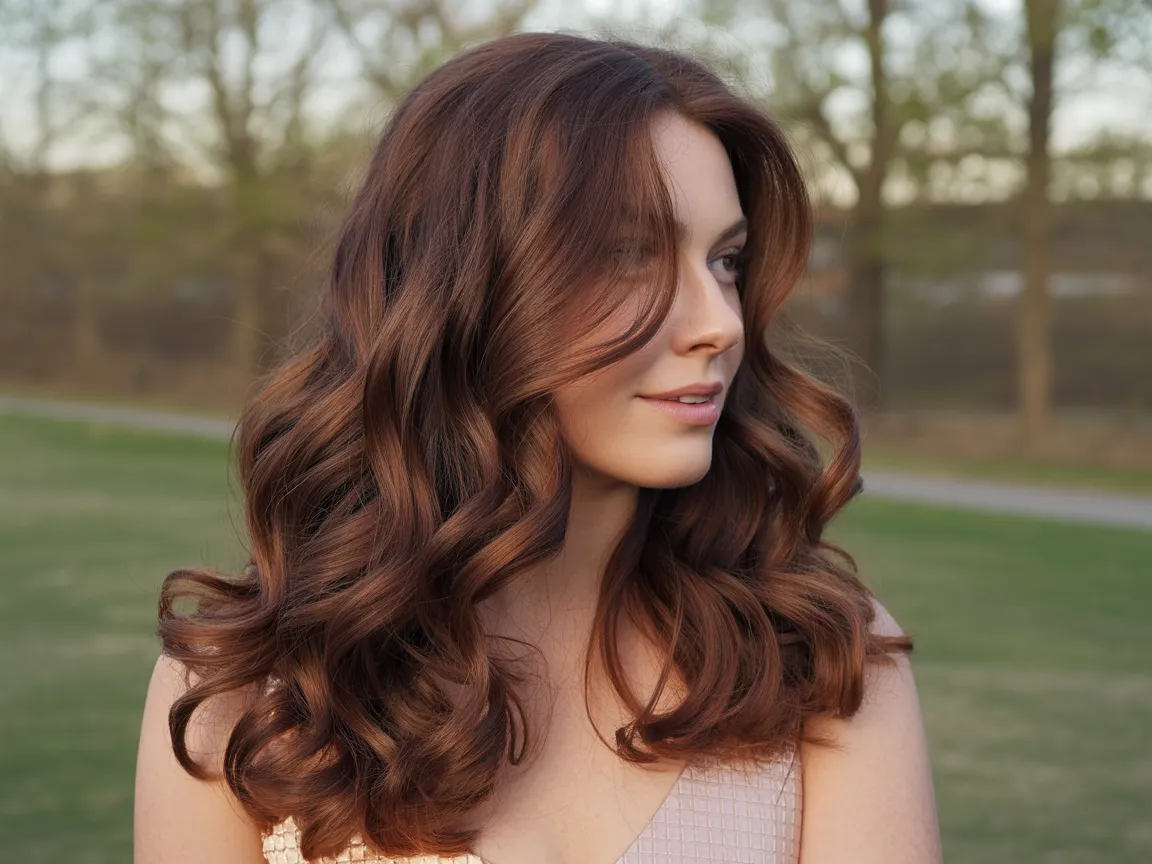
Warmth without red is the point of this one. A medium mocha base around level 4 or 5 gets thin cinnamon ribbons through the mid-lengths and ends, each about one level lighter and carrying a copper-brown tone. Warm and neutral undertones wear it best, and it makes green, hazel and amber eyes stand out.
Copper fades faster than neutral brown, so a copper-tinted gloss at the end of the appointment, refreshed every four to six weeks, keeps the ribbons from sliding into flat orange. Between visits, a copper-depositing conditioner used every week or so does the same job at home. Long layers on medium to thick hair give the ribbons room to show.
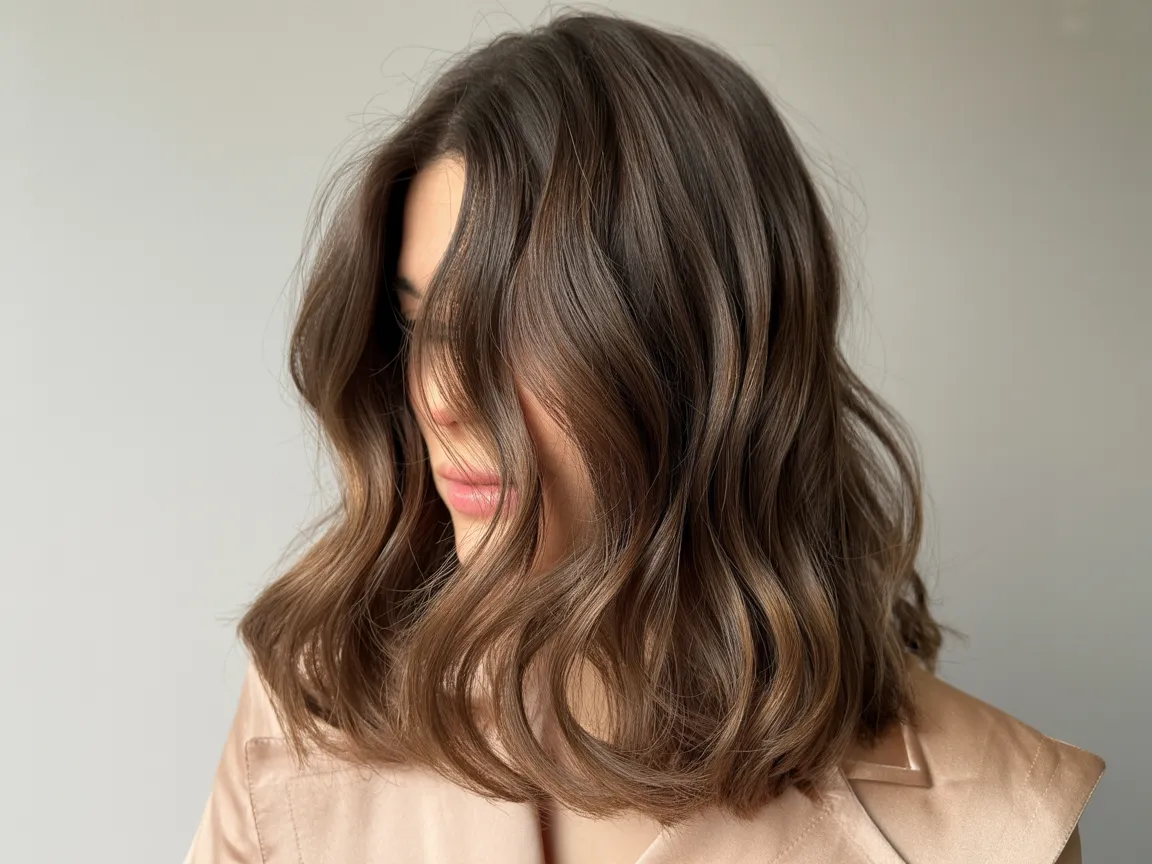
For a brunette who has never had color, start here. A cocoa melt leaves the natural root alone and blends it into lighter milk-chocolate ends, typically level 3 or 4 at the scalp shading to level 5 at the tips. A root smudge, which is a toner brushed over the base, blurs any line so grow-out never shows as a stripe.
Because nothing new is placed at the root, many people stretch to three months or more between visits. Keep the gap between the two shades small: past three levels, the result starts to look like ombré rather than a melt. On fine or easily dried-out hair, ask whether the ends can be done with a demi-permanent formula.
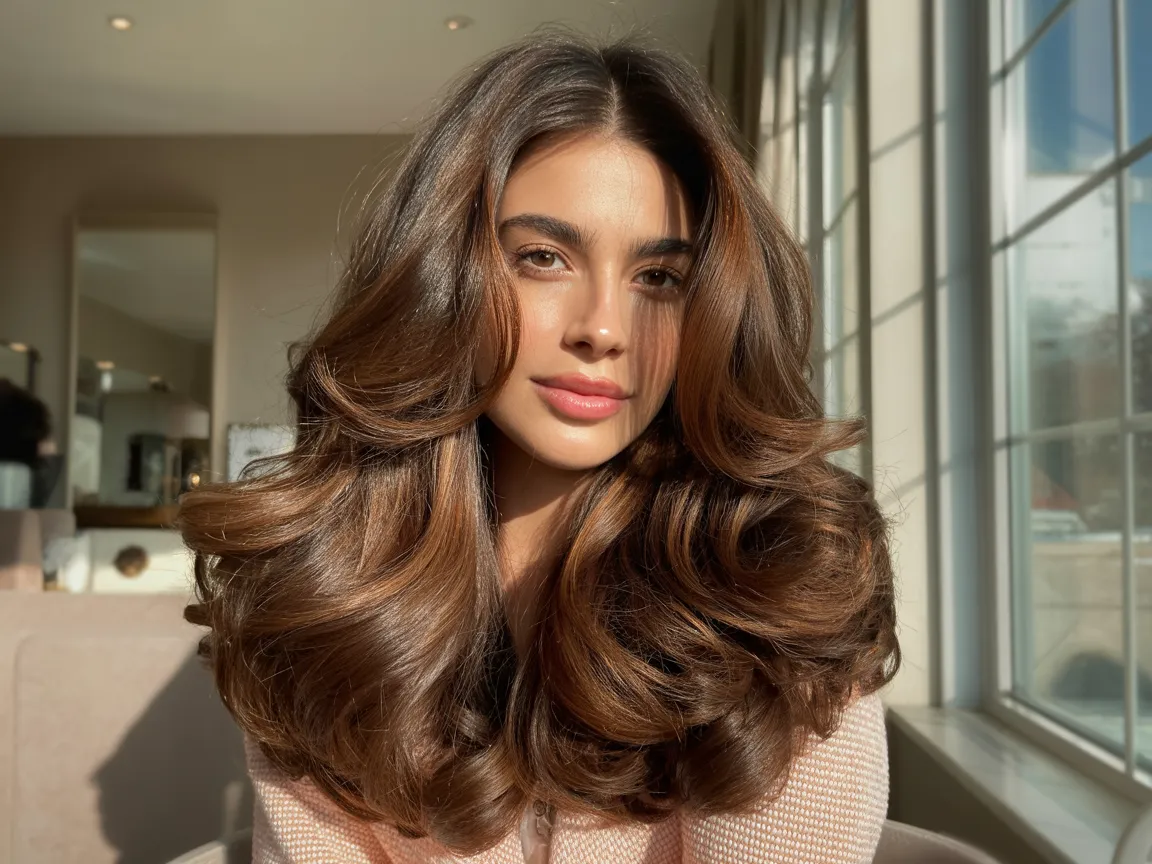
Level 2 or 3 espresso under hand-painted caramel at level 6 or 7 is the highest-contrast look on this list, and that contrast is why it photographs so well. Most of the caramel goes through the ends and around the face. Deep and olive skin tones carry it especially well.
Very dark hair turns red, then orange, as it lifts, so this one does require lightener and a colorist who knows exactly when to stop and how to tone. At home, a blue shampoo once a week cancels orange before it builds. For more placement ideas, browse our caramel balayage looks.
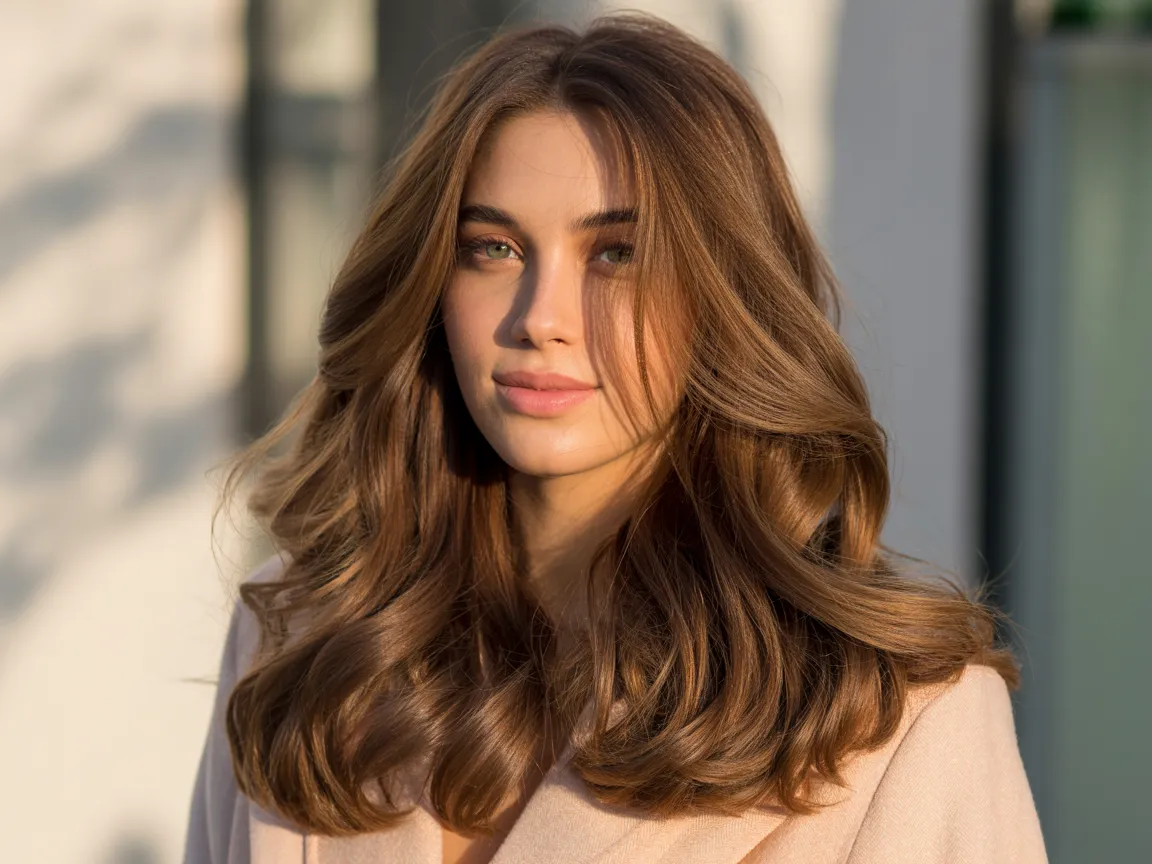
Chestnut is a warm brown with a slight red cast, around level 5. Fine honey babylights at level 7, concentrated along the hairline and the top layer, copy the way sun lightens hair: bright from the front, soft from the side.
Babylights are slow work in very thin sections, so book a long appointment and expect a higher bill than standard foils. The payoff is a blurry grow-out. On fine hair, where chunkier highlights can look stripy, these tiny pieces are the safer bet, and they flatter fair to medium skin with warm or peachy undertones. A gloss in the same appointment adds extra shine.
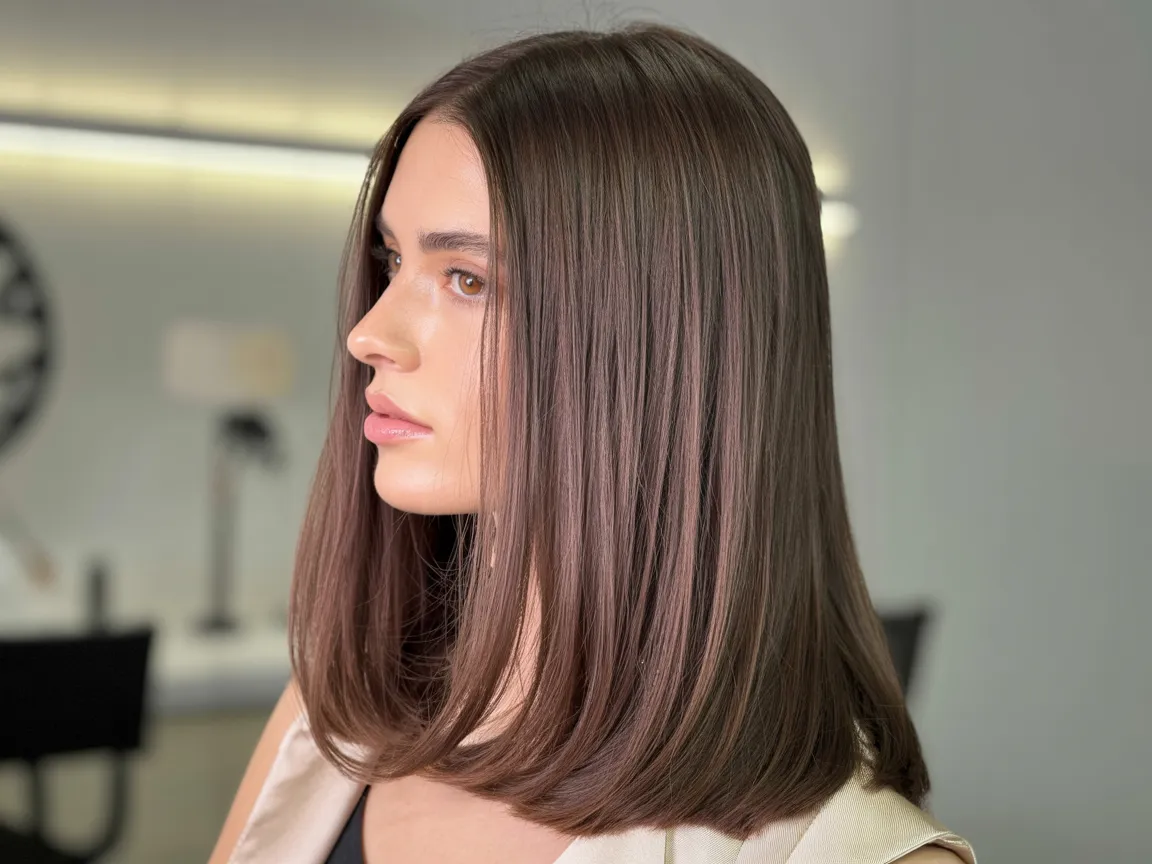
Not every spring change has to go lighter. Smoky walnut is a neutral-to-cool level 5 brown with ash-brown lowlights woven under the top layer. The darker pieces create shadow between layers, so a shag or face-framing cut looks fuller and its shape shows even when hair is worn straight.
Cool and olive undertones get the most from it, as does anyone who wants depth rather than brightness, and it needs no lightener at all. Ash drifts warm over time, so a blue shampoo every week or two and a cool gloss at each cut keep it smoky.
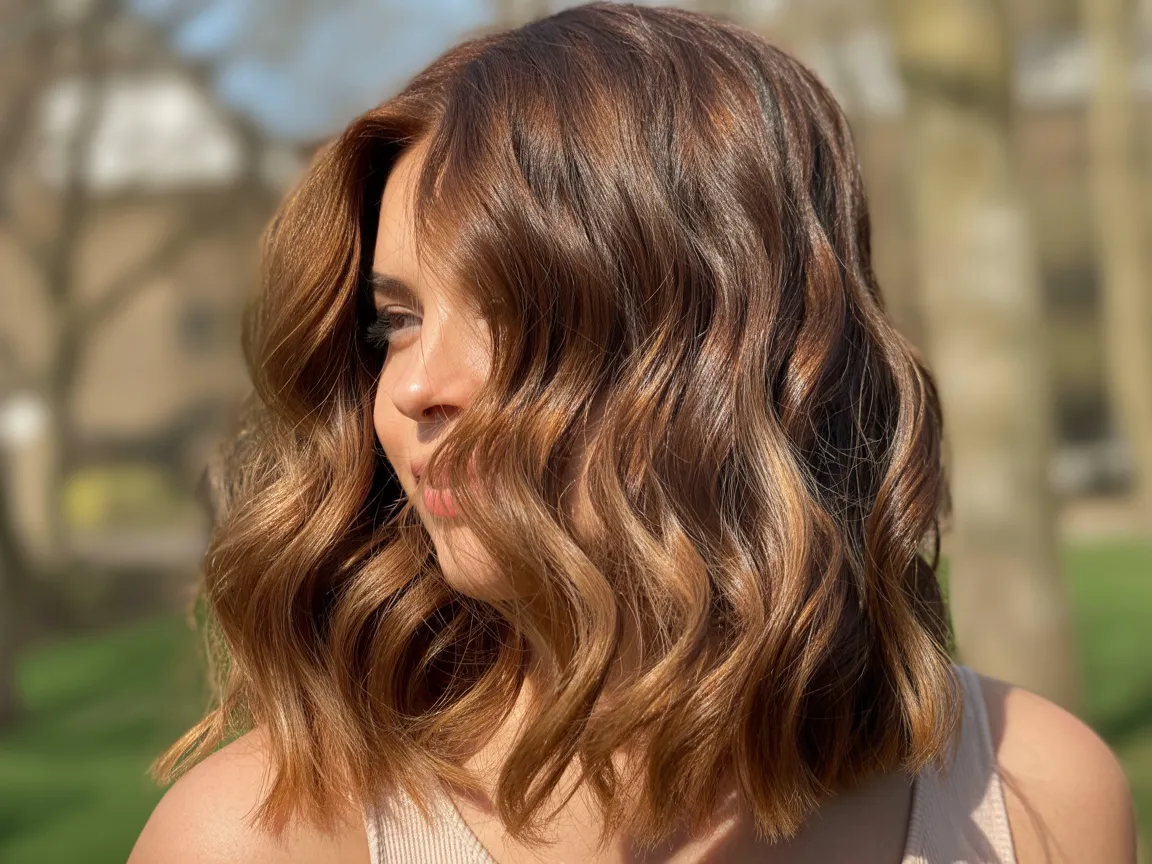
Picture maple syrup held up to a window: a level 5 to 6 golden brown with a whisper of red. On waves and curls, every bend catches light differently, so the warmth shows in layers rather than as one flat color.
It can be a single process or include a few slightly lighter pieces at the surface, and warm and neutral skin wear it best. Heat dulls warm tones, so apply a heat protectant before every blow-dry, and swap daily flat-ironing for a 1.25-inch curling iron or overnight braids. Any lightening on curly hair should be gentle, ideally with a bond builder mixed into the formula.
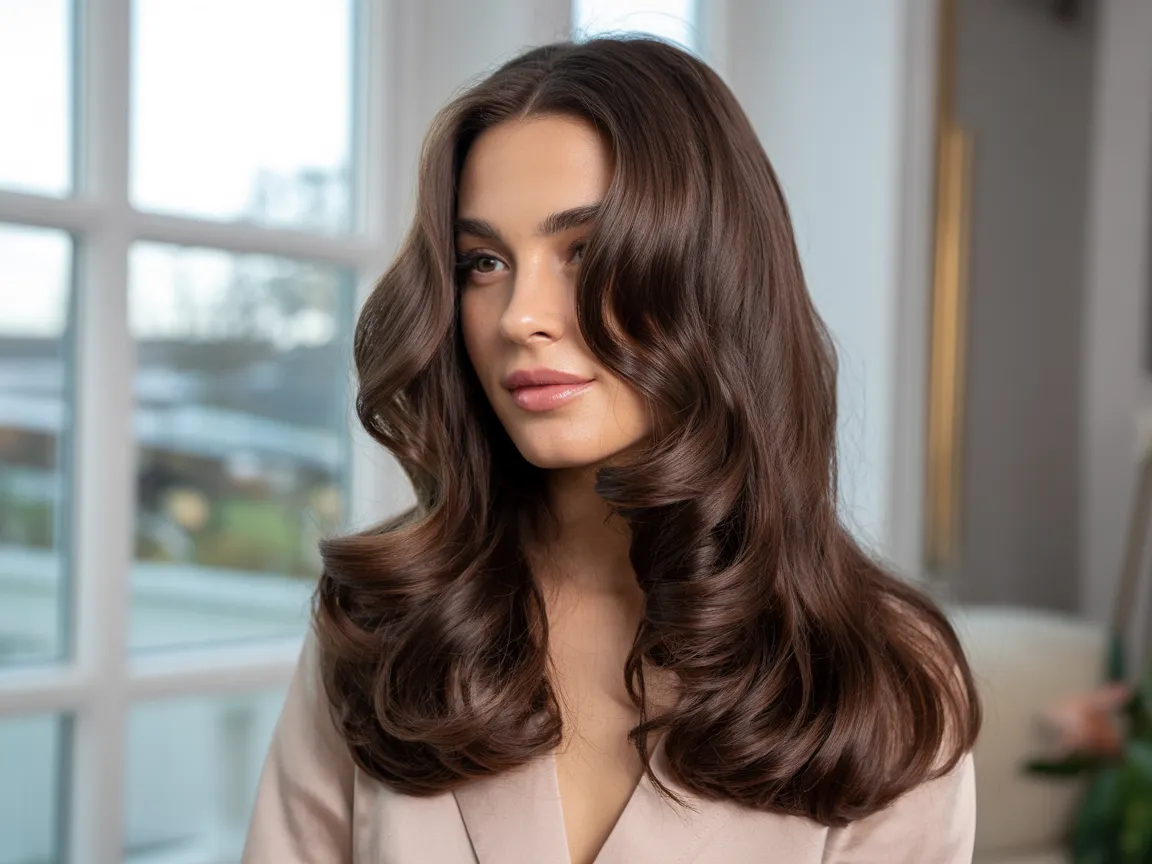
No highlights, no lightener: just an all-over neutral chocolate at about level 4, finished with a clear or chocolate gloss. The shine comes from a smooth cuticle rather than contrast, so hair stays in its healthiest state, and any undertone can wear it.
Long, straight or blown-out hair shows it best, because light can run the full length. A demi-permanent formula also softens a few early grays without the harsh regrowth line of permanent dye. Rinse in cool water, skip daily washing, and rebook the gloss every month to six weeks to hold the velvet finish.
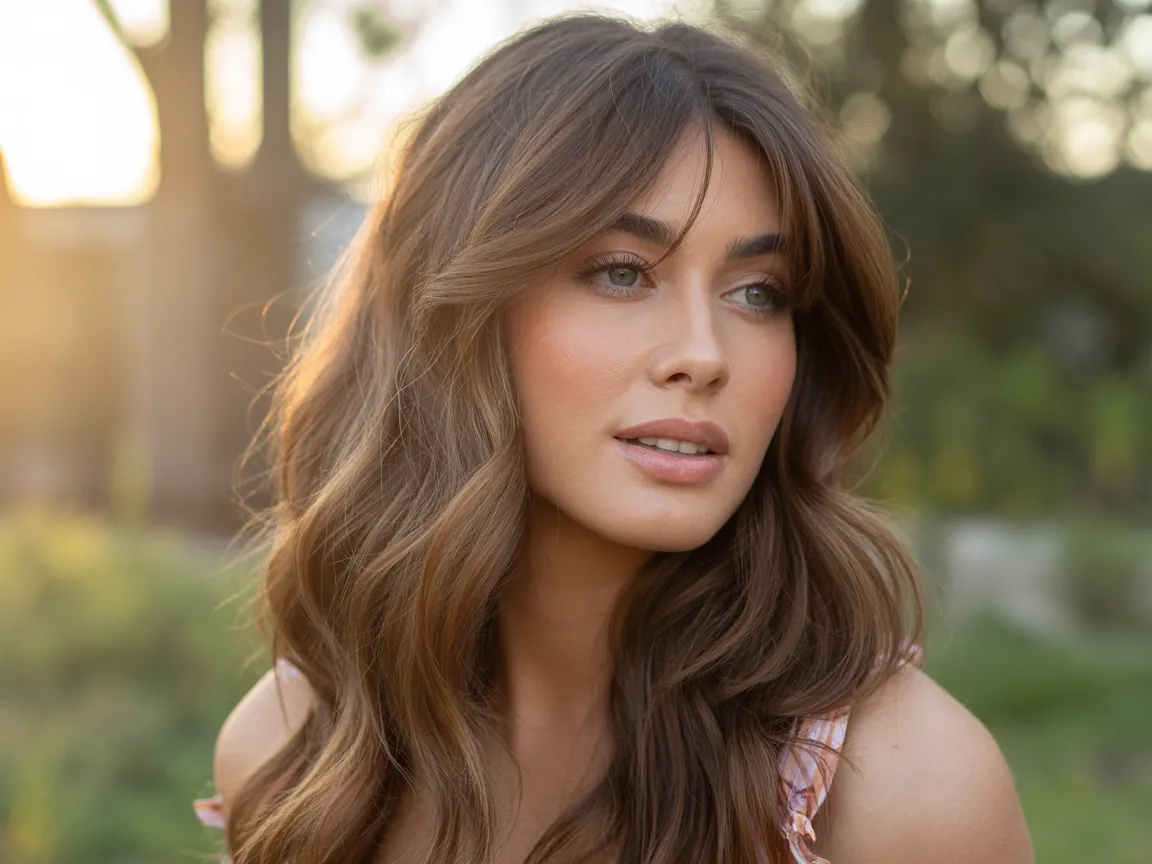
If your natural light brown looks mousy by the end of winter, this deposit-only gloss is the fix. Made for hair already around level 6, it adds a golden-beige tone that looks sunlit without changing depth. Nothing is lifted, so there’s no damage and no brass to fight.
Neutral and warm undertones on fair to medium skin suit it most. Salon glosses such as Redken Shades EQ are common for the job, and an at-home gloss like Kristin Ess Signature Hair Gloss can stretch the tone between visits. Results are most predictable on hair with no previous color, and the fade is gradual over four to six weeks.
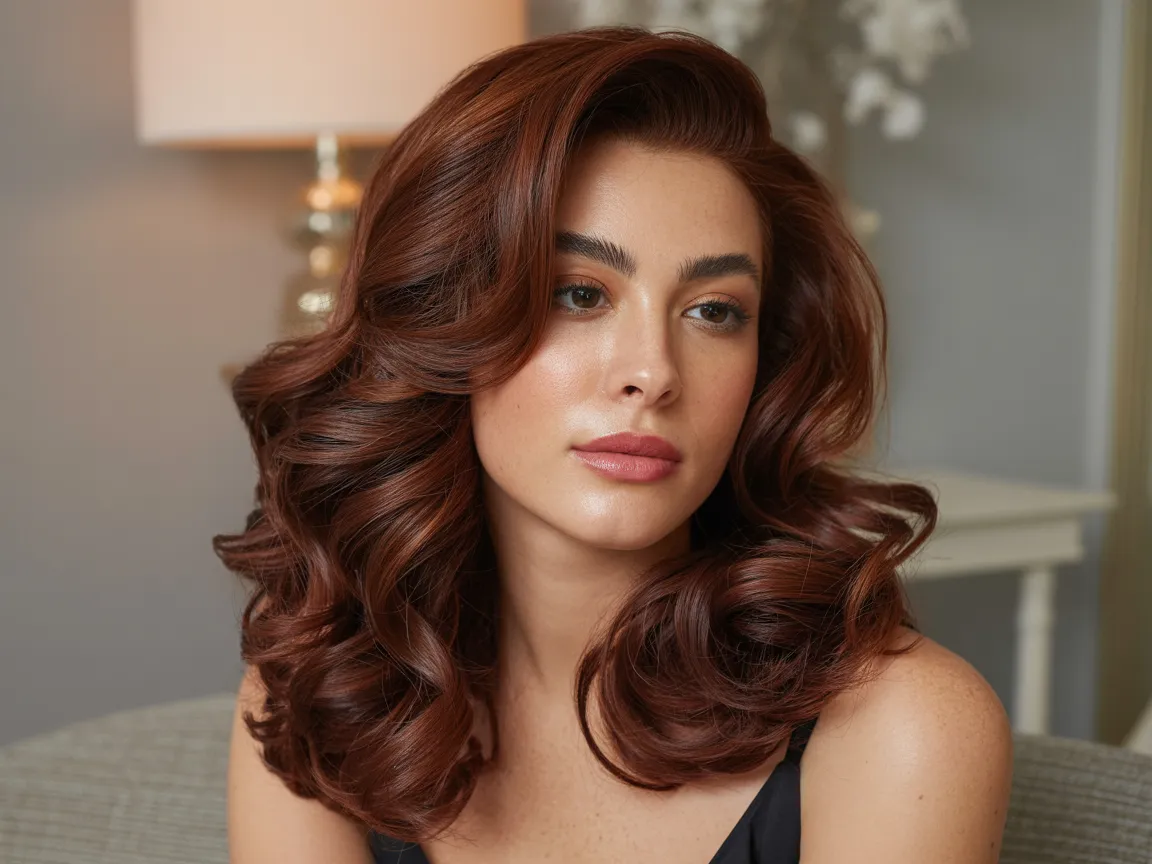
Indoors, mahogany reads as deep brown; in spring sunlight it shows a wine-colored glint. The shade sits around level 4 with red-violet undertones and gives dark brown hair richness without bleach. Deep and medium-deep skin, and cool or neutral undertones, wear it especially well.
Red fades faster than most tones, so aftercare matters more here than with neutral browns: cool water, a sulfate-free color-safe shampoo, and a mahogany or red depositing conditioner once a week. On natural level 2 or 3 hair, permanent color can lift the one or two levels needed and deposit the red-violet in one step. If you’re already around level 4, a demi-permanent gloss is enough.
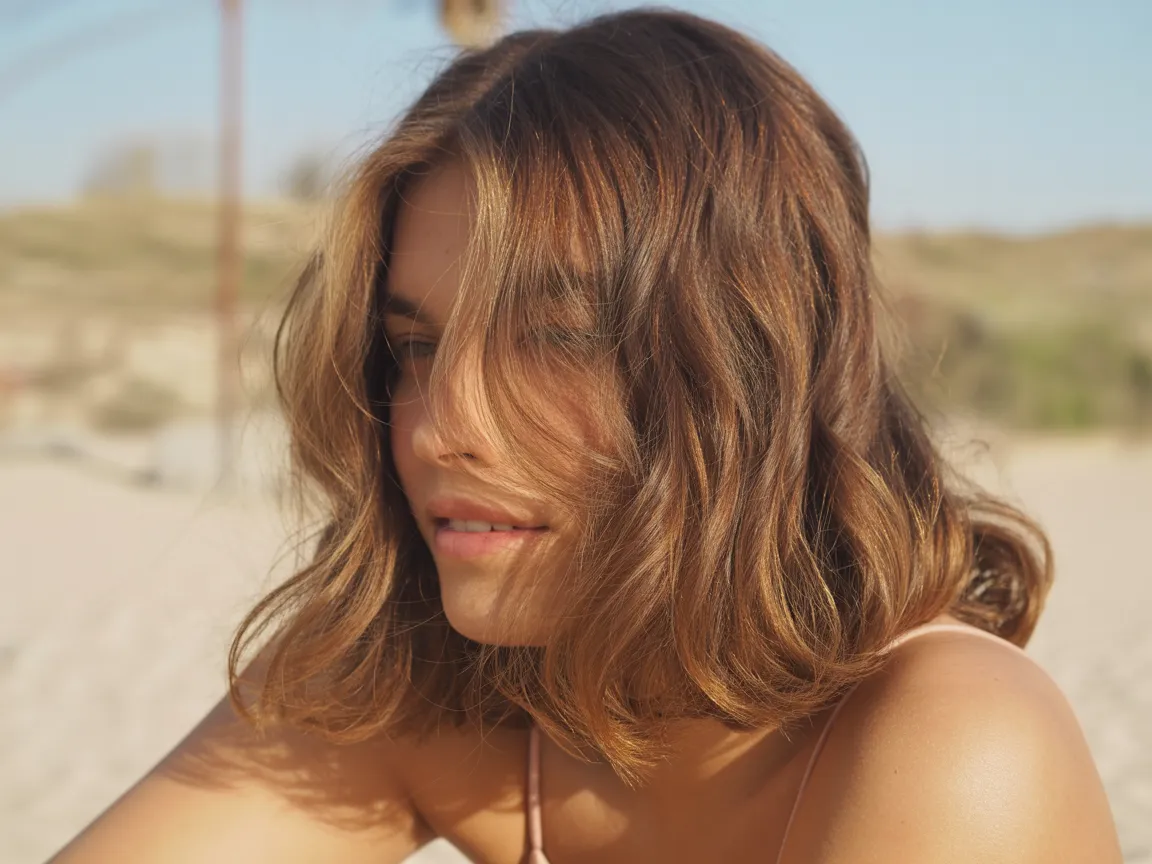
Think of light brown hair after a summer outdoors: natural root, with the ends and top layer brightened to a sandy, neutral-beige level 7 or 8. The lightener is painted on, heaviest at the tips, so the result reads beach rather than salon.
Natural level 5 or 6 hair is the sweet spot, because the jump is small, and it looks best on mid-length to long hair with neutral or cool-neutral undertones. Swimmers should wet hair with tap water and add a leave-in conditioner before getting in a pool, since lightened ends are porous and can pick up a greenish cast from copper and other metals in the water.
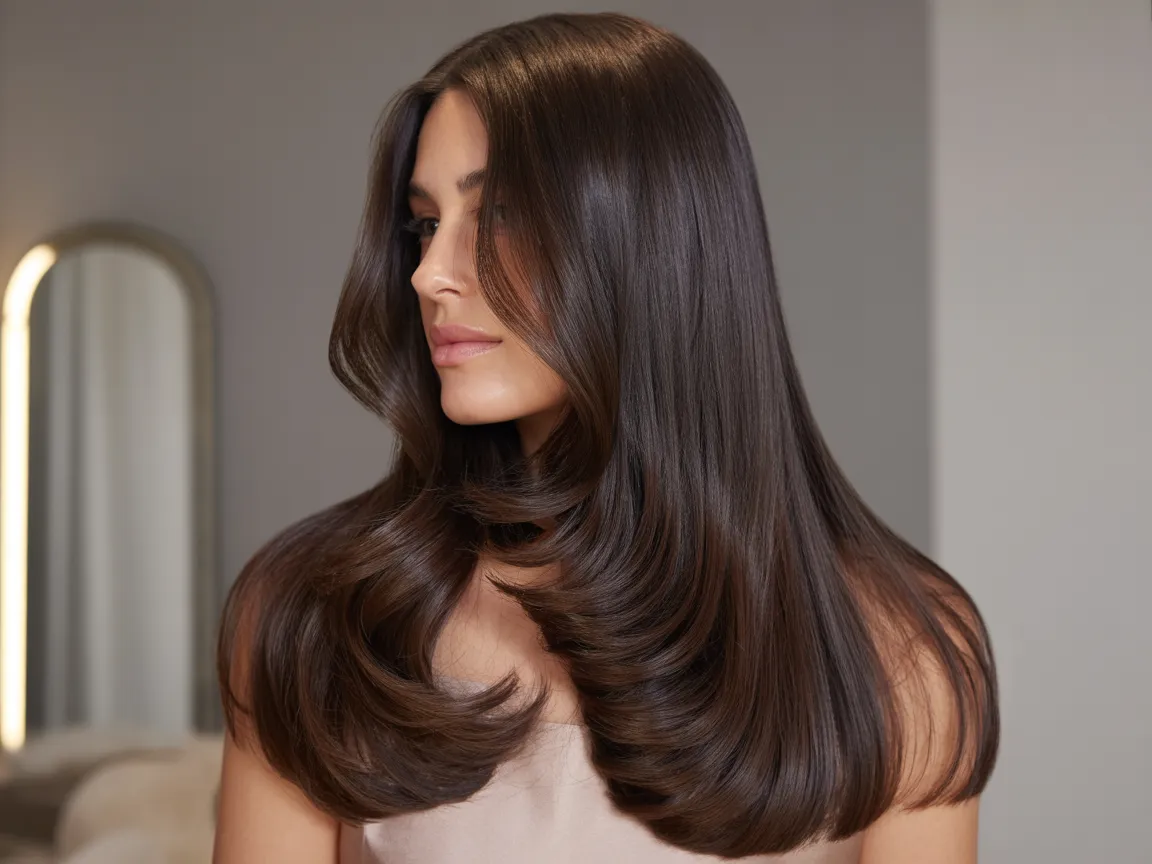
The most playful option here stops short of fashion color. A medium brown glazed with a pink-mauve tint shifts from brown in shade to dusty rose in sunlight. On natural level 5 or 6 the rose shows clearly; on darker hair it appears only as a soft sheen.
Cool and neutral undertones suit it best, and it’s especially pretty with fair skin and pink cheeks. Pink pigment washes out quickly, often within a few weeks, so treat it as a seasonal experiment. A rose-tinted conditioner keeps it going, and when you’re done, it simply fades away.
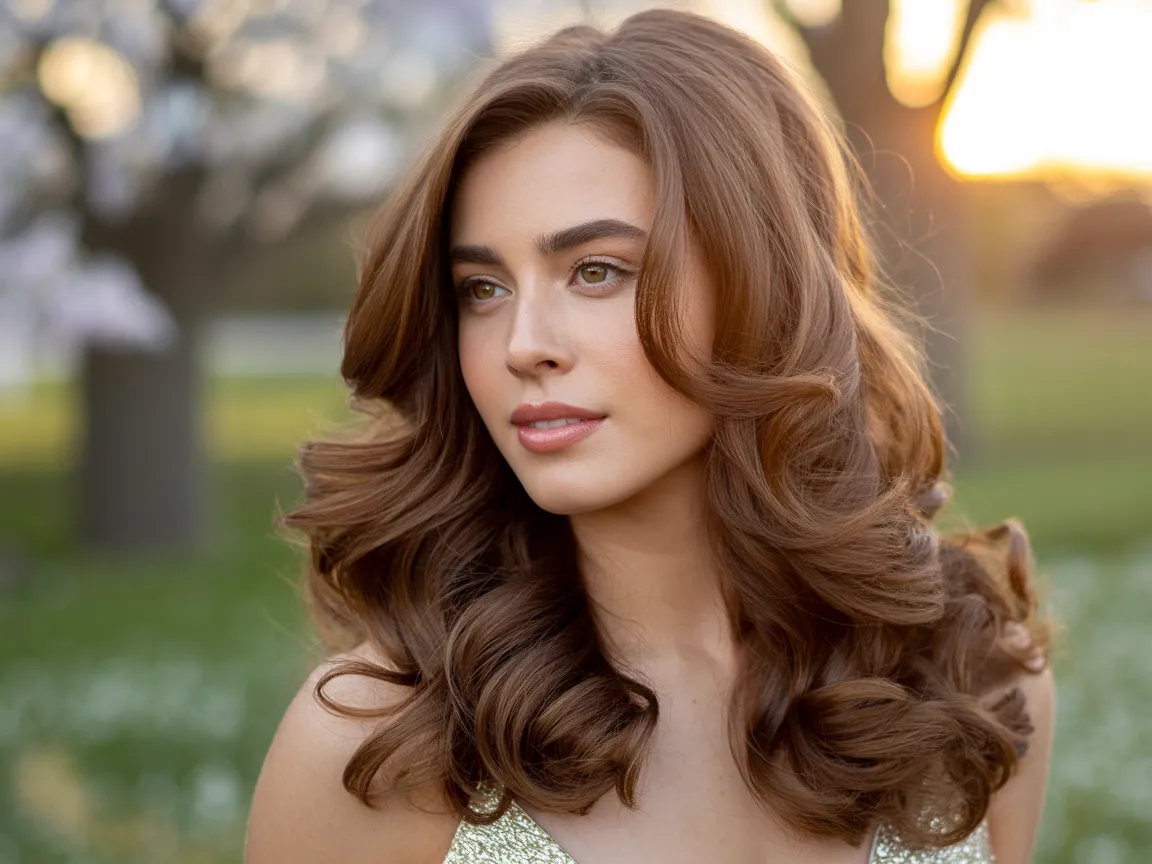
Brunettes whose hair turns brassy every spring should look at mushroom brown, the cool answer to caramel. It’s an earthy taupe between brown and gray-beige, usually level 5 or 6, with fine ash babylights a level or two higher.
Getting it right takes skill. Brown hair lifted to level 6 or 7 exposes orange, and the toner has to neutralize that before any taupe appears. Plan on a toner refresh about every six weeks plus a blue or blue-violet shampoo at home. Cool, olive and neutral undertones suit it; warm, peachy skin can look washed out beside it.
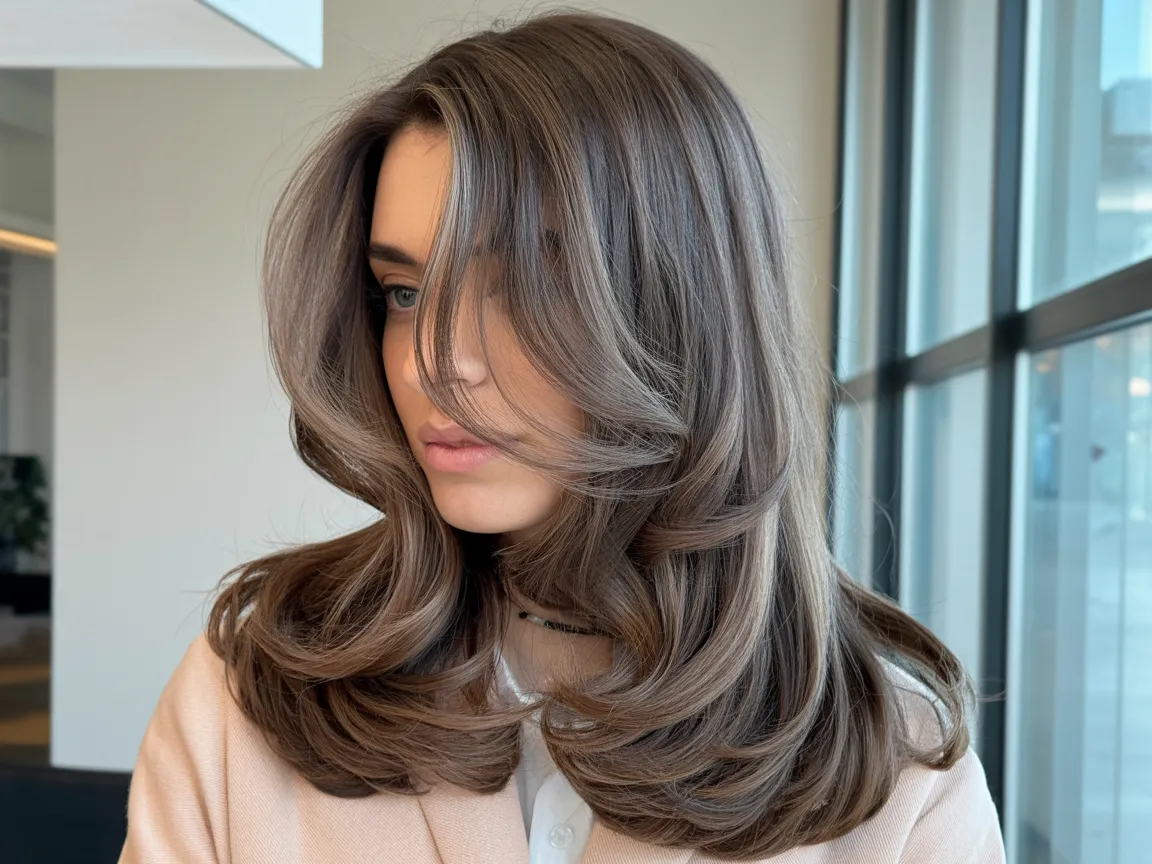
Only the two front sections that frame the face are lightened here, to a warm hazelnut at level 6 or 7, while the rest of the hair stays natural. It brightens the complexion the way a full head of highlights would, at a fraction of the time and cost.
As a first lightening service it’s hard to beat, and on short hair it does even more, since a bob or pixie puts those front pieces on display. It pairs well with curtain bangs. Keep the pieces about two levels above your base, because stark blonde front sections on dark hair date quickly. Touch-ups are fast, since only two small areas grow out.
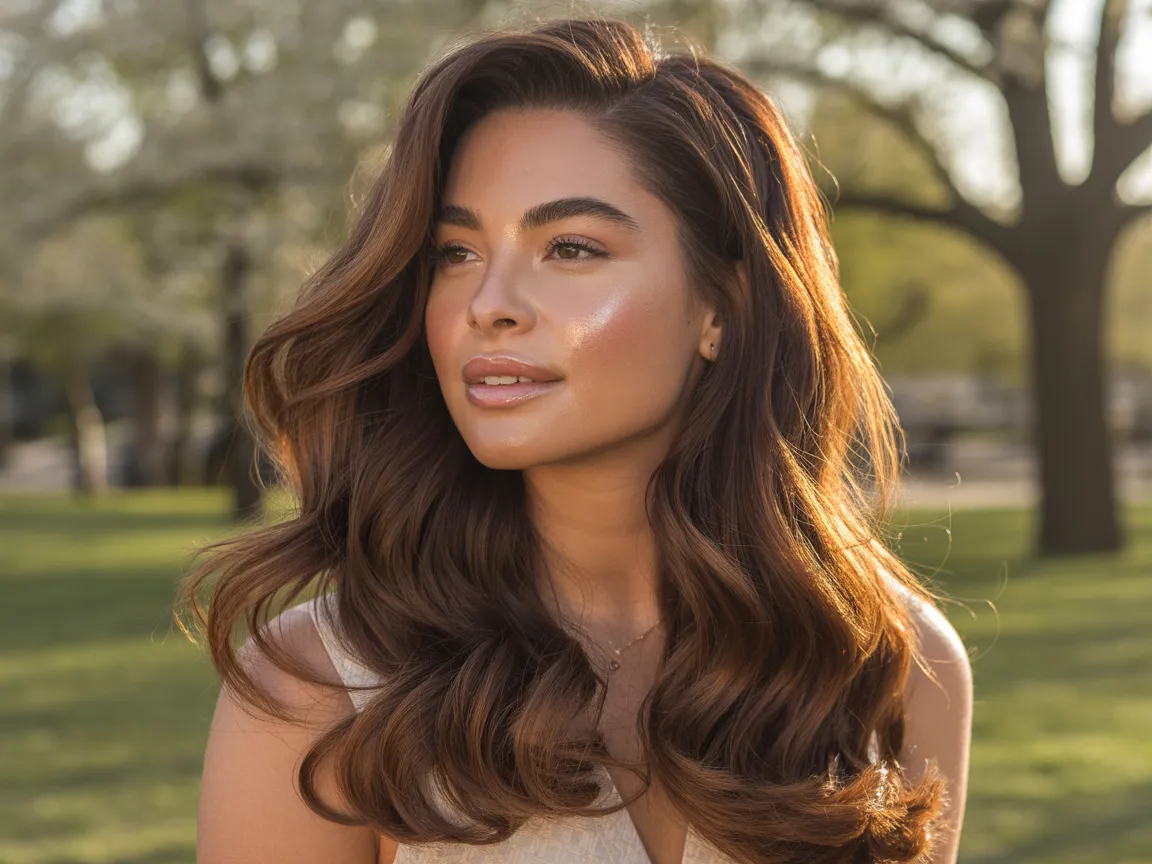
Tuck your hair behind an ear and the burgundy flashes through; let it fall straight and the look is mostly brown. Chocolate cherry keeps a deep chocolate base and adds cherry-burgundy lowlights or peekaboo panels under the top layer, which makes it a strong pick for dark brunettes who want color without much lightening.
Cool and neutral undertones and medium to deep skin wear it richly. On level 3 or 4 hair, a high-lift red can often make the panels show without bleach; on level 1 or 2, expect a little lightener on those sections first. As with mahogany, red fades fast, so wash in cool water and go easy on hot tools.
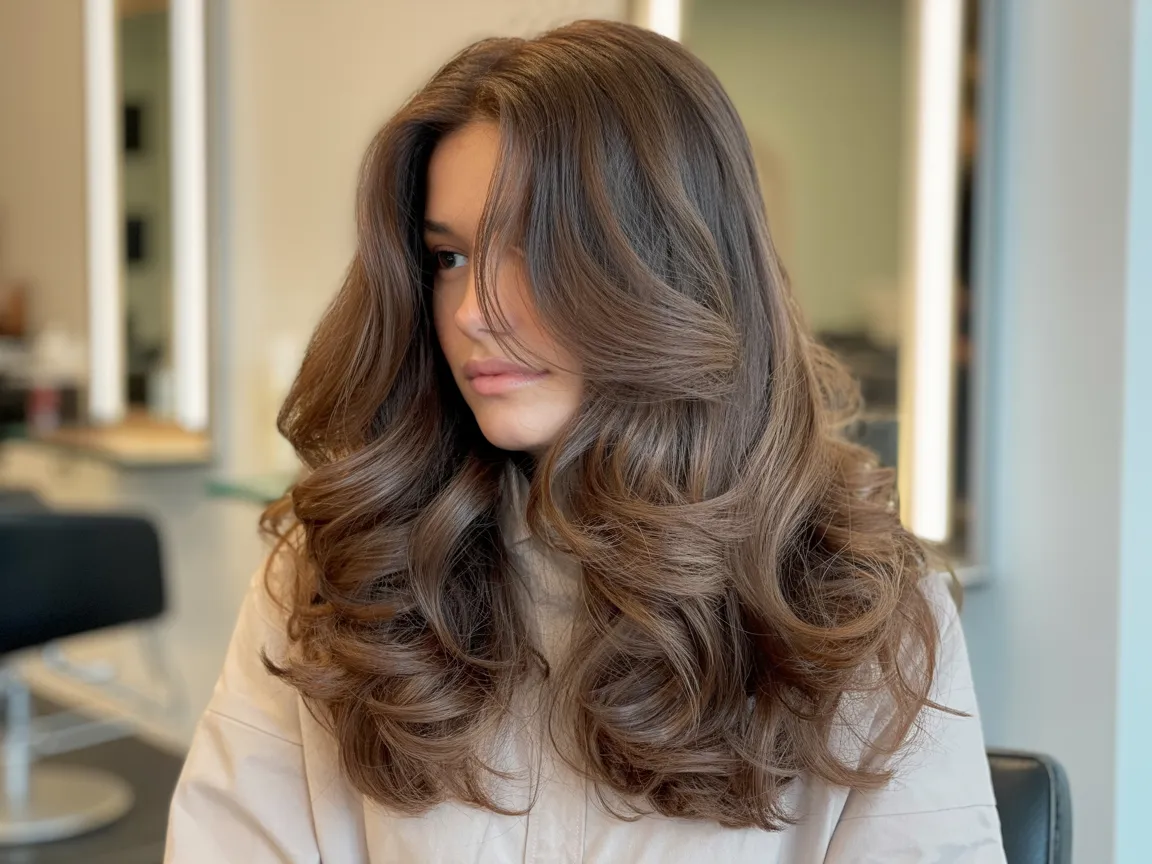
Like copper but not ready for red? Bronze sits between copper and golden brown. A level 5 medium brown base gets hand-painted bronze at level 6 or 7, sweeping from the mid-lengths down, and the metallic warmth flatters warm and golden undertones, brown or hazel eyes, and long layers.
Placement should be soft and sweeping, never striped, and the root should stay natural so it grows out well. A gold or copper gloss at your next cut keeps the bronze from fading to plain light brown.
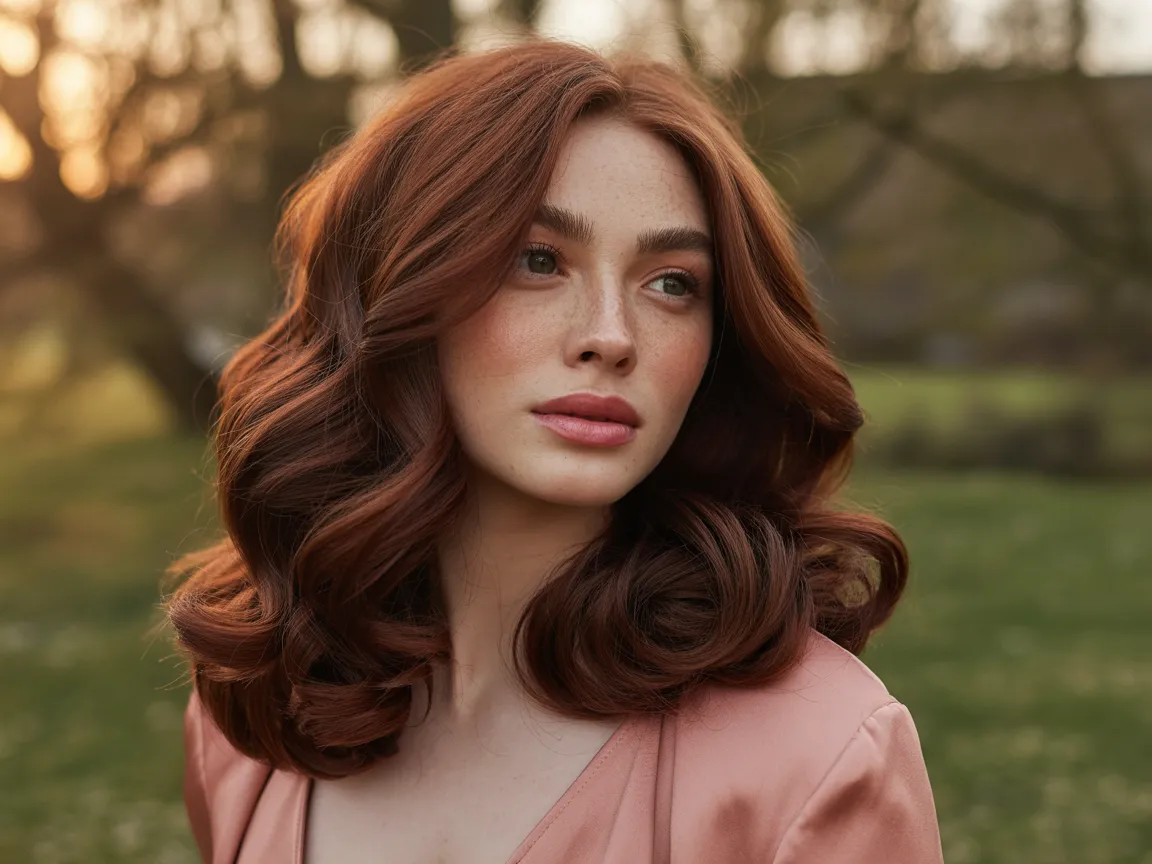
Sometimes called ecaille, tortoiseshell layers several warm tones at once: chocolate around level 4 at the root, caramel through the middle, honey and gold at the ends. Unlike a two-tone balayage, it uses multiple formulas, so no single highlight dominates.
Thick or medium-thick hair is needed to show every tone, and the job suits a colorist comfortable mixing several formulas in one session. Bring reference photos and agree on how light the ends should go. Since the root stays dark, grow-out is soft, and regular glosses keep the warmer tones from fading unevenly. Warm and neutral undertones suit it best.
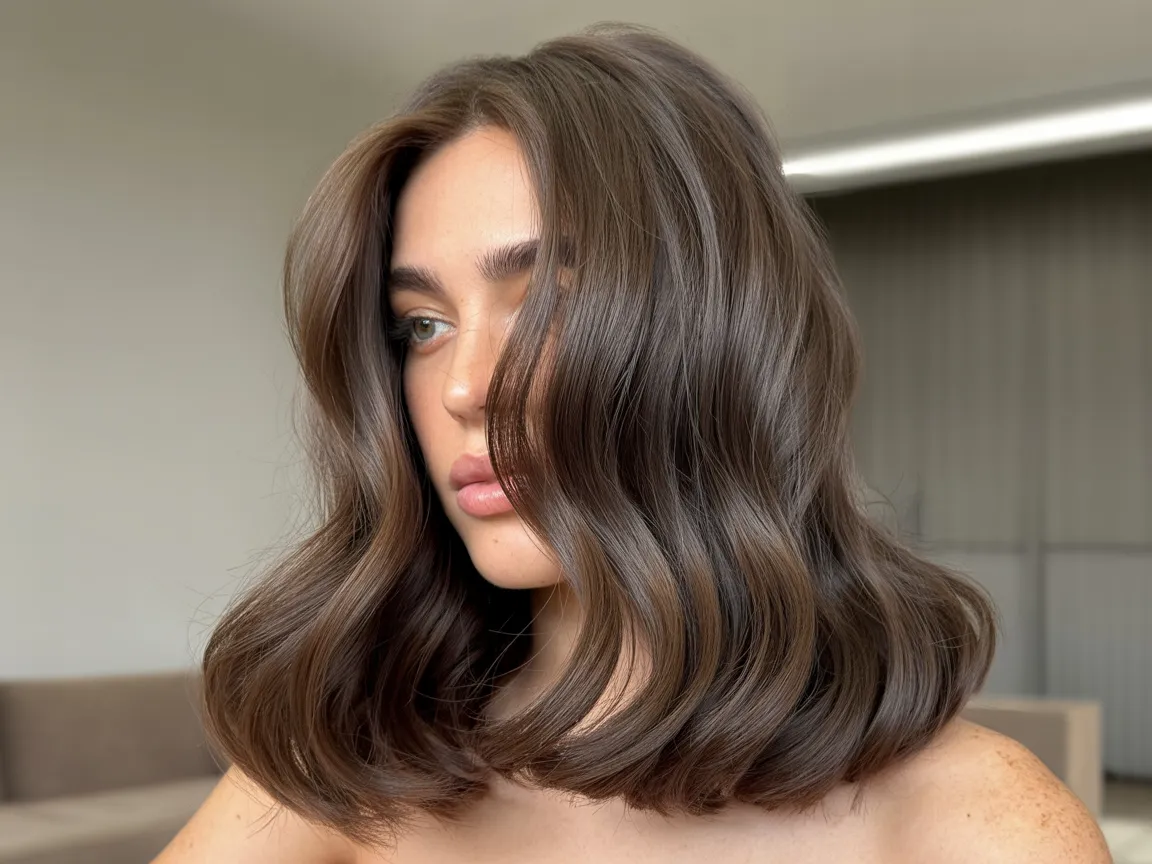
When gray starts showing, many brunettes reach for a solid dark dye and then fight a white line at the part every few weeks. Gray blending uses fine babylights and lowlights plus a demi-permanent gloss to soften gray strands into the brown rather than covering them completely.
The finished shade usually sits a level lighter than the color you wore in your twenties, which looks softer as skin changes. Multi-tonal brown also bounces more light around the face than flat, very dark color, which is why many colorists favor it for mature skin. Because regrowth blends in, appointments can be spaced further apart.
| Shade | Base level | Undertone | Lightener? | Upkeep |
|---|---|---|---|---|
| Cinnamon Mocha Glow | 4–5 | Warm, neutral | Light lift | Gloss every 4–6 weeks |
| Soft Cocoa Melt | 3–4 | Any | Minimal | Low, 3+ months |
| Espresso Caramel Blend | 2–3 | Warm, olive | Yes | Toner + weekly blue shampoo |
| Chestnut Honey Shine | 5 | Warm, peachy | Yes | Medium |
| Smoky Walnut Layers | 5 | Cool, olive | No | Cool gloss at each cut |
| Maple Brown Waves | 5–6 | Warm, neutral | Light lift | Medium |
| Velvet Chocolate Flow | 4 | Any | No | Gloss every 4–6 weeks |
| Toasted Almond Gloss | 6 | Warm, neutral | No | Fades over 4–6 weeks |
| Mahogany Brown Glow | 4 | Cool, neutral | No | High (red fades) |
| Sandy Brunette Blend | 5–6 | Neutral, cool-neutral | Yes | Low to medium |
| Rose Brown Glaze | 5–6 | Cool, neutral | No | Lasts a few weeks |
| Mushroom Brown Babylights | 5–6 | Cool, olive, neutral | Yes | Toner about every 6 weeks |
| Hazelnut Money Piece | 4–5 | Warm, neutral | Yes (small area) | Low |
| Chocolate Cherry Lowlights | 1–4 | Cool, neutral | Little or none | High (red fades) |
| Golden Bronze Balayage | 5 | Warm, golden | Yes | Medium |
| Tortoiseshell Brunette | 4 at the root | Warm, neutral | Yes | Medium |
| Gray-Blending Brunette Glow | Varies | Any | Light lift | Low |
Brown hair holds natural red and orange pigment. Once it’s lightened, or once toner fades, those warm tones come forward, and spring and summer sun speed things up. Even well-toned spring hair colors for brunettes drift warmer within a few weeks, but a few habits slow that down noticeably.
Purple shampoo targets yellow tones in blonde hair. Brunettes are usually fighting orange, which blue cancels, so a blue shampoo such as Joico Color Balance Blue or Matrix Brass Off is the better match. Once a week is plenty; daily use can leave brown looking dull and flat.
UV fades both natural and dyed pigment, so a hat or a leave-in with UV filters earns its place on long days outside. Protect hair before blow-drying or curling, and keep flat irons at a moderate temperature. On pool days, use the same pre-swim rinse described under the sandy brunette look.
A gloss between bigger appointments is the quickest way to revive a fading shade: it brings back tone and shine in a short visit and adds no lift. If your hair has been lightened several times, ask about a bond-building treatment such as Olaplex No.3, which is applied at home before shampooing.
Dimension shows best on layers, and the shorter the hair, the more each placement matters. On a bob or pixie, a money piece or babylights near the part do most of the work; on long hair, balayage and melts have room to move. You can browse more cuts and color pairings in our hairstyle ideas section.
Spring hair colors are lighter, warmer, or brighter versions of everyday shades that suit longer days and stronger sunlight. For brunettes that usually means caramel or honey highlights, golden bronze, cinnamon, rose brown, or a fresh gloss. In seasonal color analysis, the term also describes the golden, warm palette recommended for people typed as a Spring.
For most brunettes, the most flattering color stays a couple of levels from their natural base and matches their undertone. Warm undertones look best with caramel, honey and copper-brown; cool undertones look best with ash, mushroom and violet-based chocolate. Neutral undertones can wear almost any brown, so choose by upkeep.
Brunette trends lean toward dimensional cocoa, golden bronze, cinnamon and copper-brown, plus single shades with a high-shine gloss. Low-maintenance placements, such as root melts and face-framing money pieces, stay popular because they grow out softly. Cool mushroom brown is the main alternative for people who want to avoid warmth.
Yes, within limits. A gloss can add golden or beige tone that makes brown look lighter, and permanent color can lift untreated hair about one or two levels, with high-lift formulas going a little further on lighter browns. It can’t lift hair that has already been dyed, though, and it won’t take dark brown to blonde. Anything beyond that needs lightener.
A soft brown about one level lighter than your younger natural shade tends to look fresher than very dark, flat color. Multi-tonal results from gray blending, babylights and a gloss reflect more light and soften regrowth. Very dark solid dye can look harsh against mature skin and creates a sharp root line as gray grows in.
A demi-permanent gloss usually lasts about four to six weeks, fading gradually rather than leaving a line. It goes faster with frequent washing, hot water, clarifying shampoos and swimming. Red, copper and pink glosses tend to fade sooner than neutral and golden brown ones, so book refreshes a little more often for those shades.
Start with your undertone and your honest appetite for salon visits, then pick from the shades that fit both. If you’re ready for a bolder warm change, our next guide to spring red hair color ideas covers copper, auburn and strawberry shades that build on the same principles.