Physical Address
304 North Cardinal St.
Dorchester Center, MA 02124
Physical Address
304 North Cardinal St.
Dorchester Center, MA 02124


A jacket does more than keep you warm. It sets the tone of the outfit: a leather moto makes jeans look sharper, a trench makes a plain sweater look finished, and a denim jacket thrown over a sundress turns it into something you can wear on a cool evening. Pick the right one and a basic outfit suddenly looks planned.
These 15 jacket outfits for women run from light spring layers to cold-weather parkas, and every look comes with the temperature range it handles best, so you can match the jacket to the forecast as well as to your plans.
Quick answer: Match the jacket’s length to your bottoms: cropped jackets with high-rise pants, hip-length jackets with straight jeans or skirts, and long coats with slim or straight shapes. Choose the jacket weight for the temperature, keep the layer underneath simple, and check that the shoulders fit and the sleeves stop at your wrist.
Most jacket outfits fail for one of three reasons: the length fights the bottoms, the fit is off at the shoulders, or the jacket is the wrong weight for the day. Sort those out and almost any combination works.
The shoulder seam should sit on your shoulder bone, unless the jacket is designed with a dropped, oversized shoulder. The sleeve hem belongs at the wrist, or a little past it on a coat. Finally, try it on over the thickest layer you plan to wear: if you can’t cross your arms in it over a sweater, it’s too small for fall and winter.
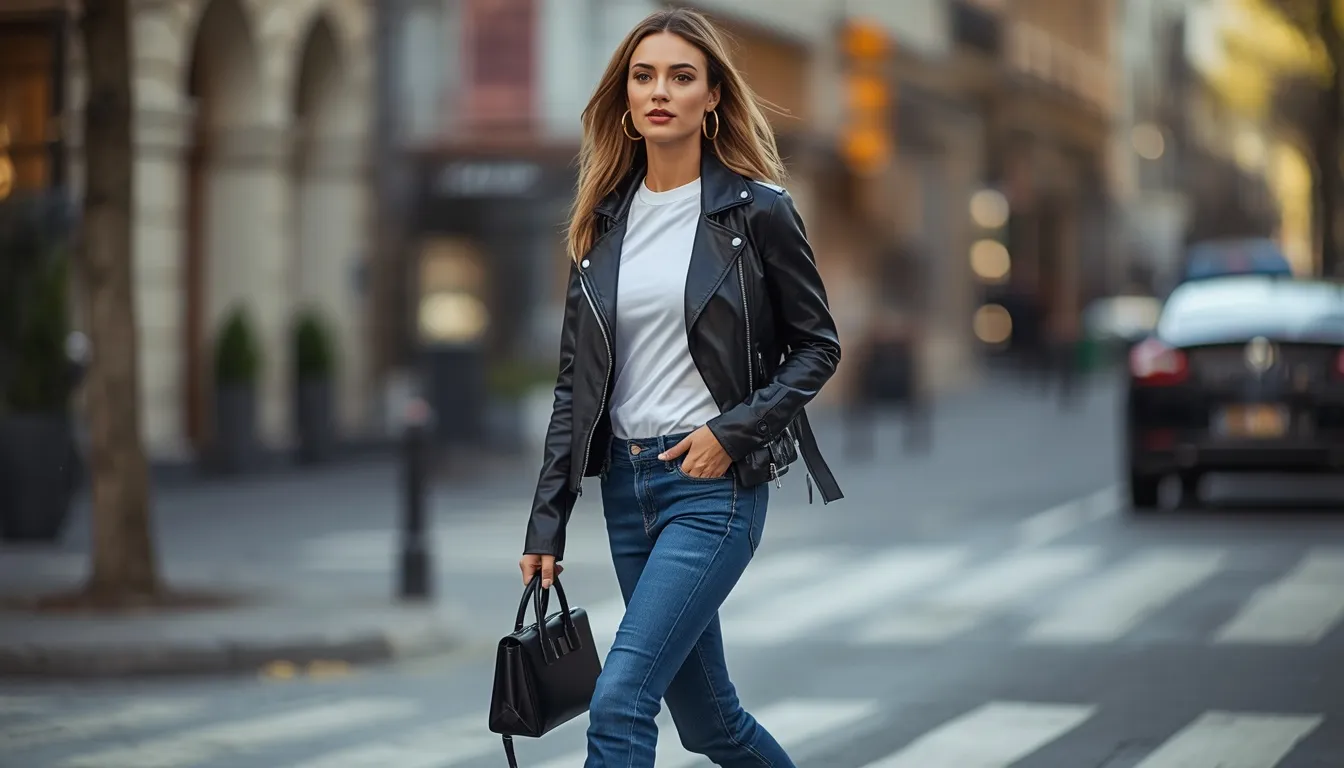
Few jackets cover as many plans as a black leather moto: errands, dinner, a concert, a flight. Build it on a navy-and-white Breton striped tee, mid-wash straight-leg jeans and black leather ankle boots, and you’re dressed for fall days between 55 and 68°F.
Fit matters more with a moto than with almost any other jacket. It should sit close through the body and stop at the hip; cut loose, it loses the sharp lines that make it look good. Real leather softens and molds to you over the years. Faux leather, usually polyurethane, is lighter and cheaper but can peel or crack after a few seasons of heavy wear. On colder days, zip it halfway for a cleaner neckline.
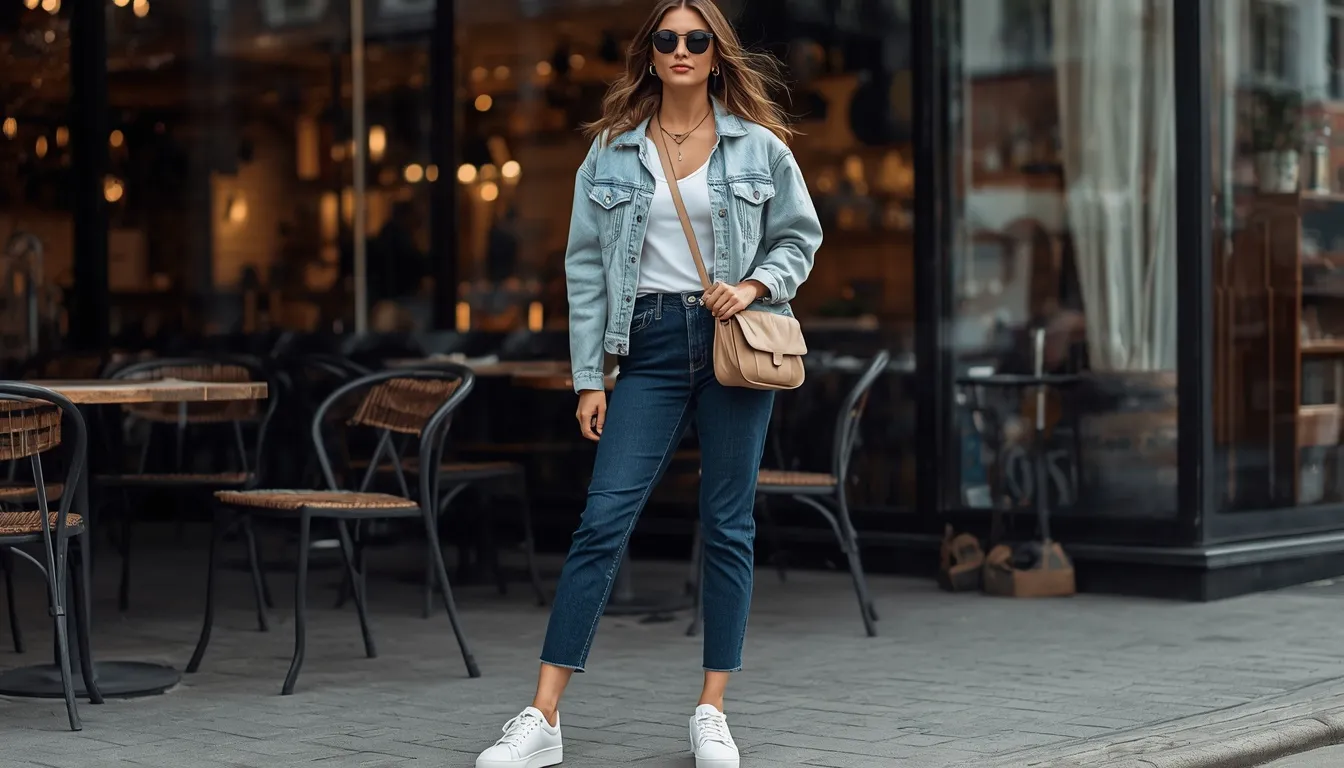
Double denim only looks deliberate when the two washes are clearly different. Start with a mid-wash trucker jacket, such as the Levi’s Trucker, and pair it with dark-indigo straight jeans, a plain white tee and white sneakers or loafers for 60–70°F spring and early-fall days.
Aim for at least two shades of contrast between jacket and jeans, and put a non-denim top between them in white, grey or a soft color. A brown leather belt draws a clean line across the middle. Washes that almost match read as an accident; obvious contrast reads as a choice.
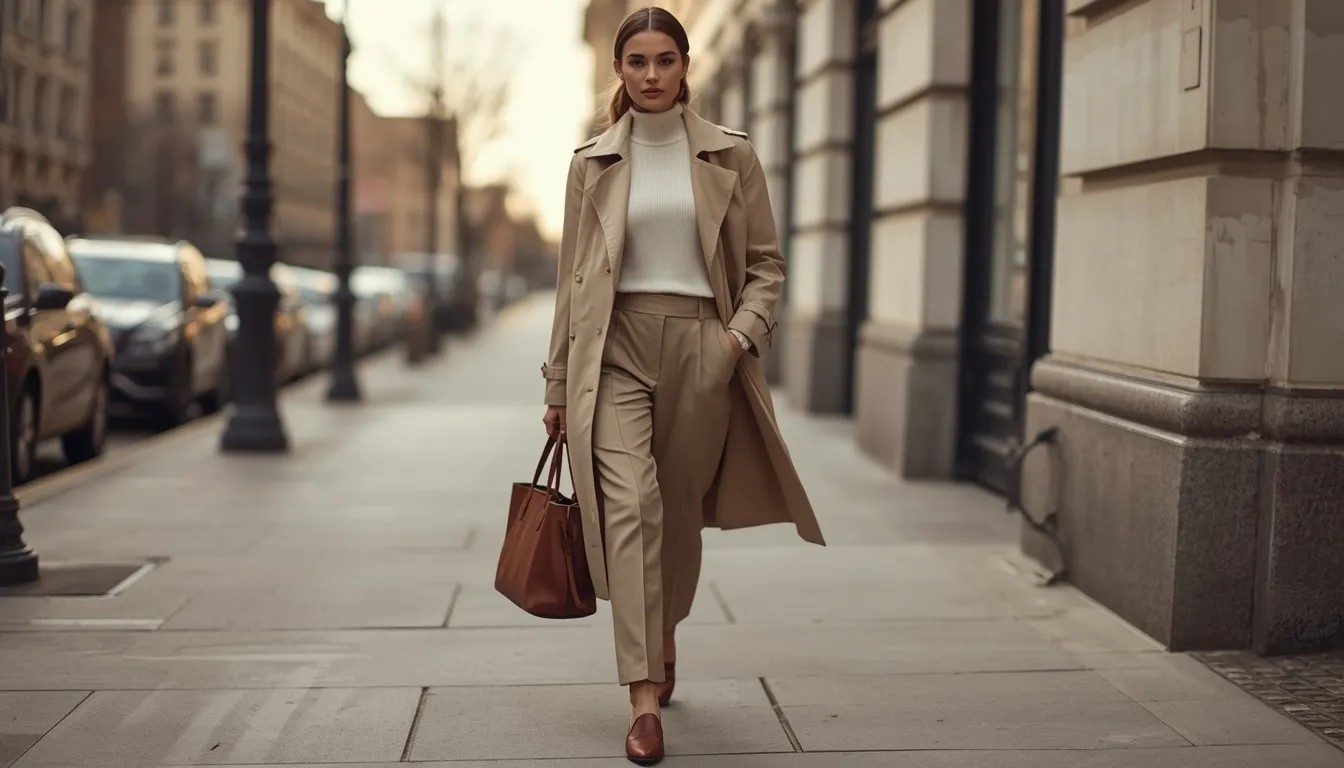
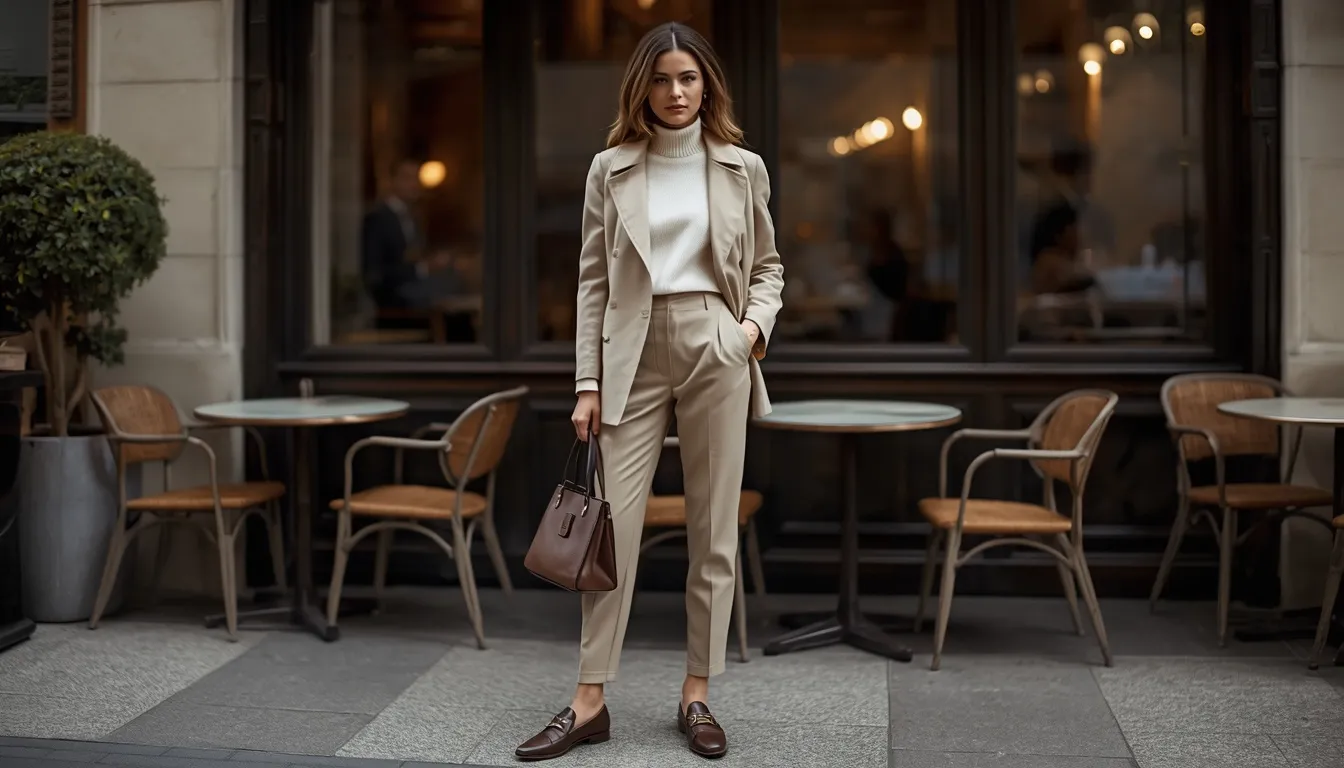
Rainy spring mornings are what a double-breasted beige trench was made for. Cotton gabardine, the tightly woven fabric Burberry developed in the late 1800s, sheds light showers and still looks sharp at the office. Wear it open over a cream crewneck sweater, black or grey wide-leg trousers and leather loafers when it’s 50–62°F.
Belt it loosely at the waist, or knot the belt behind you so the ends don’t swing. Gabardine resists drizzle but isn’t waterproof, so carry an umbrella when the forecast turns heavy. When the rain comes on a warm day and a trench is too much coat, these summer rainy day outfits swap it for lighter layers.
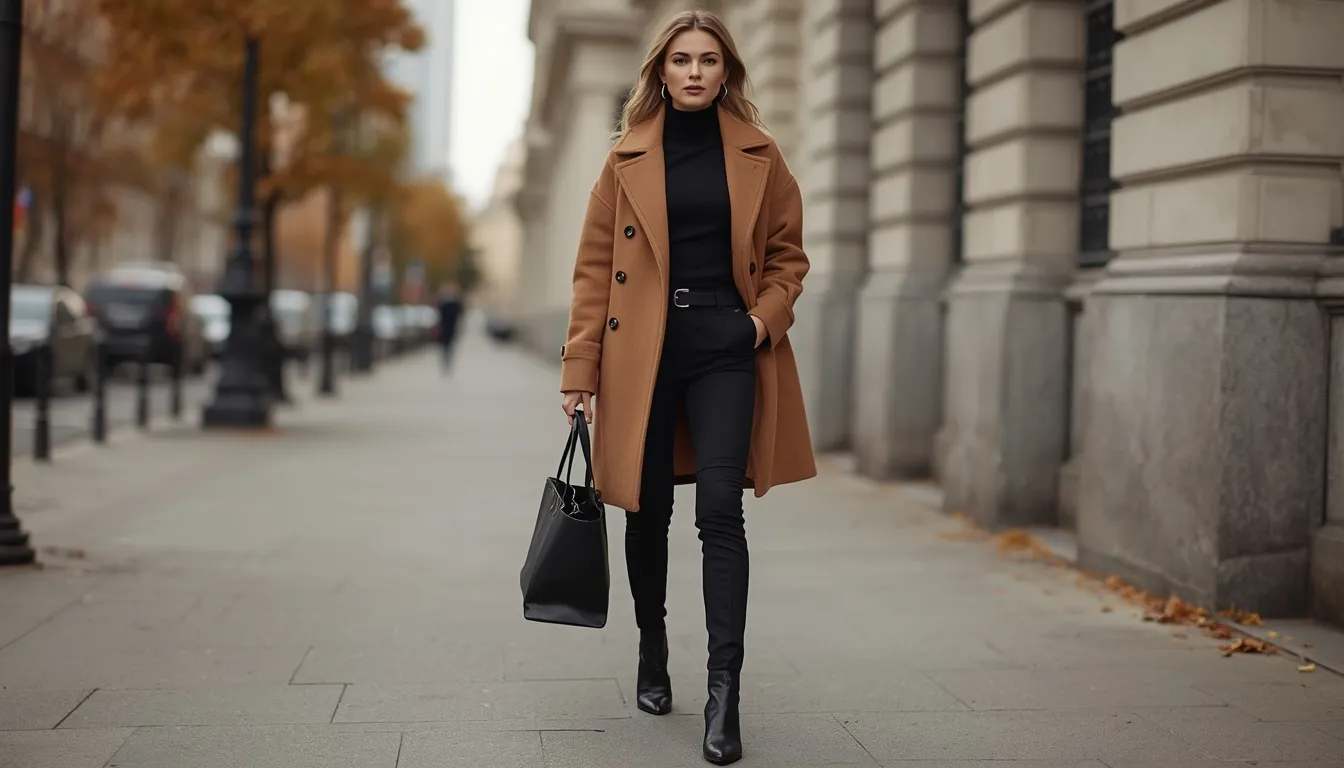
Late-fall weekends need something you can throw over a hoodie without thinking, and an oversized wool shirt jacket, or shacket, is exactly that. Choose a plaid or solid camel wool-blend version and wear it with a grey hoodie, black leggings or straight jeans and chunky sneakers for school pickup, coffee runs and road trips at 45–58°F.
Because the shacket is roomy, keep everything under it fitted, and pull the hood out over the collar. Check the label: a blend that’s at least half wool keeps you warm, while mostly polyester versions pill quickly and don’t insulate as well. Turn the cuffs back once so a little of the hoodie sleeve peeks out.
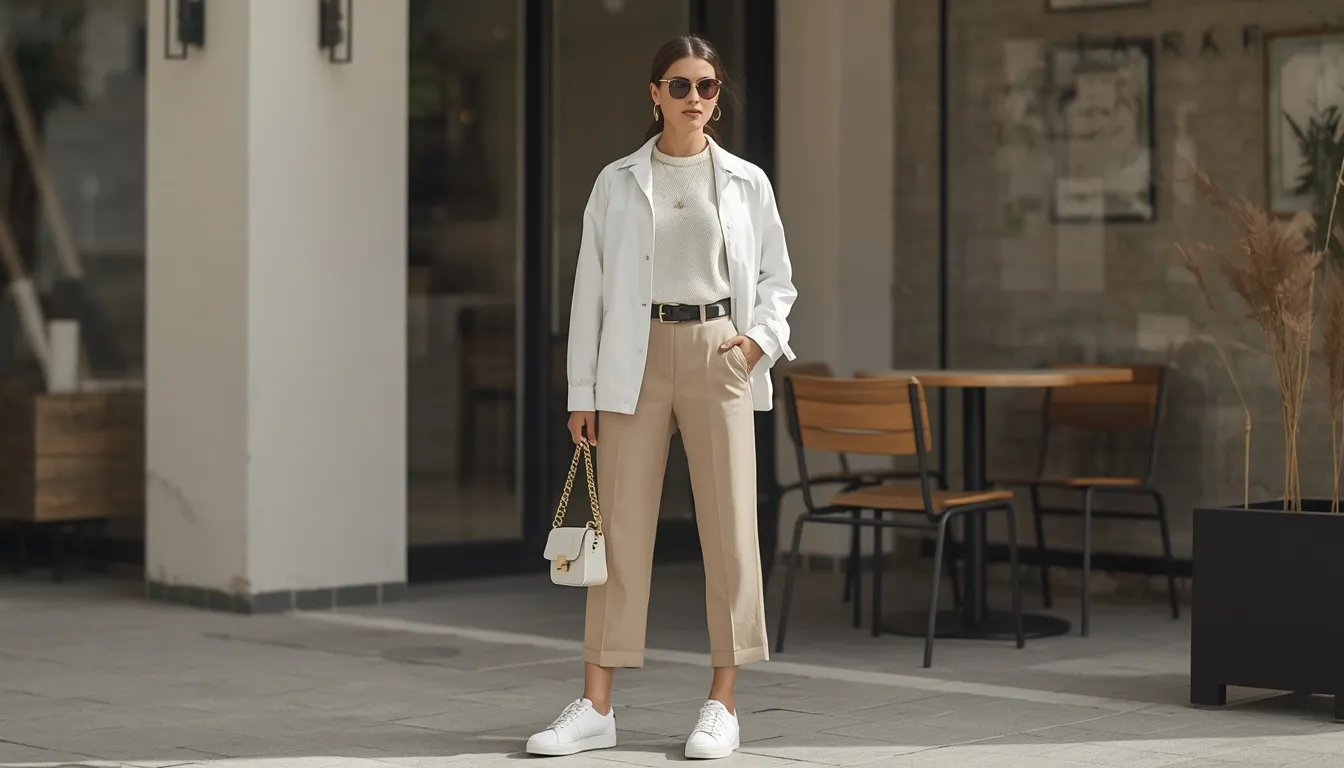
Blue denim can look heavy against summer colors; white or cream denim doesn’t. Layer a white denim jacket over a pale blue or floral cotton sundress, add tan sandals and a straw bag, and you’re set for outdoor dinners and beach-town evenings around 62–72°F.
Buy one you can machine-wash cold, because white shows every mark. Push the sleeves to the elbow so the jacket looks relaxed over the dress. With a midi dress, a slightly cropped cut keeps the waist visible.
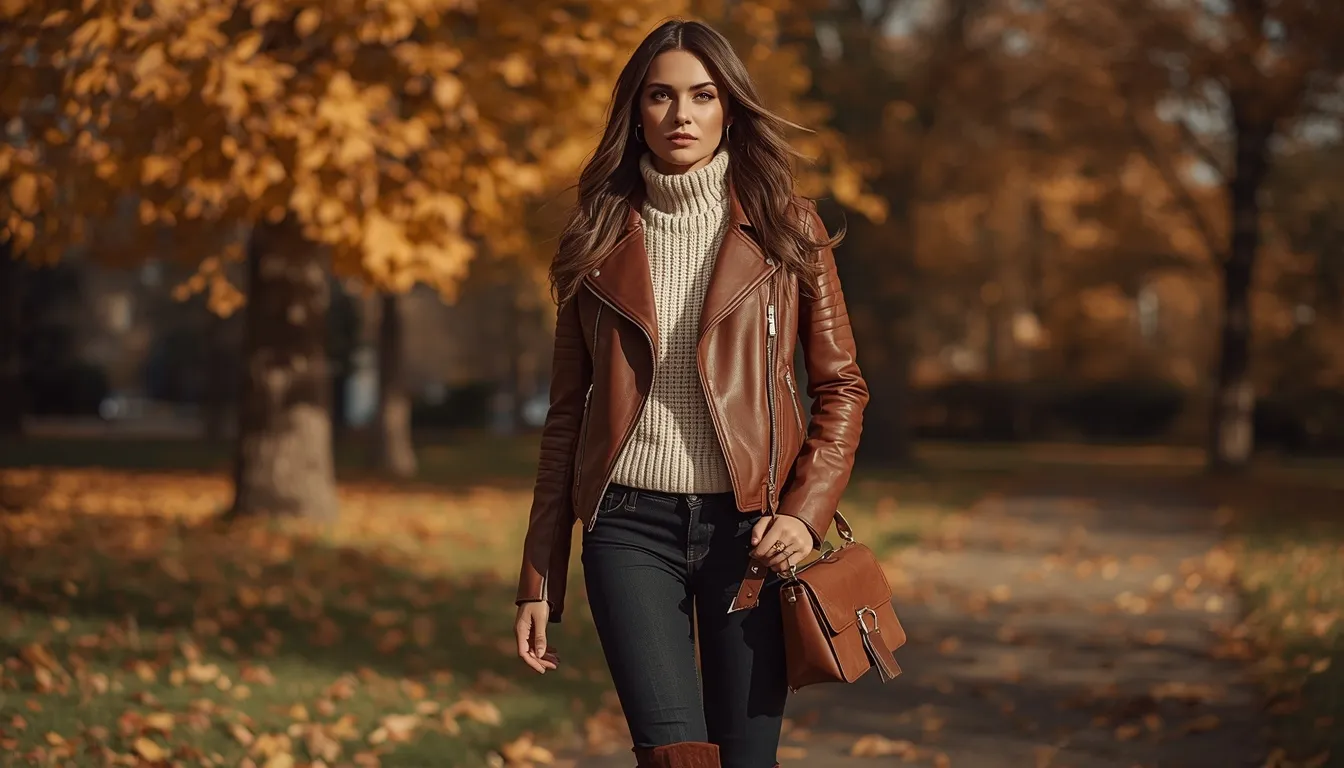
Fall dinners, office days and holiday parties call for something more polished than a moto, and a chocolate or cognac leather blazer fits the bill while still looking soft next to feminine pieces. Wear it over a cream knit sweater with a black or camel satin midi skirt and knee-high boots on 50–65°F days.
Brown reads warmer and less edgy than black, so it’s easier to combine with cream, camel, olive and burgundy. Match your boots to the blazer or go one shade darker. Condition real leather once or twice a year so the elbows don’t dry out and crack.
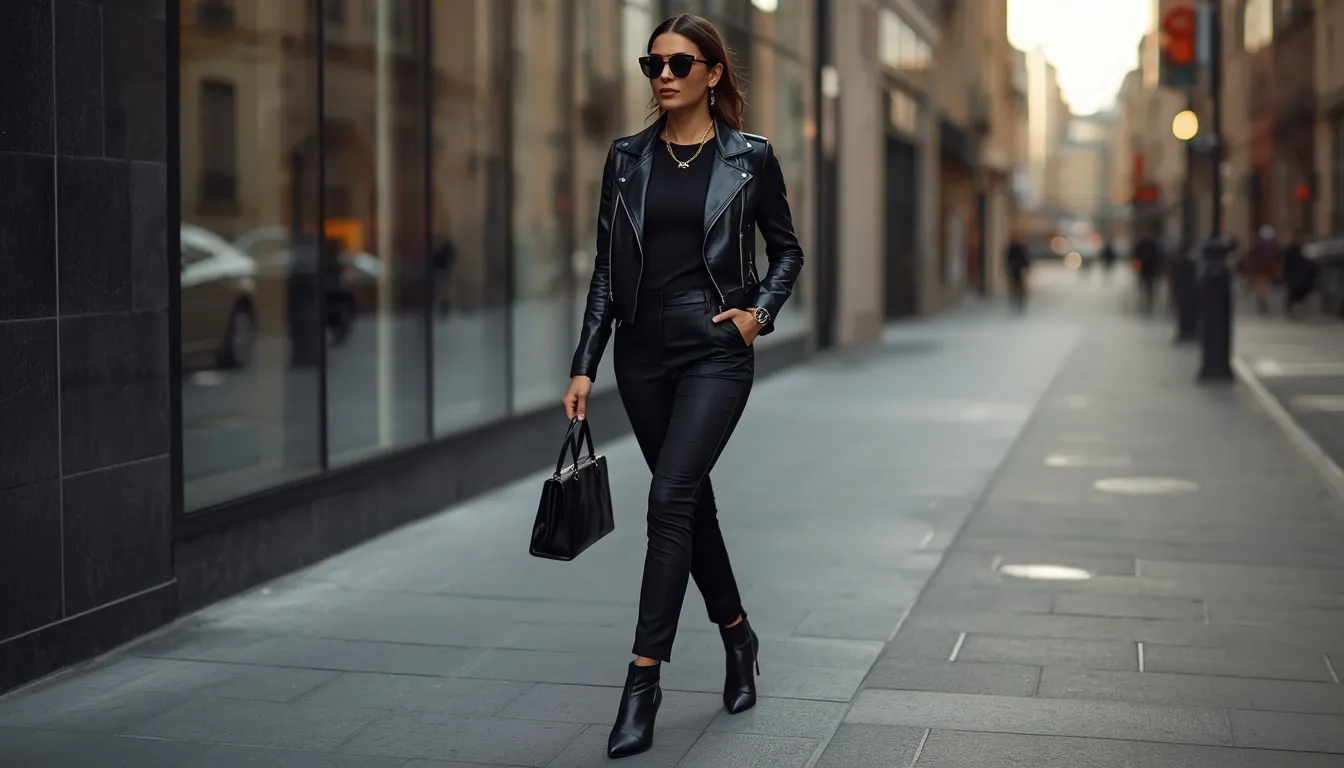
Getting dressed takes no thought when everything is black: a nylon or satin bomber over a fitted black turtleneck, black straight jeans and black Chelsea boots. The result is sleek enough for an evening out and easy enough for a travel day at 50–65°F.
Texture keeps an all-black outfit from going flat, so mix shiny nylon, matte cotton, ribbed knit and smooth leather. Look for ribbed cuffs and a ribbed hem that lands at the hip. A silver or gold earring and a structured bag add contrast without breaking the color story.
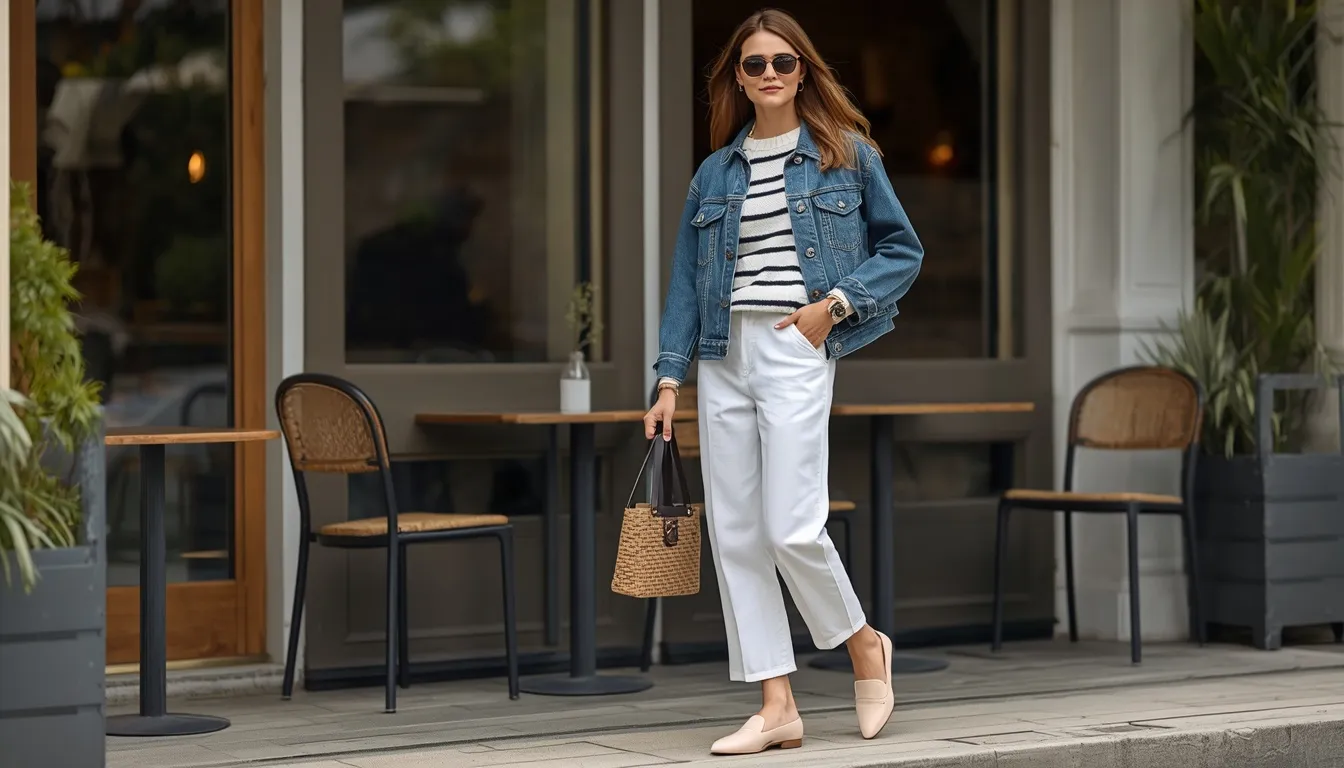
Picnics, farmers markets and slow weekends between 60 and 70°F are made for an oversized light-wash jean jacket over a floral midi dress. Finish with white sneakers or cowboy boots and a crossbody bag.
To get the slouchy shape, size up one or two in a standard denim jacket, or buy one cut oversized so it drops off the shoulders. The dress should hang at least a few inches below the jacket’s hem. For outfits where denim is the dress itself, our denim dress outfit guide picks up from here.
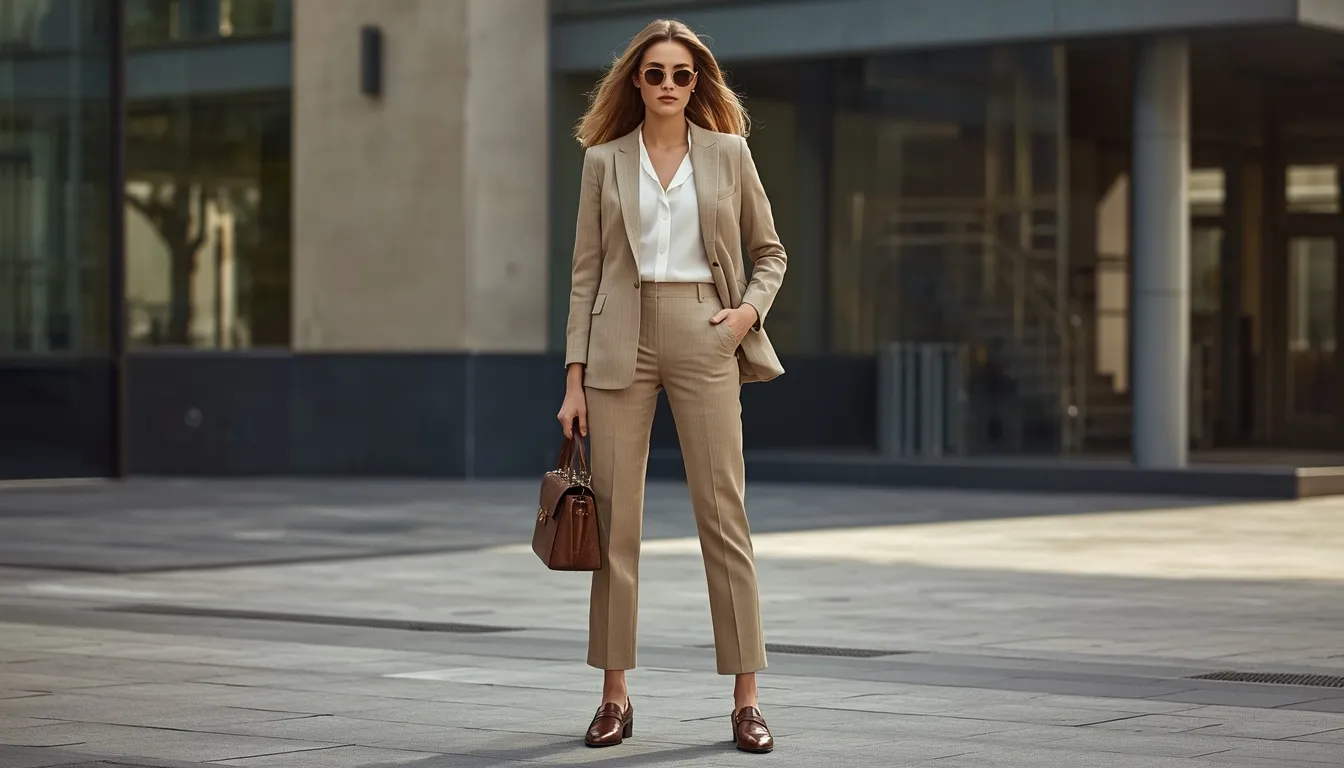
In wool or a wool blend, a navy single-breasted blazer earns its place at work more than any other jacket. Pair it with an ivory silk or satin blouse, grey tailored trousers and pointed flats or block-heel loafers. Offices are heated in winter and air-conditioned in summer, so it stays comfortable indoors all year.
The blazer should button without pulling across the front and end at or just below the hip bone. Navy is gentler than black and works with grey, camel, cream and denim, which means it goes with jeans on Fridays too. Keep a lint roller in your desk drawer, since wool picks up lint fast.
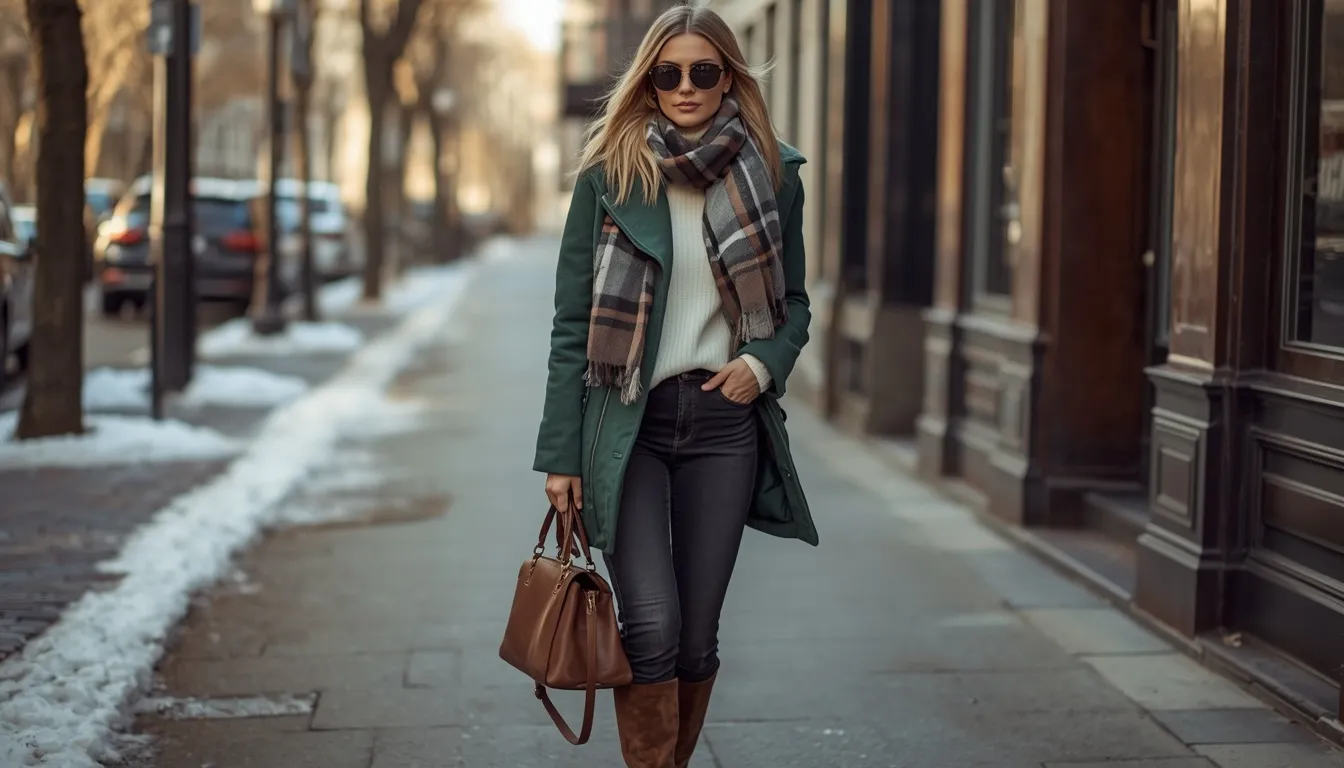
Winter commutes and outdoor weekends at 25–45°F need real insulation, and an olive hooded parka with a lined body gives you that without looking purely technical. Layer it over a chunky cream cable-knit sweater, dark jeans, wool socks and waterproof lace-up boots.
Go for a length that reaches mid-thigh so it still covers your hips when you sit. A double-ended zip lets you open the bottom few inches for a longer stride. Olive goes easily with cream, camel, brown and denim, and a tan or burgundy scarf breaks up all that green.
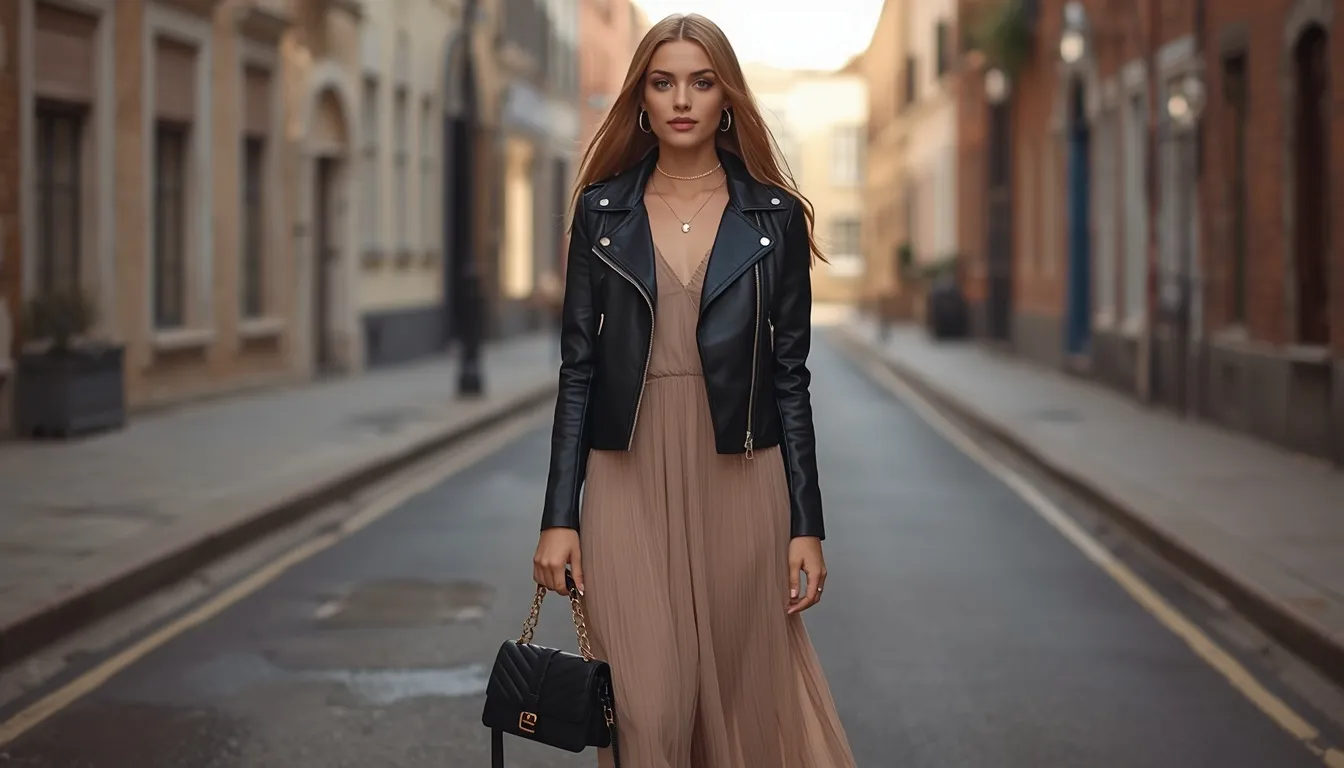
Sporty meets dressy when a short, puffy bomber sits over a long, fluid skirt. Try an olive or black satin bomber with a champagne midi slip skirt, a fitted white tee and white leather sneakers for spring brunch, a casual date or a museum day around 58–68°F.
The proportions do the work: a hip-length jacket with ribbed edges balances a skirt that moves, which makes this one of the easiest bomber jacket outfits to get right. Wear the jacket fully open or zipped halfway, and switch to ankle boots in fall. Once it’s warm enough to leave the jacket at home, these satin skirt outfit ideas take the skirt into summer.
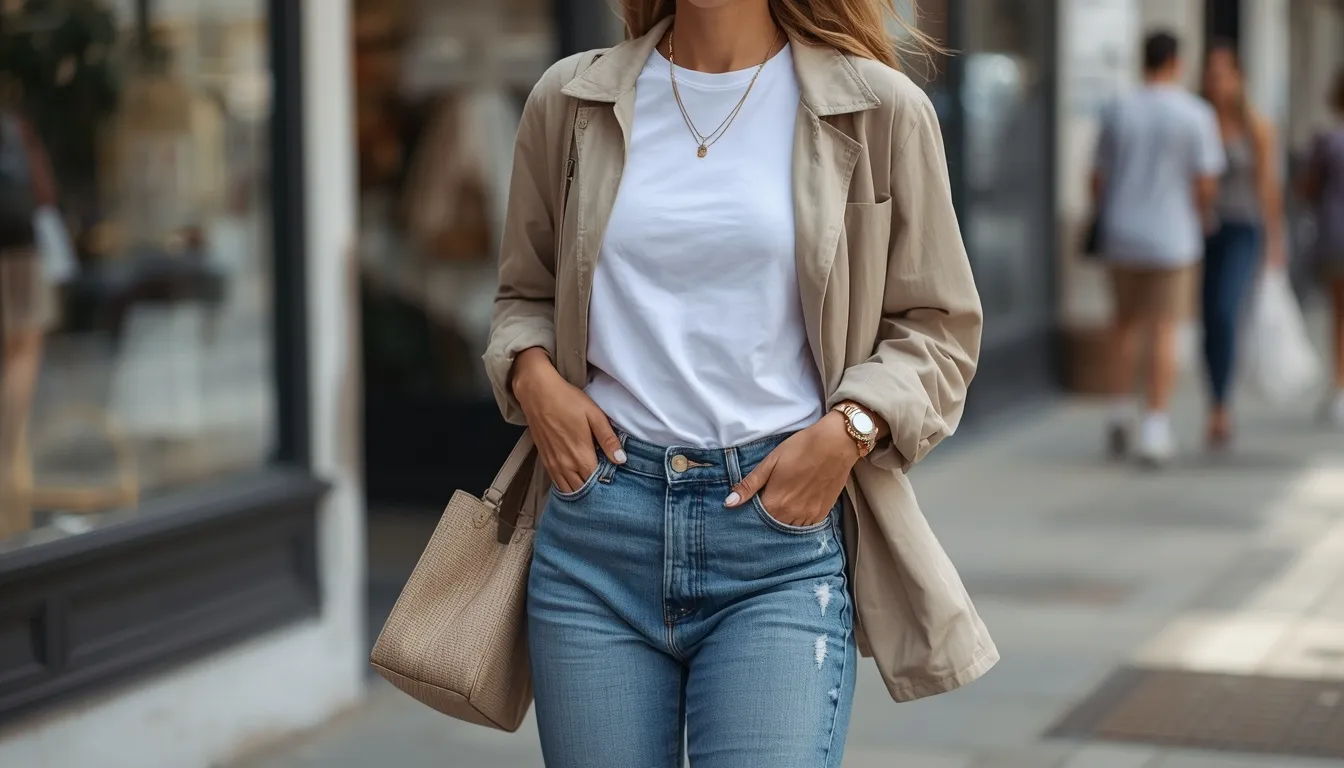
Plain jeans look instantly more put-together under a cropped bouclé or tweed jacket, the style Chanel made iconic. Wear an ivory, pink or black-and-white version over a fitted black top with dark straight jeans and ballet flats or slingbacks for lunches, events and workdays at 58–70°F.
Because the jacket stops at the waist, choose high-rise bottoms that meet its hem with no gap of skin. Tweed already carries a lot of detail, so keep jewelry simple. Store it folded or on a wide hanger so the shoulders don’t stretch.
Hip-length, cut from canvas or waxed cotton and finished with a corduroy collar, the barn jacket is popular again. Familiar versions include Carhartt’s canvas Detroit jacket and Barbour’s waxed Bedale. Wear a tan or olive one over a Fair Isle sweater with straight jeans and brown leather boots for apple picking, country weekends and chilly football games at 45–60°F.
Waxed cotton shrugs off light rain but should never go in the washing machine: wipe it with a damp cloth and re-wax it roughly once a year. Canvas is lower maintenance and gets softer the more you wear it.
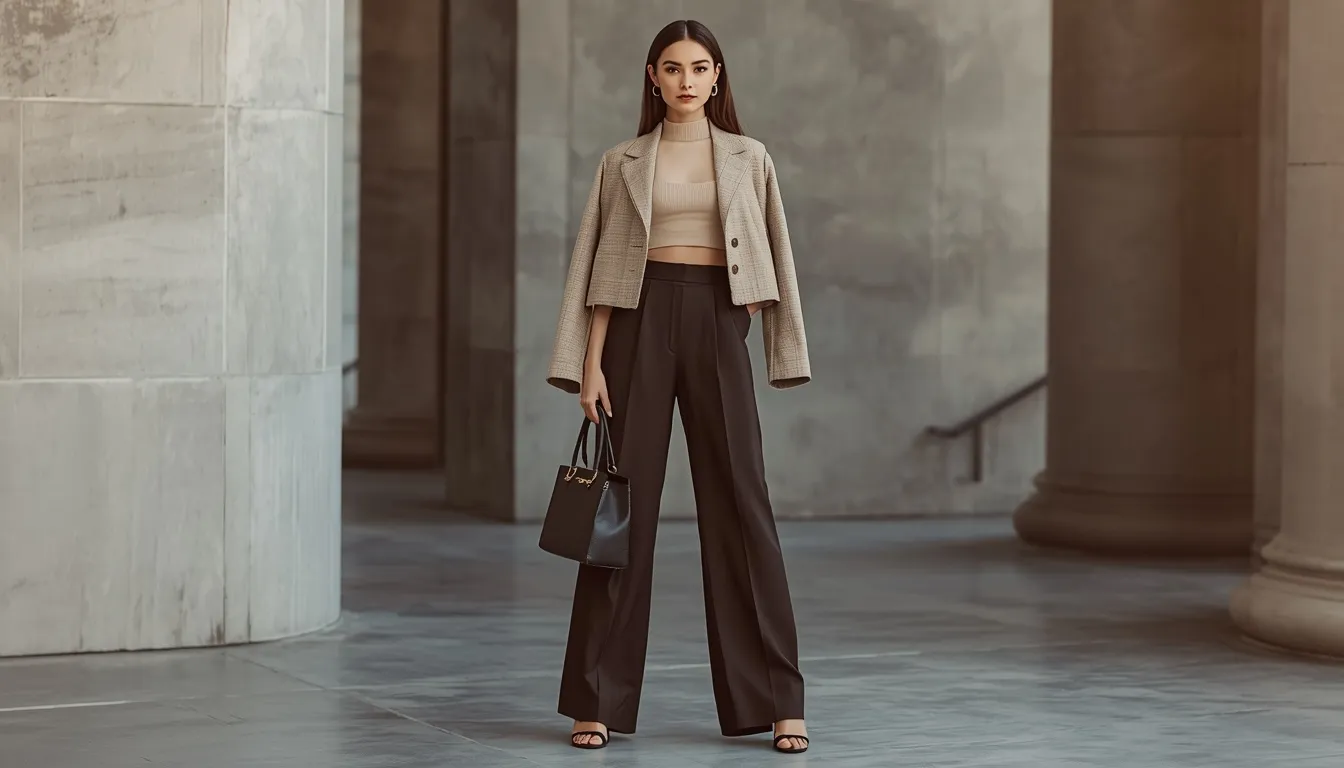
Most varsity jackets are cut boxy, which is why straight jeans work better here than skinny ones. Choose a varsity, or letterman, jacket with a wool body and leather or faux-leather sleeves and wear it over a grey hoodie or crewneck sweatshirt, light-wash straight jeans and retro sneakers such as New Balance 550s or Adidas Gazelles.
The collegiate feel is right for game days, campus visits and weekend errands at 45–60°F. A version without big patches looks more grown-up, and on cold days you can snap it shut over the hoodie.
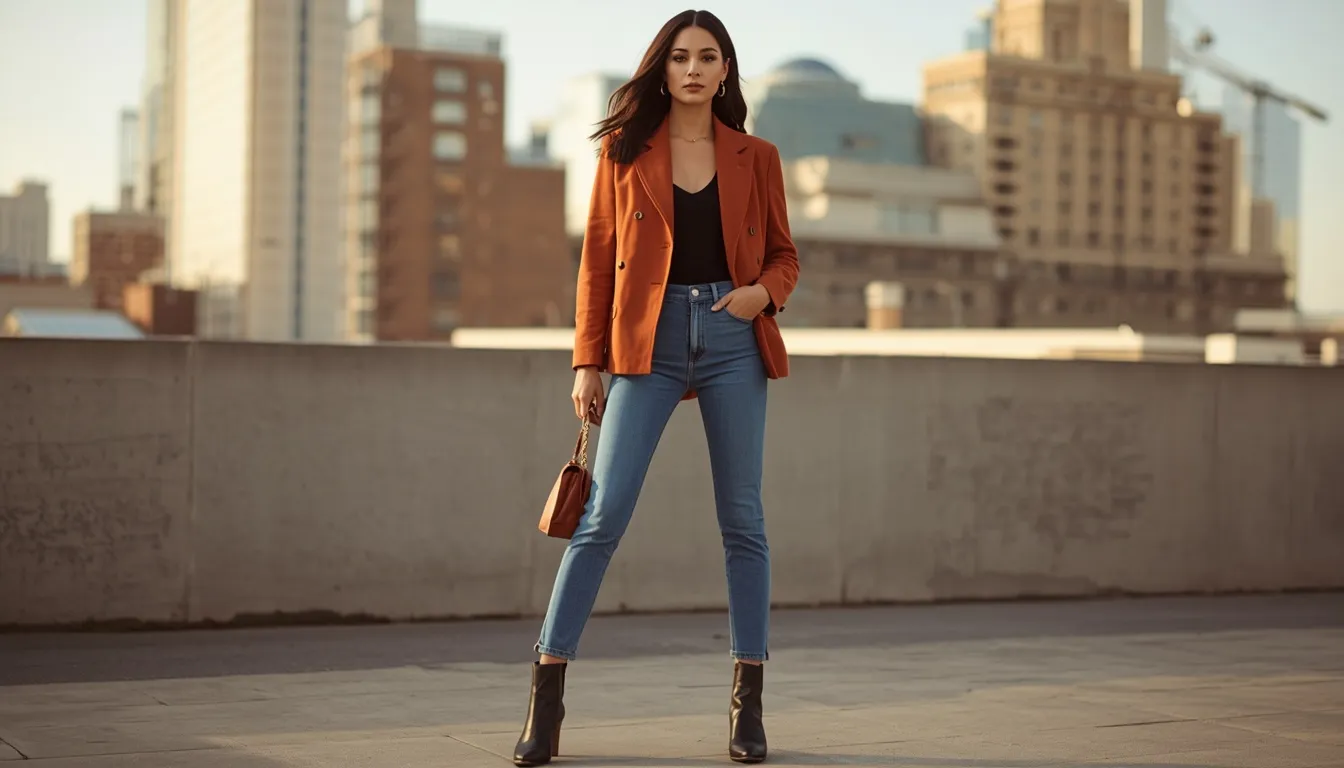
From the mid-40s down to about 30°F, a cropped down puffer keeps you warm without the bulk of a long coat. Wear a black or cream one with high-waisted leggings or flared yoga pants, a fitted half-zip and shearling-lined boots like UGG Classic Minis for cold errands and travel days.
Since the jacket adds volume on top, keep the bottoms slim. Check the fill before you buy: down is warmer for its weight, while synthetic insulation keeps working when it gets damp. Wash it on a gentle cycle and tumble dry low with dryer balls to re-fluff the filling.
| Jacket | Temperature range | Pair it with | Mood |
|---|---|---|---|
| 1. Black leather moto | 55–68°F | Striped tee, straight jeans, ankle boots | Classic, edgy |
| 2. Denim trucker | 60–70°F | Dark jeans, white tee | Casual |
| 3. Beige trench | 50–62°F | Knit, wide trousers, loafers | Polished |
| 4. Wool shacket | 45–58°F | Hoodie, leggings, sneakers | Cozy |
| 5. White denim | 62–72°F | Sundress, sandals | Fresh, summery |
| 6. Brown leather blazer | 50–65°F | Knit, satin midi skirt, boots | Elegant |
| 7. Black bomber | 50–65°F | All-black base, Chelsea boots | Sleek |
| 8. Oversized denim | 60–70°F | Floral midi dress, sneakers | Relaxed |
| 9. Navy blazer | Indoors, year-round | Silk blouse, tailored trousers | Work-ready |
| 10. Olive parka | 25–45°F | Cable knit, jeans, waterproof boots | Practical |
| 11. Satin bomber | 58–68°F | Slip skirt, sneakers | Sporty-dressy |
| 12. Cropped tweed | 58–70°F | Dark jeans, ballet flats | Ladylike |
| 13. Barn jacket | 45–60°F | Fair Isle sweater, boots | Country |
| 14. Varsity jacket | 45–60°F | Hoodie, jeans, retro sneakers | Collegiate |
| 15. Cropped puffer | 30–45°F | Leggings, shearling boots | Athleisure |
Buying for a T-shirt, wearing over a sweater. Try every fall and winter jacket on over a sweater before you buy it. A jacket that only fits over a tee will pull at the shoulders and ride up at the sleeves by November.
Sleeves that swallow your hands. Unless the jacket is styled oversized, sleeves that cover your knuckles make the whole outfit look sloppy. A tailor can shorten most jacket sleeves, though leather and quilted jackets cost more to alter.
Same length on top and bottom. A coat that ends exactly where your skirt or dress ends cuts you in half. Go noticeably shorter or longer.
Washing everything the same way. Denim can be washed inside out in cold water and hung dry. Leather needs a damp cloth and conditioner, never the machine. Wool coats should be brushed and steamed, with dry cleaning saved for stains. Waxed cotton is wiped and re-waxed. Down puffers can be machine-washed gently with a down-specific detergent.
Storing on thin hangers. Wire hangers dent the shoulders of leather, wool and tailored jackets. Use wide wooden or padded hangers, and keep leather out of plastic dry-cleaning bags so it can breathe.
Keep the washes far apart, usually a lighter jacket over darker jeans, and wear a top that isn’t denim, such as a white tee or a grey knit, so there’s a break between them. Non-denim shoes and a leather belt help too. If your jacket and jeans are nearly the same shade, swap one of them for chinos, black jeans or a different jacket.
A black moto, in real or faux leather, and a mid-wash denim jacket are the two most versatile choices. Both work with jeans, dresses, skirts and trousers, and they cover most temperatures from about 55 to 70°F. For colder weather, a neutral trench coat or a camel wool coat goes with almost every outfit.
Pick a jacket that’s clearly shorter than the dress. A cropped or hip-length denim, leather or tweed jacket works with midi and maxi dresses, while a long trench works over a mini or knee-length dress. Push the sleeves up, leave the jacket open, and choose shoes that match the jacket’s mood.
At around 50°F, choose a medium-weight jacket: a trench coat, lined leather jacket, barn jacket, heavier bomber or wool shacket. Layer a sweater or long-sleeve top underneath. If it’s windy or you’ll be outside after dark, add a scarf, or move up to a light wool coat.
Barn and chore jackets, brown leather and suede, and bombers in nylon and satin have all had a strong revival over the last few seasons, and cropped tweed jackets keep coming back. Classic trench coats and leather motos stay popular every year, so they’re the safest long-term buys if you only want one or two jackets.
Start with the jacket you already own and build from the length rule: shorter jackets with high-rise bottoms, longer coats with slimmer shapes, and a simple layer underneath. Then add one new piece a season. For complete everyday outfits to wear under your favorite jacket, see our casual outfit ideas for women.