Physical Address
304 North Cardinal St.
Dorchester Center, MA 02124
Physical Address
304 North Cardinal St.
Dorchester Center, MA 02124

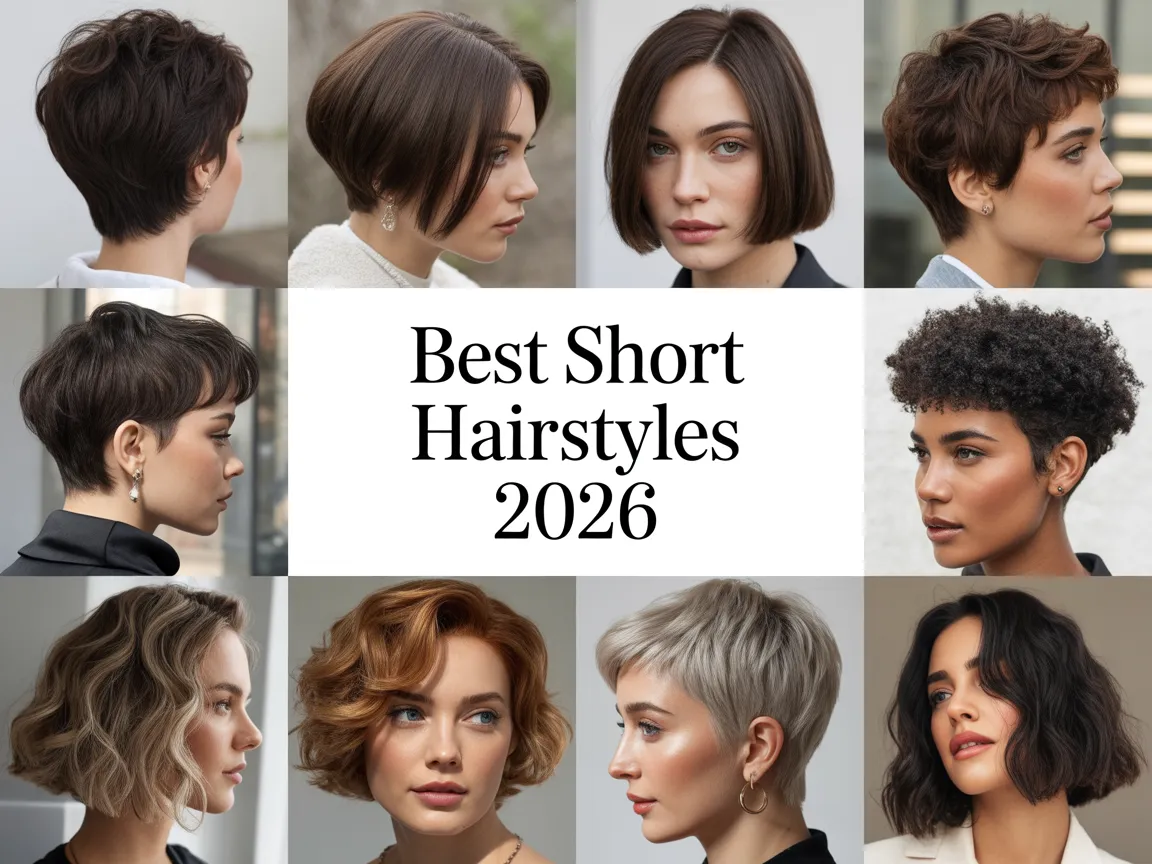
A short cut changes more than length. It changes how long you spend in front of the mirror, how often you see your stylist, and which features people notice first. That’s why the right choice depends less on what’s trending and more on your hair density, texture, and face shape.
The 17 short haircuts for women below cover pixies, bobs, shags, crops, and natural styles. You’ll see who suits each shape, how fast it grows out, and the wording that gets you the cut you actually pictured, so you can walk in with a clear request instead of a vague screenshot.
Quick answer: The most versatile short haircuts for women are the textured pixie, the chin-length bob, the bixie, and the short shag. Fine hair looks fuller in blunt bobs and soft pixies with weight at the crown. Thick or curly hair suits layered shags. Plan on seeing your stylist roughly monthly for a pixie and every second month for a bob.
Short hair hides very little, so the cut has to suit the face, density, and texture you already have, plus the time you’re willing to spend on upkeep.
Stylist John Frieda popularized a simple check. Hold a pencil horizontally under your chin and a ruler vertically from your earlobe down to the pencil. If the distance is under 2.25 inches, very short cuts such as pixies and crops tend to flatter you. If it’s longer, a bob or a longer pixie that ends near the jaw usually looks more balanced. Treat it as a guide, not a rule.
Oval faces can wear almost any length. Round faces look longer with height at the crown, a side part, and pieces that fall just below the chin; a perfectly round, cheek-length bob does the opposite. Square faces soften with wispy layers and side-swept bangs rather than a blunt jaw-length line. Heart-shaped faces suit chin-length bobs that add width near the jaw, and long faces look best with bangs or volume at the sides instead of the top.
Density is how many strands you have; texture is how thick each strand is. Fine or thin hair looks fuller with blunt perimeters and a few internal layers, while heavy layering can make it look sparse. Thick hair needs weight removed, often with hidden internal layers or a nape undercut, or a short cut can turn triangular. Curly and coily hair should be cut dry or curl-by-curl, because curls can shrink anywhere from a little to a lot once they dry.
Hair grows roughly half an inch a month, so a pixie that looks sharp in week one can look shaggy by week six. Shorter cuts trade daily styling for frequent trims. If you’re unsure, start with a chin-length bob or a long pixie; both can grow into a lob without months of awkward in-between length.
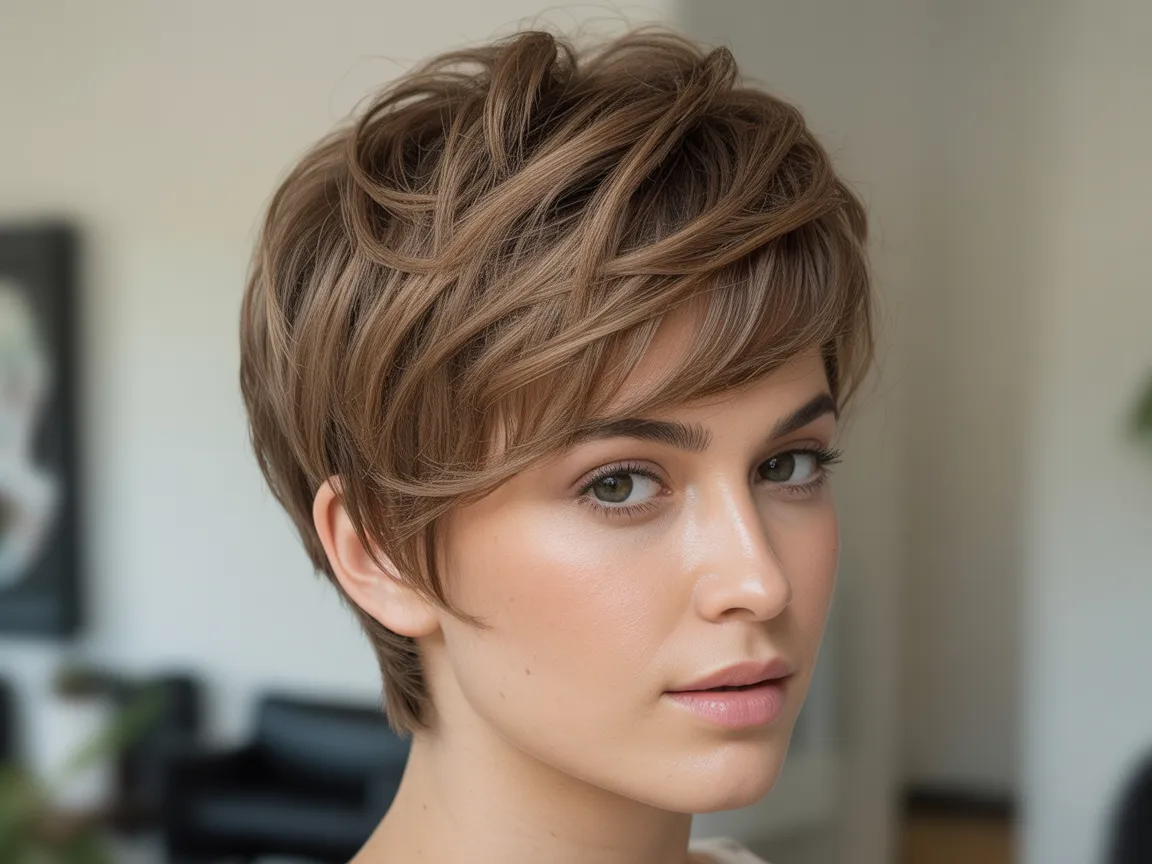
Close at the sides and nape, two to three inches on top, and cut so the top pieces separate instead of lying in a helmet: that’s the textured pixie. Oval and heart-shaped faces and petite features carry it well, and it works on straight or slightly wavy hair of medium density.
Styling takes about five minutes. Rough-dry with your fingers, rub a fingertip of matte paste or pomade between your palms, rake it through the top and pinch a few pieces forward. Shiny gels clump the texture into stripes, so skip them. The nape starts to look fuzzy after about a month, which is when to book a cleanup.
Ask your stylist for: point-cut or razor texture on top, soft pieces around the ears
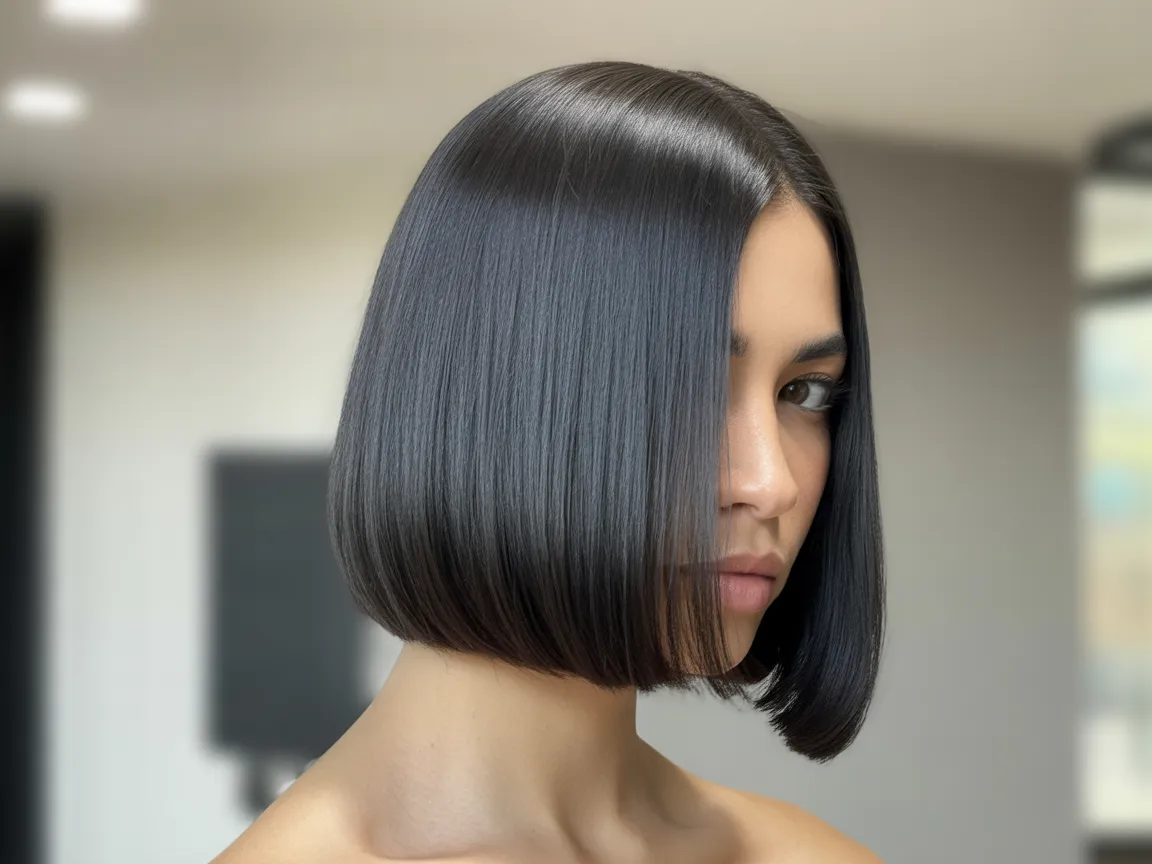
Shine is the entire point here. The hair ends right at the chin in one sharp line with almost no layers, so it suits naturally straight hair or anyone happy to use a flat iron, and it flatters oval and heart-shaped faces.
This isn’t a wash-and-go cut. Blow-dry with a paddle brush, then pass a one-inch flat iron over each section once, angling the ends slightly under. A drop of lightweight smoothing serum on the ends adds gloss without flattening the root. Use a heat protectant every time, because daily straightening shows up quickly as split ends on a blunt line.
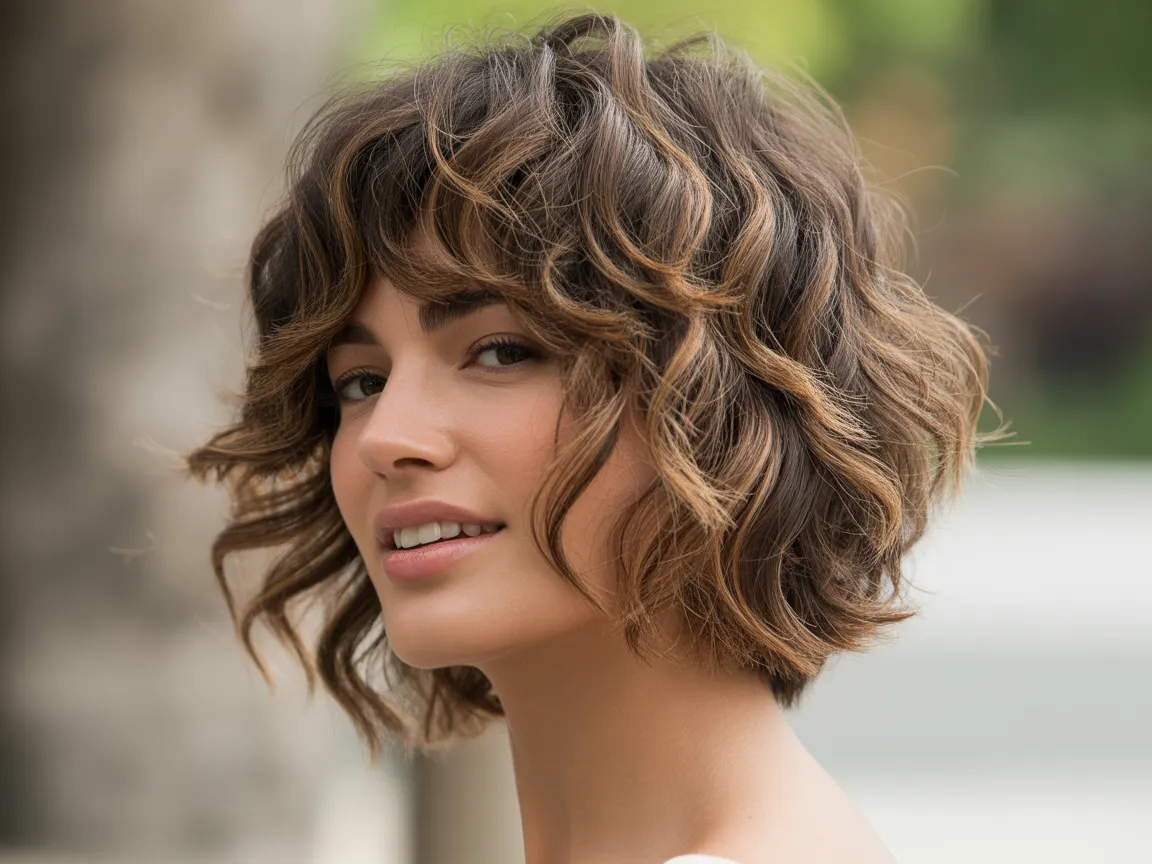
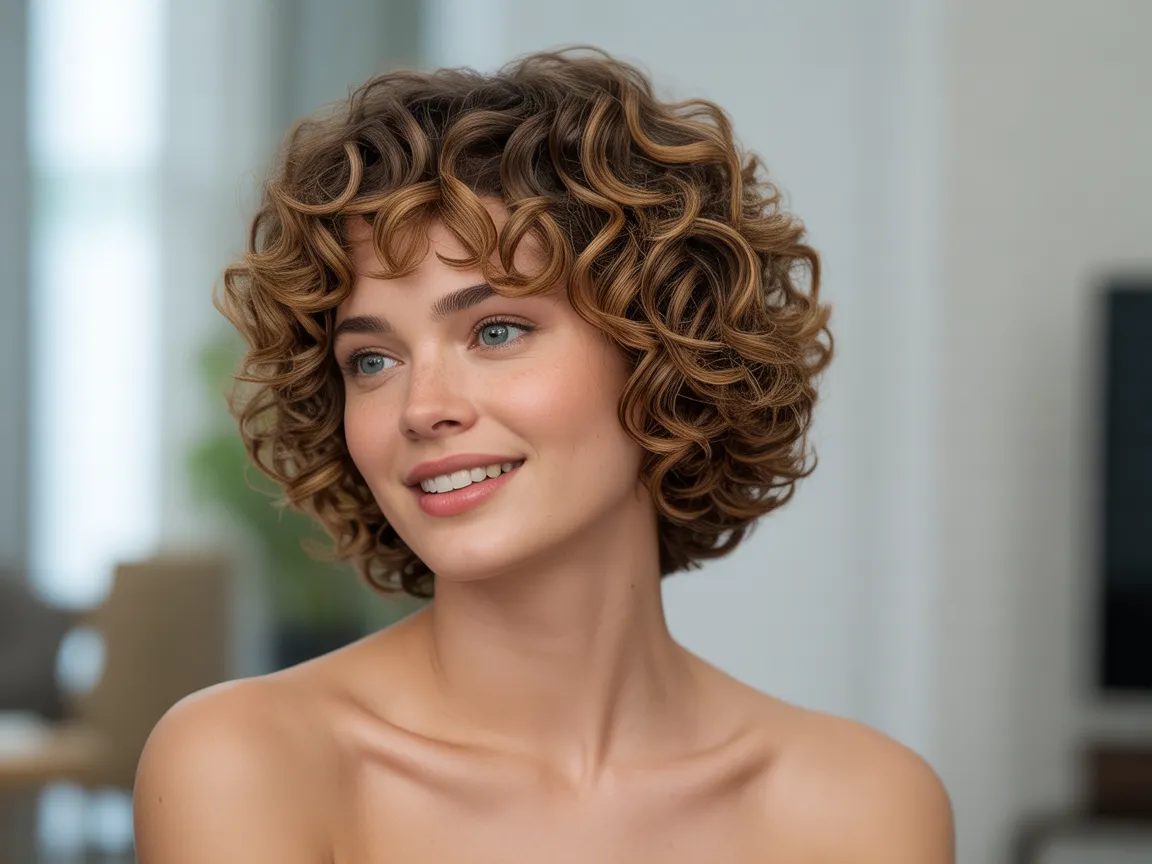
If your hair frizzes and bends no matter what you do, a shag stops fighting it. Layers stack at the crown and around the face, the ends are thinned out so the hair looks lived-in, and center-parted curtain bangs tie it together. Wavy, thick, and naturally textured hair look best in it.
Air-dry it with a texturizing cream or mousse scrunched in from mid-length to ends, then blast the bangs with a round brush for 30 seconds. A shag grows out gracefully, so you can usually stretch to eight to ten weeks between appointments.
Tell your stylist: razor-textured ends, bangs that hit the cheekbones
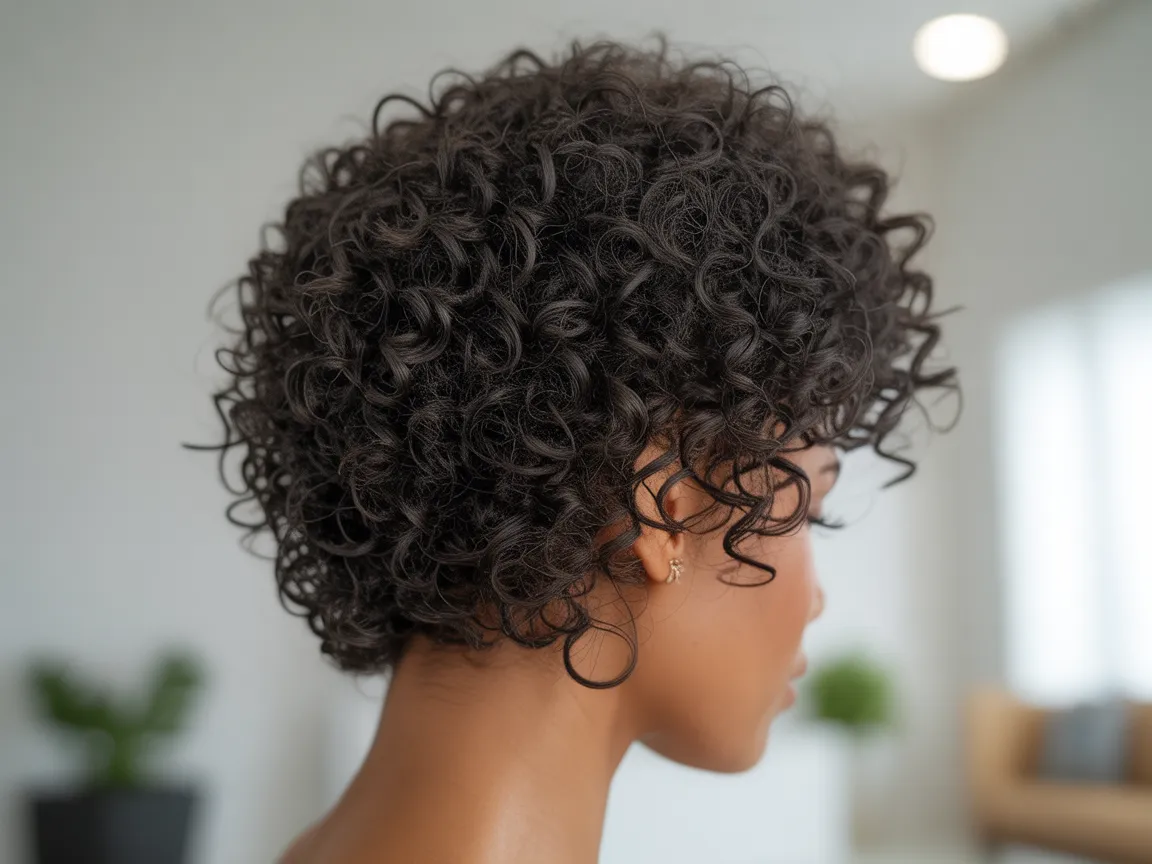
Shaped so the coils form an even halo, usually two to four inches long when stretched, a short rounded afro needs no heat and very little daily time, which is why it’s a favorite among short natural hairstyles for Black women. A stylist who cuts natural hair dry can make the crown taller or the shape softer to suit your face.
Definition comes from moisture. On wash day, apply a leave-in conditioner, then a curl cream or gel in sections, and let it dry without touching. Refresh midweek with water and a light oil, and sleep on a satin pillowcase or bonnet to keep the shape. If you’d rather keep more length, our curly hairstyles guide covers longer curl shapes.
The request: a dry cut, more length at the crown than the sides
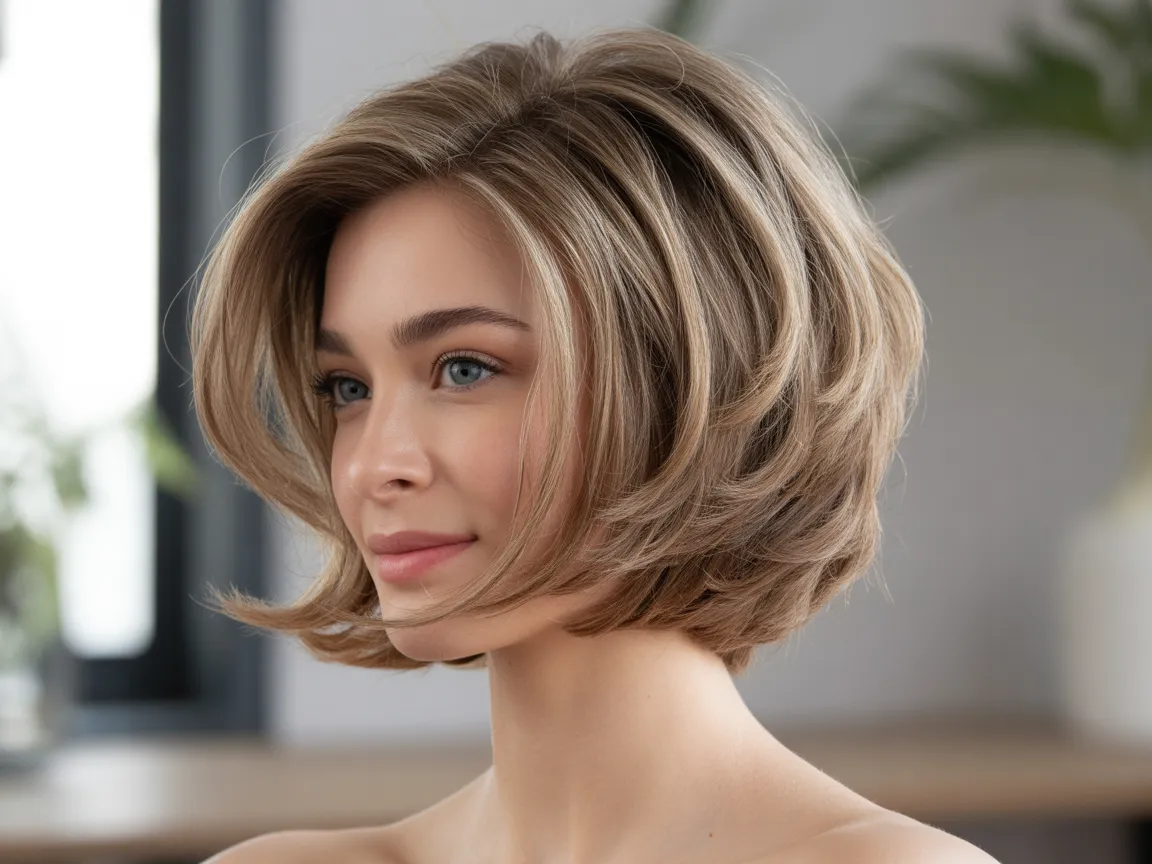
A strong, square jaw can make a blunt bob look boxy. Feathered layers, long and angled so they flip slightly away from the face, blur that line and give the bob a soft swing. The length sits between the jaw and the top of the neck, and the movement helps medium-density hair that tends to hang flat.
Use a medium round brush and roll the front sections back and away from your face as you blow-dry. A light volumizing mousse at the root helps the layers hold their shape. On fine hair, keep the feathering to the front and sides so the back keeps enough weight.
Ask for: the back slightly shorter than the front
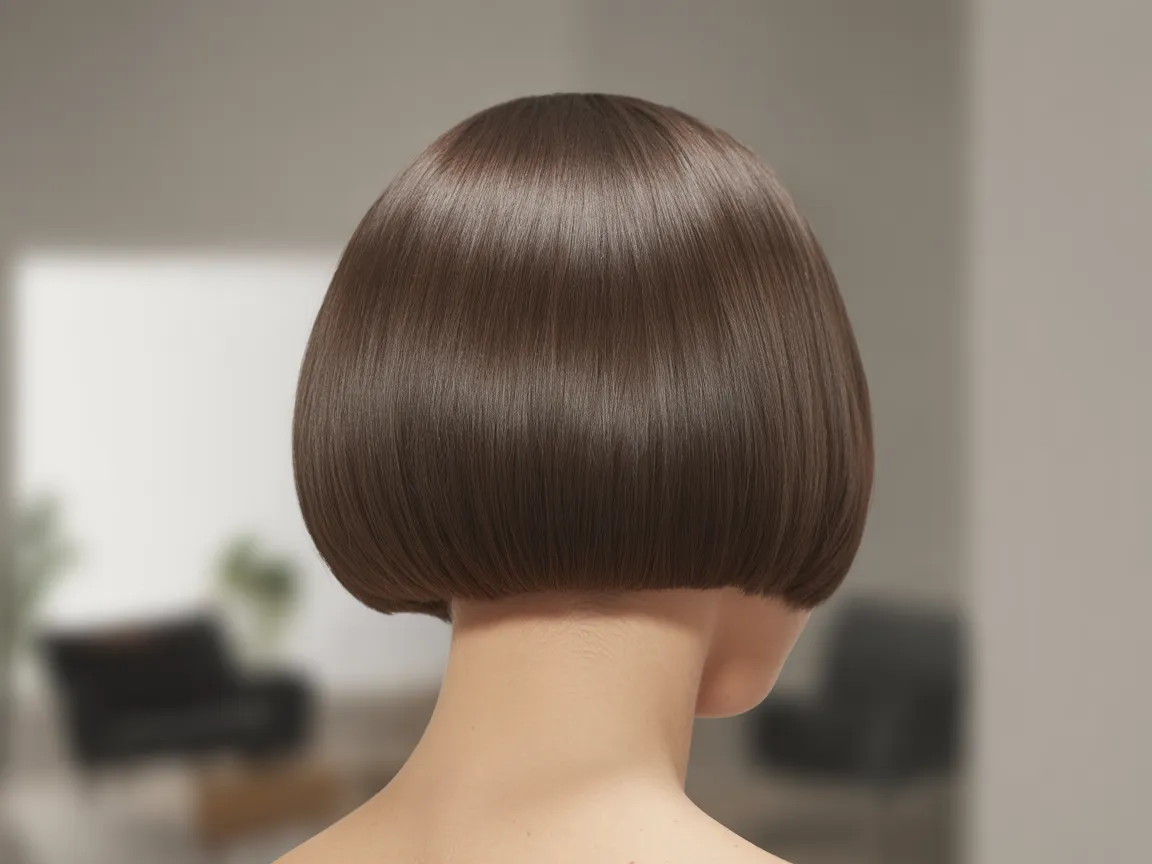
Fine or thin hair has one reliable friend: a single length. With every strand ending at the same point, somewhere between the chin and the collarbone, the ends look dense and solid, with no see-through layers. It also helps bleach-damaged hair look healthier, because the weakest ends are gone.
Wear it straight with a center part for a minimal look, or bend it with a flat iron using a twist-and-pull motion for loose waves. Because the line is the whole design, go back roughly every two months, before the ends start to fray.
Say this at the salon: minimal thinning, perimeter cut on dry hair
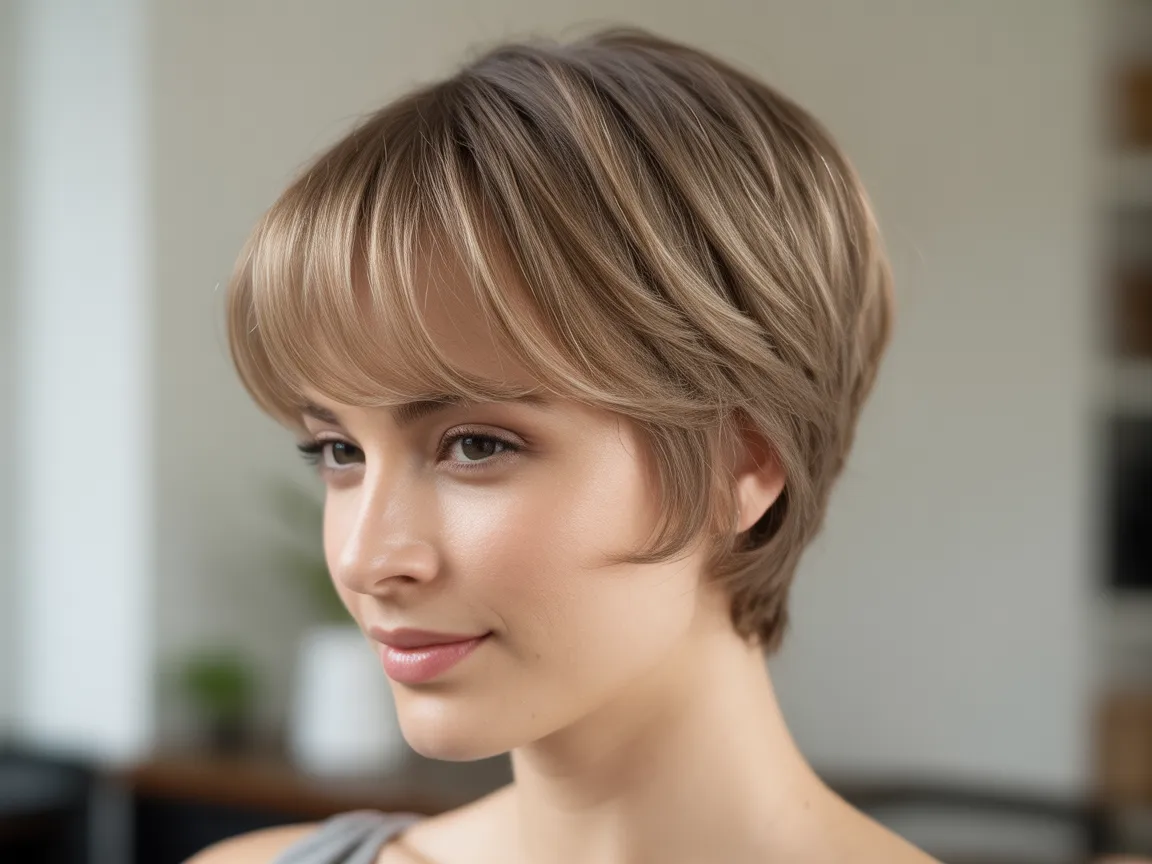
Nervous about going very short? This is the gentle version. Around three to four inches stay on top and sweep forward into a wispy fringe that grazes the brows, which flatters long faces and high foreheads. Glasses wearers like it because the fringe sits above the frames.
Dry the fringe in the direction you want it to fall, using a flat brush and low heat. Finish with a flexible-hold hairspray instead of wax so the bangs move. Many salons offer quick bang trims between full appointments, which buys you extra weeks.
Ask your stylist for: a soft tapered nape rather than a clipped one
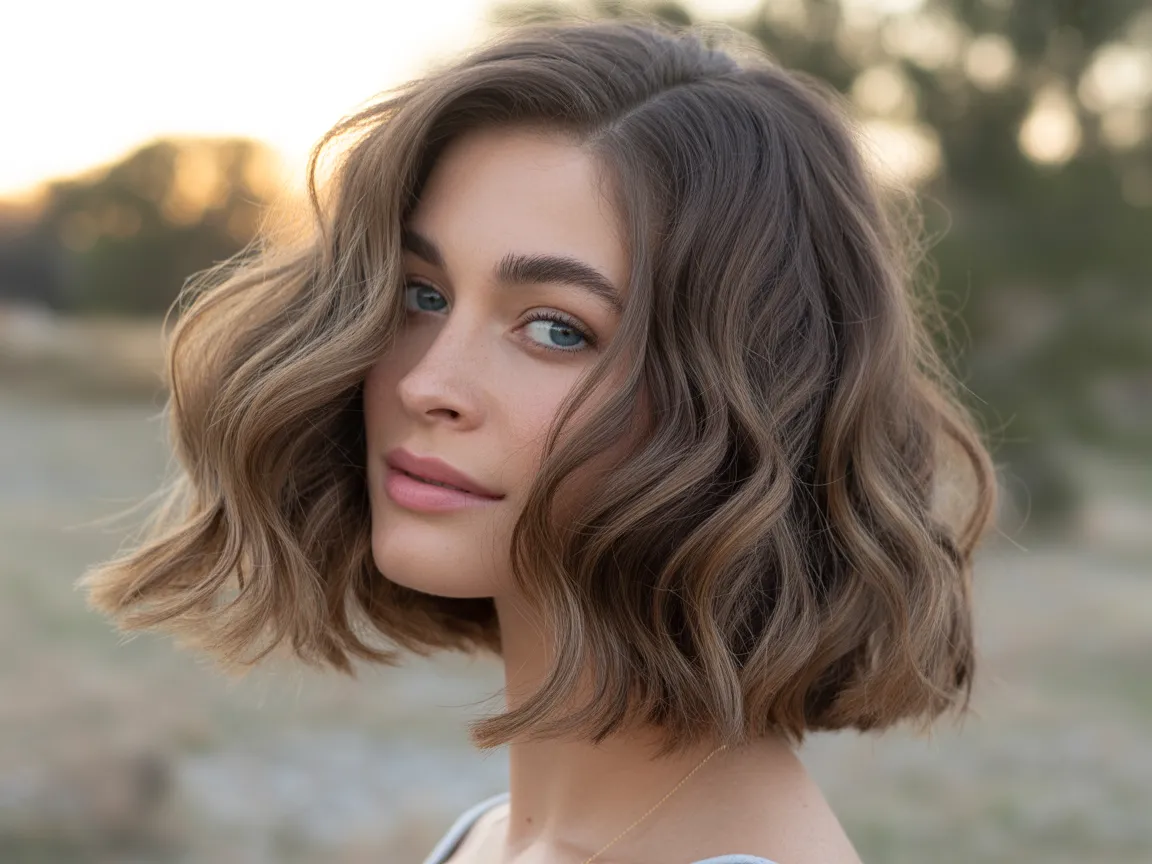
Cutting off a lot of length at once? Start here. A short lob, or long bob, lands just above the collarbone, and loose waves give it volume and hide an uneven grow-out. Nearly every face shape can wear it, and it’s ideal for hair that bends naturally but frizzes when long.
For a no-heat version, mist damp hair with sea salt spray, twist it into two loose buns, and let it dry. With heat, use a one-inch curling iron or wand and leave the last inch of each section straight so the waves look modern rather than ringlet-like.
In the chair: long invisible layers, slightly longer in front

Layers and thin hair can work together, as long as they’re placed carefully. Here they’re concentrated at the crown, where thin hair usually lies flat, while the perimeter stays thick so the ends don’t look wispy. It’s one of the most flattering short hairstyles for women with thin hair, including anyone noticing thinning with age.
Apply a root-lift spray or mousse to damp roots and blow-dry with your head flipped forward for the first minute. Finish with a light texture spray rather than heavy creams, which weigh fine strands down. A stylist may suggest a slightly shorter back and a side part, which both add the look of volume.
Ask your stylist for: no razor on the ends, scissor-cut only
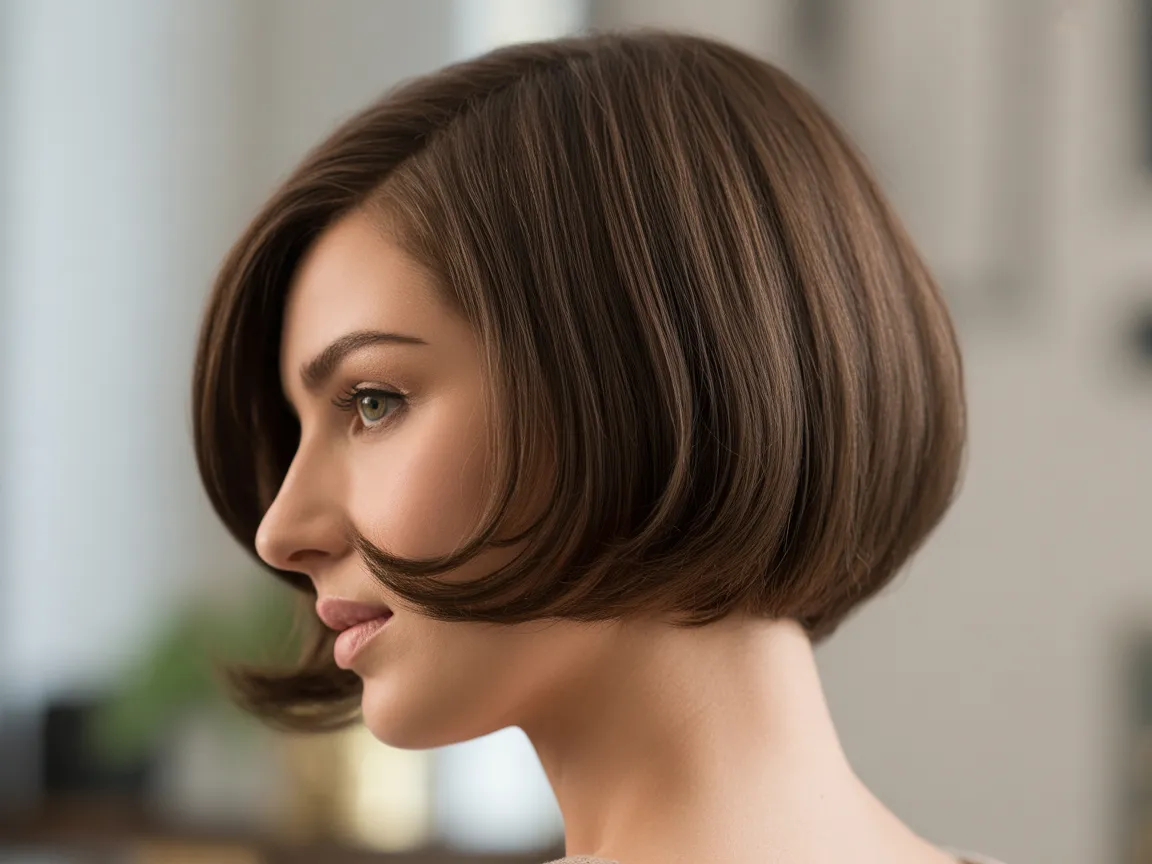
Office-friendly and easy with glasses, this chin-length bob gets its polish from one move: a deep side part, with the longer side swept across the forehead and tucked behind one ear. The asymmetry and lift slim a round face, and it works on straight or lightly wavy hair.
Blow-dry the part in the opposite direction first, then flip it over; this builds volume at the root that lasts all day. A small round brush turns the ends gently under. If the cut starts to feel heavy, ask for a few internal layers rather than shortening the whole bob.
The request: ends slightly beveled under
Growing out a pixie is where the bixie earns its place. It pairs the short back of a pixie with the longer, ear-covering sides of a bob, so it reads softer than one and lighter than the other. Heart-shaped and oval faces suit it, especially with medium-density hair that has a slight wave.
Style it with a texture spray and your fingers, pushing the top back and letting the sides fall forward around the cheekbones. Because the shape is meant to look undone, it tolerates a few extra weeks between cuts; eight weeks is common. Ask for a slightly longer nape if you want the option to grow it into a short bob.
Tell your stylist: cheekbone-length sides, shaggy texture on top
Shorter than a standard bob, the French bob ends between the cheekbone and the jaw and comes with brow-skimming bangs. It should look slightly messy, not perfectly smooth. Oval and long faces suit it, and fine to medium hair with a natural bend is the easiest texture to wear it with.
The easiest way to style it is to do almost nothing: rough-dry, add a little cream for texture, and push the bangs to the side with your fingers. If you have a cowlick at the hairline, show it to your stylist before they cut the bangs, so they can work with its direction.
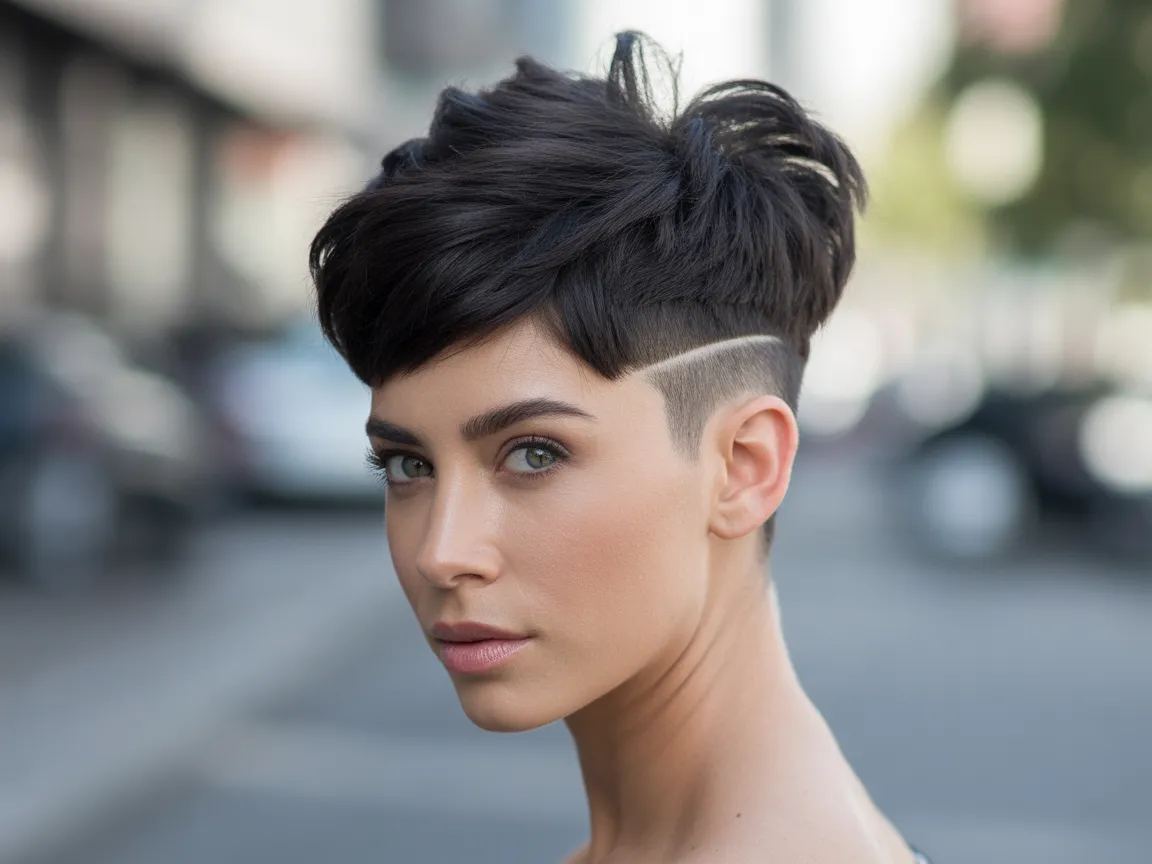
Very thick hair tends to puff out in a pixie, and an undercut solves that by clipping away the underlayer, usually at the nape or above one ear, while the top stays longer. With the hair down, the clipped section can be completely hidden; tuck it behind the ear and it shows.
The clipped section needs a touch-up every three to four weeks to stay crisp. If you want to grow it out later, ask for a number 3 or 4 guard rather than a very close shave, so the regrowth blends in sooner. A small amount of pomade keeps the top piecey.
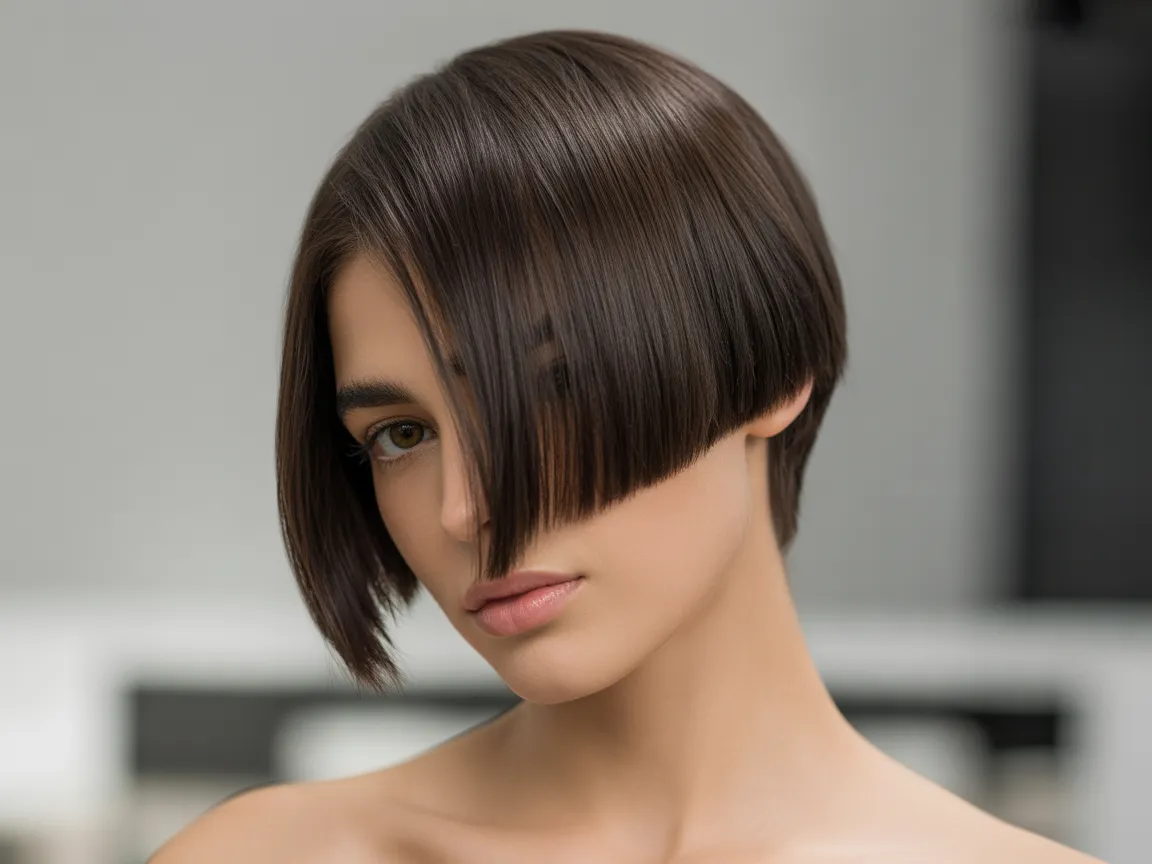
When a classic bob feels too safe, cut one side an inch or more longer than the other and put a deep part on the long side. The diagonal line draws attention to the cheekbones and breaks up a square or round face, and the overall effect reads modern and slightly editorial.
Straight or smoothed hair shows the asymmetry best, so expect a quick flat iron pass on the longer side. Keep the difference subtle, about one to two inches, if you’re unsure; a dramatic slant is harder to grow out. Trims every six to eight weeks keep the angle sharp.
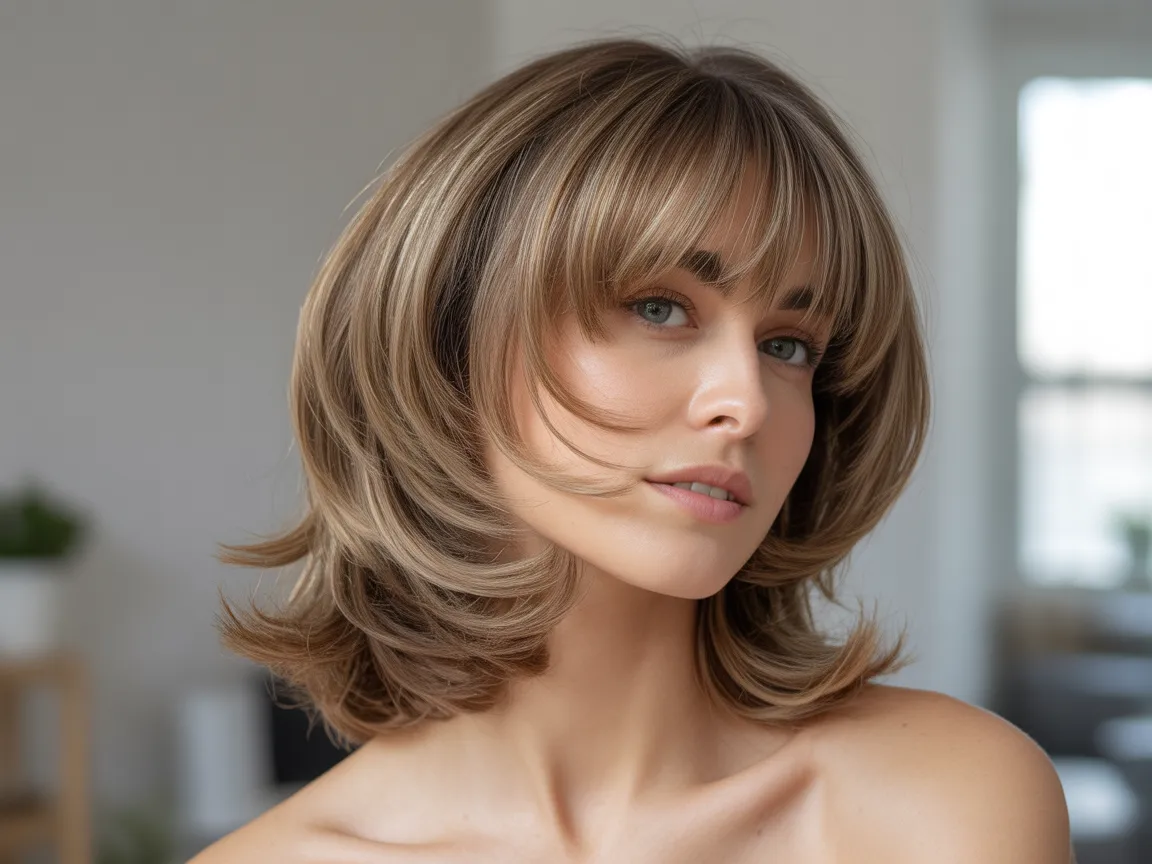
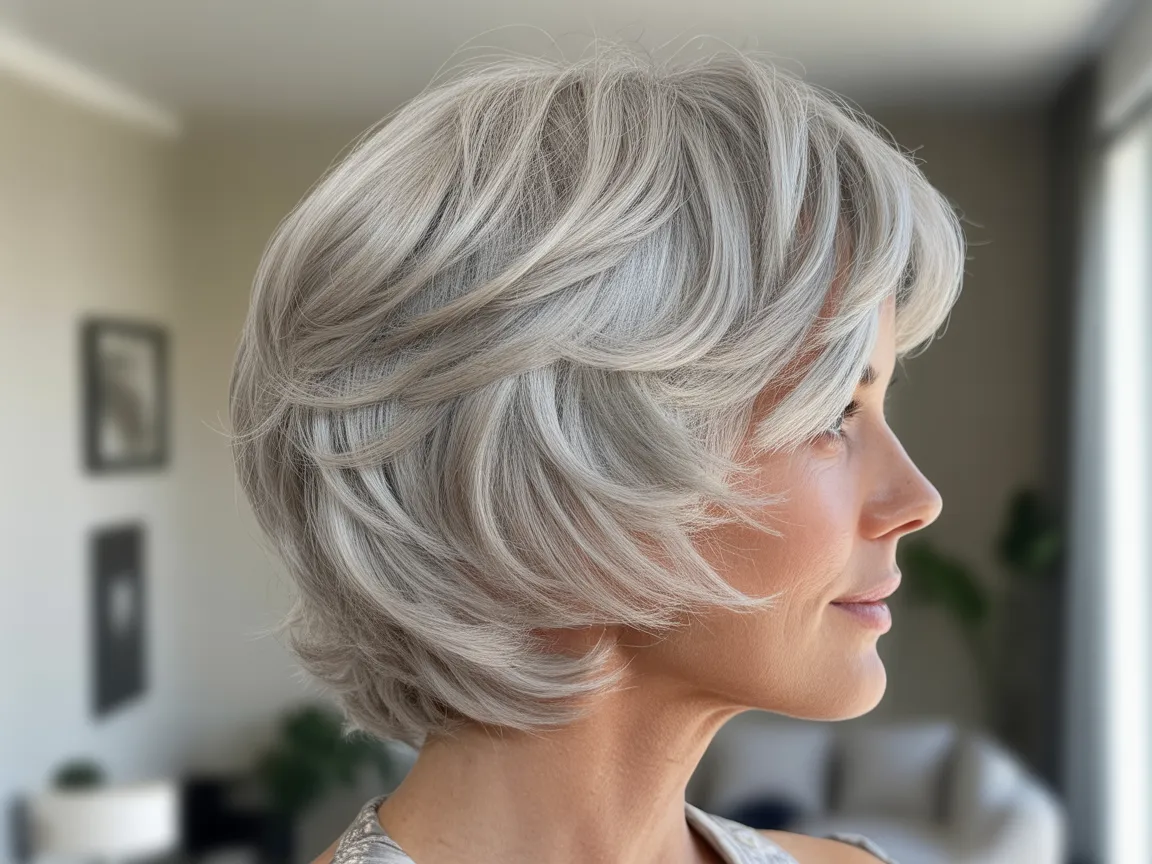
Gray hair often feels coarser and wirier than it used to, and a short feathered shape controls that texture without stiff styling. The crop keeps soft volume at the crown and wisps at the temples, which softens the face and shows off natural silver. That combination is why it’s a common pick among short hairstyles for older women.
A violet-toned shampoo every week or so stops silver from going brassy or yellow, and a lightweight leave-in conditioner tames flyaways. Expect a trim every five to seven weeks to keep the feathering crisp. If you wear glasses, ask your stylist to cut while you have them on, so the hair around the ears sits comfortably over the arms of the frames.
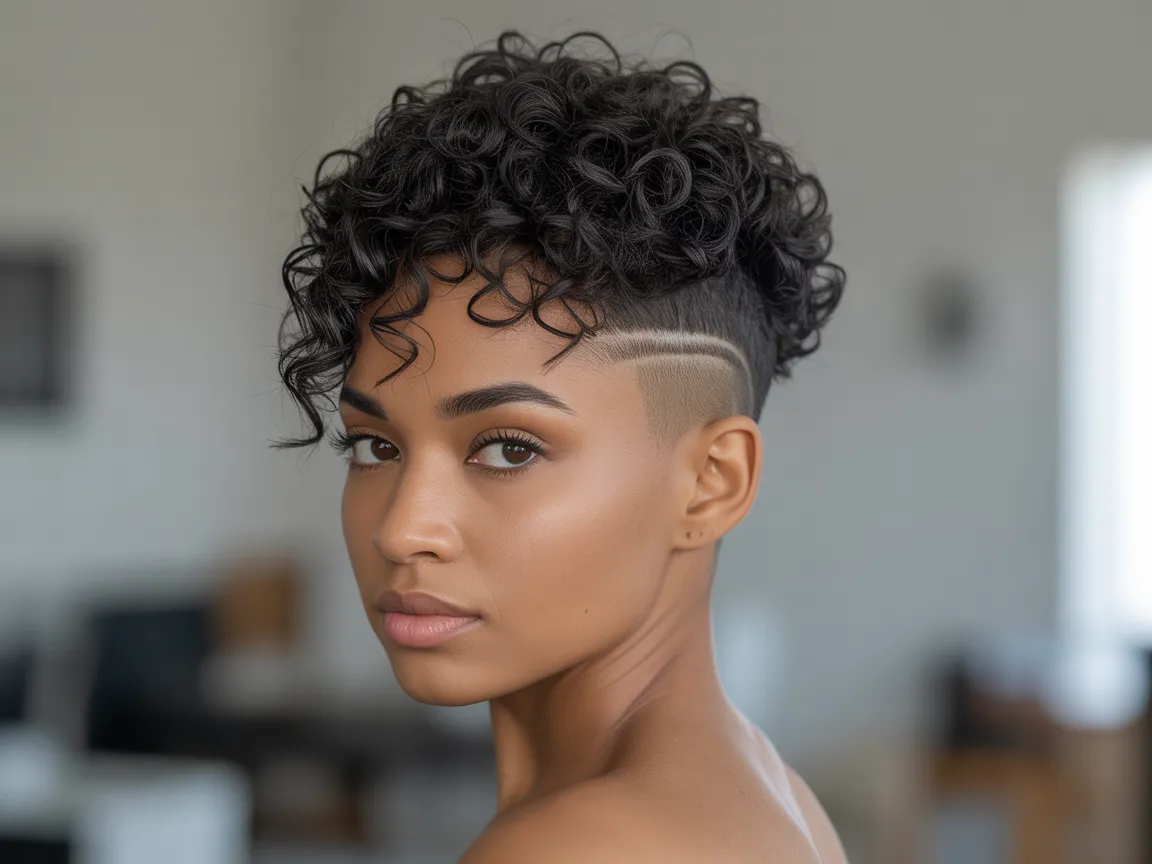
No tools, almost no product, and a two-minute routine. A buzz cut takes hair down to an even length all over, typically with a number 2 to 4 clipper guard, and a good stylist softens the hairline so it doesn’t look harsh. Strong bone structure, defined brows, and an even scalp shape make it look its best.
The trade-off is frequent touch-ups, roughly every two to three weeks, and sun on the scalp, so wear sunscreen or a hat outdoors. Bold earrings or a graphic color such as platinum blonde make it feel deliberate.
Ask your stylist for: a rounded hairline and soft sideburns
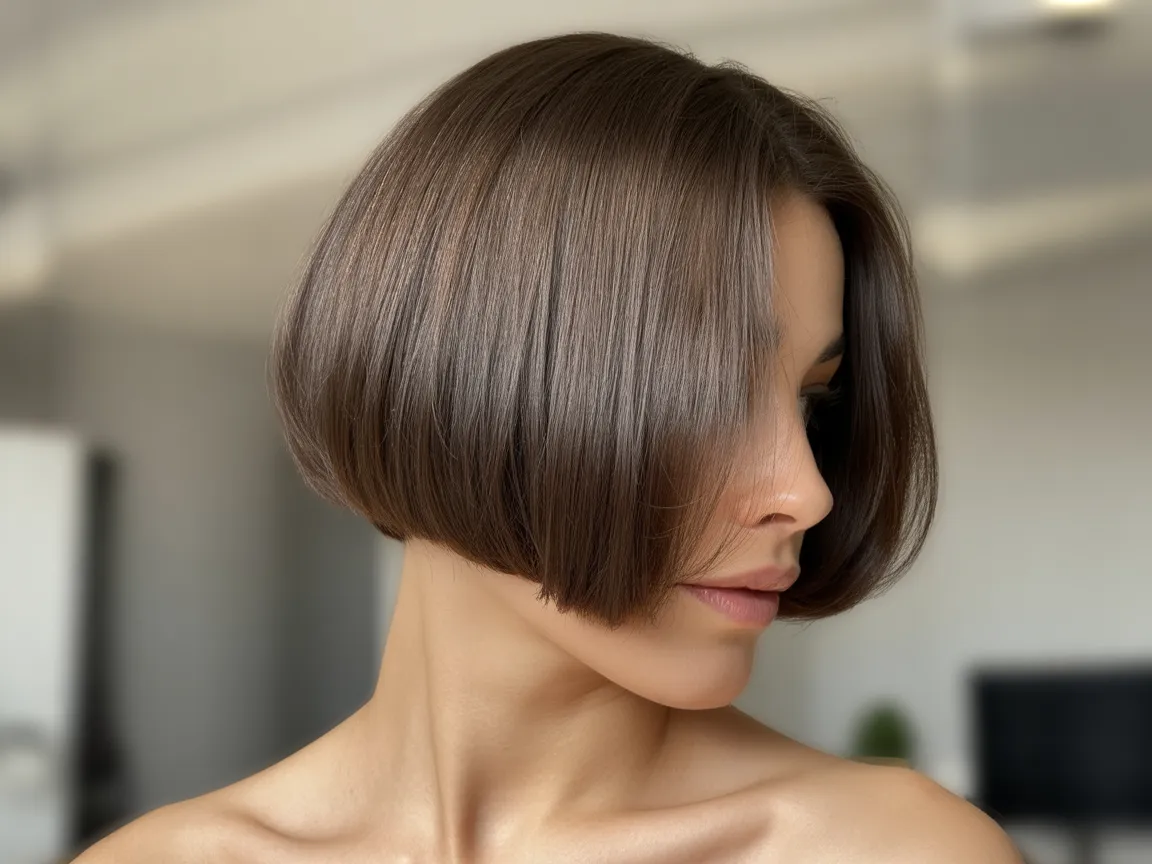
Two-strand twists, chin-length knotless braids, or a twist-out on a tapered cut give natural hair defined shape for days (twist-outs) or weeks (braids and twists). Because they cut down on daily combing and styling, they help many women limit breakage and hold on to length.
Keep tension low at the hairline; braids pulled hard at the edges can contribute to traction alopecia. Moisturize the scalp lightly every few days and cover the style with a satin scarf or bonnet at night. For short braids, plan to take them down within about six to eight weeks to avoid matting at the root.
Ask for: low-tension installs with no tight edges
| Cut | Made for | Back in the chair | Daily styling |
|---|---|---|---|
| Textured pixie | Oval or heart faces, medium density | 4–6 weeks | About 5 minutes |
| Sleek chin-length bob | Naturally straight hair | 6–8 weeks | 15–20 minutes with heat |
| Short shag | Wavy or thick hair | 8–10 weeks | Air-dry plus bangs |
| Short curly afro | Type 3C–4C curls | 8–12 weeks | Wash-day routine, quick refresh |
| Feathered layered bob | Square faces, flat medium hair | 6–8 weeks | 10 minutes, round brush |
| Short blunt cut | Fine or thin hair | 6–8 weeks | 5–10 minutes |
| Soft pixie with fringe | First-time pixie, glasses wearers | 4–6 weeks | 5 minutes |
| Wavy collarbone lob | Most face shapes, big chop | 8–10 weeks | Air-dry or 10-minute wave |
| Layered cut for thin hair | Fine or thinning hair | 6–8 weeks | 10 minutes with root lift |
| Side-part bob | Round faces, office wear | 6–8 weeks | 10 minutes |
| Bixie | Growing out a pixie | About 8 weeks | 5 minutes |
| French bob | Oval or long faces, fine hair | 6–8 weeks | Under 5 minutes |
| Undercut pixie | Very thick or coarse hair | 3–4 weeks (undercut) | 5 minutes |
| Asymmetrical bob | Square or round faces | 6–8 weeks | 10 minutes |
| Silver feathered crop | Gray hair, women over 50 | 5–7 weeks | 5 minutes |
| Buzz cut | Strong features, zero styling | 2–3 weeks | Almost none |
| Short twists and braids | Type 4 natural hair | Redo every 6–8 weeks | Minimal |
Keep booking trims. Shaping the back and sides while the top catches up is what prevents a mullet; ask your stylist to leave the front and crown alone.
Use transitional shapes. A pixie can move to a bixie, then a French bob, then a chin-length bob. Each stage is a finished haircut in its own right. If you want more ideas for the bob stage, our guide to the short layered bob walks through shapes that suit different hair types.
Lean on accessories. Clips, slim headbands, and bobby pins crossed in an X above the ear hold awkward side pieces in place. Once the back reaches your chin, you can tie it up; the stubby pony in our ponytail hairstyles guide is made for bob-length hair.
Avoid common mistakes. The most frequent misstep is copying one celebrity photo without considering texture: a pixie that looks airy on fine hair can look bulky on thick hair. Over-thinning fine hair and cutting curly hair wet without allowing for shrinkage are close behind. If you’re deciding between a crop and something even shorter, our roundup of pixie haircuts for women compares soft, textured, and undercut versions side by side.
Start with the right product for your cut, not more heat. Pixies and crops only need a little matte paste raked through dry hair with your fingers. Bobs look polished after a quick round-brush blow-dry or a single flat iron pass. Shags and curly cuts often look best air-dried with a mousse or curl cream, which can take less than five minutes.
Short hair is a good choice if you want less daily styling and don’t mind trims every four to eight weeks. Try the 2.25-inch chin test, look at your hair’s density and texture, and consider a lob or chin-length bob first if you’re unsure. Remember that hair grows about half an inch a month, so a big chop takes time to undo.
Cuts with height at the crown and length that falls just below the chin work best on round faces. A side-parted bob, an asymmetrical bob, or a longer pixie with a side-swept fringe all create vertical lines that lengthen the face. Avoid rounded cheek-length bobs and heavy blunt bangs, which repeat the face’s curve and make it look wider.
A feathered crop, a soft layered pixie, and a chin-length bob with crown lift are popular short hairstyles for women over 50 and 60. They add volume where hair often thins and control the coarser texture of gray hair. Ask for wispy layers around the face rather than a severe line, and have your stylist cut with your glasses on if you wear them.
For short hair, a curling iron between half an inch and one inch works best. A half-inch or three-quarter-inch barrel suits pixies and very short layers, while a one-inch barrel creates loose waves on bobs and lobs. Larger barrels usually leave short hair with a slight bend rather than a visible curl, which can still look nice on a lob.
Recent seasons have favored softer, lived-in shapes over very sleek ones. The bixie, the French bob with wispy bangs, short shags with curtain bangs, and textured pixies have all been popular through 2025 and 2026, while sleek glass-hair bobs remain the polished alternative. Choose the trend that suits your texture and the time you want to spend styling.
Pick your short cut by texture first and trend second: fine hair needs weight at the ends, thick hair needs bulk removed, and curly hair needs a dry cut. Bring two or three reference photos, name the parts you like, and book your first trim before you leave the salon.